dailynewsnblog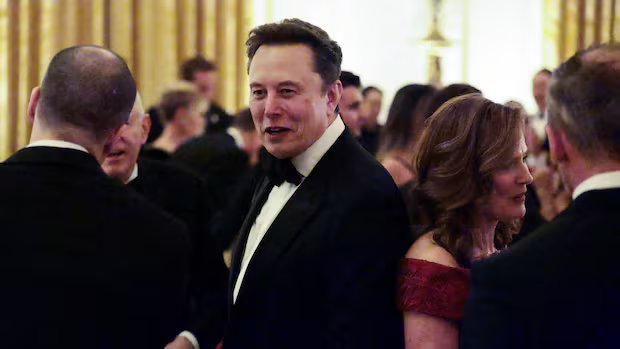

Listen to this article
Estimated 5 minutes
The audio version of this article is generated by AI-based technology. Mispronunciations can occur. We are working with our partners to continually review and improve the results.
The European Union’s executive arm said Friday it’s prepared to defend a 120 million euro ($137 million US) fine against the social media platform X after the U.S. government threw its support behind a legal effort by Elon Musk this week to have the case dismissed.
The European Commission fined X late last year for breaches of the bloc’s landmark digital regulations, stoking tensions with Washington. The fine amount equates to $194 million Cdn.
The EU action followed a two-year investigation and was the first penalty issued under the bloc’s digital regulations governing online content. Regulators said X’s blue checkmarks broke the rules because they involved “deceptive design practices” and could expose users to scams and manipulation.
The U.S. Justice Department said Thursday that it had filed an application to support X’s bid to have the case annulled at the European Union’s General Court.
“We will not tolerate the European Commission engaging in regulatory overreach to try and control American engines of innovation and economic growth,” said Brett Shumate, assistant attorney general of the Justice Department’s Civil Division.
European Commission spokesperson Thomas Regnier said Friday that it is the EU’s “sovereign right” to draft legislation aimed at protecting its citizens.
“We are enforcing our legislation objectively, transparently and with a solid case,” he told reporters. “We are ready to defend our position in court. We have a lot of evidence at our disposal, and it will be for the court to decide as always.”

U.S. President Donald Trump lashed out at a possible Canada-EU trade alliance, threatening new tariffs if he finds it to be ‘a hostile act.’ Meanwhile, Democrats in Washington expressed sympathy for Canada and said trade talks should resume.
The commission is the top enforcer of the 27-nation EU’s Digital Services Act (DSA), which requires tech companies to clean up their online platforms under threat of hefty financial penalties.
The DSA imposes a set of strict requirements designed to keep internet users safe online, including making it easier to report counterfeit or unsafe goods or flag harmful or illegal content like hate speech as well as a ban on ads targeted at children.
But the rulebook has become a flashpoint with the Trump administration, and U.S. officials have criticized it as amounting to online censorship.
When asked whether the Justice Department had informed the commission that it intended to back Musk, Regnier said: “We do not need to be informed about anything.”
He said the commission doesn’t expect the case to hurt broader relations between Brussels and Washington, notably in talks to mitigate the damage of Trump administration tariffs.
“From our perspective, nothing will change because of a DSA case,” he said.
‘At odds with U.S. law’
The Justice Department warned that the fine, if upheld, “may have significant implications” for U.S. online platforms and other companies providing digital services in the EU.
Shumate said in Thursday’s statement that the “European Commission inappropriately attempted to expand its regulatory authority to reach American companies not present or operating within its jurisdiction.”
Former U.S. federal prosecutor Ankush Khardori said on his website Friday that Shumate’s contention was “a basic category error that also happens to be at odds with U.S. law.”
“A company does not have to be physically ‘present’ somewhere in order to operate within the jurisdiction and be subject to that jurisdiction’s laws,” he said.
Khardori also said it was “galling” that the Justice Department called on the EU to be “consistent with how territorial jurisdiction is generally understood in international law,” given that the Trump administration has been accused of activities that are contrary to international law, including their seizure of Venezuelan leader Nicolás Maduro and its deadly strikes on boats allegedly being used for drug trafficking.
Musk on Thursday evening was among the tech executives attending a state dinner held by Trump honouring China’s leader Xi Jinping.
Musk giving to Republican candidates again
It was the second time in three months that the Justice Department has intervened to defend a company owned by Musk.
In July, the Justice Department filed a motion to intervene in a civil rights lawsuit that alleges Musk’s xAI is illegally running dozens of natural gas turbines to power a $20 billion US AI data centre in Mississippi. In that case, the groups suing xAI said it failed to get a permit for its power plant, which is located near homes, schools and churches.

SpaceX is now a publicly traded company worth over $2 trillion US after a stratospheric Nasdaq debut on Friday that made founder Elon Musk the first trillionaire, with a new estimated net worth of $1.1 trillion US.
Trump and the world’s richest businessman appeared to dial down a war of words that stunned Washington and Wall Street alike last year after Musk called Trump’s tax breaks and spending cuts a “disgusting abomination.”
The statements followed a controversial designation of Musk as a special government employee, where he oversaw a cost-cutting blitz within the federal bureaucracy. Musk was encharged with those responsibilities despite conflict of interest concerns, given that his companies often have bid for government contracts or have been embroiled in civil litigation with federal agencies.
Musk’s time with the Department of Governmental Efficiency, which ended in May 2025, could come under scrutiny, however, if the Democrats regain one or both chambers of Congress in the Nov. 3 midterms. Some Democratic lawmakers want Musk subpoenaed to testify about his actions at DOGE.
Musk is again using his super PAC to help fund Republican candidates ahead of the midterms.