dailynewsnblog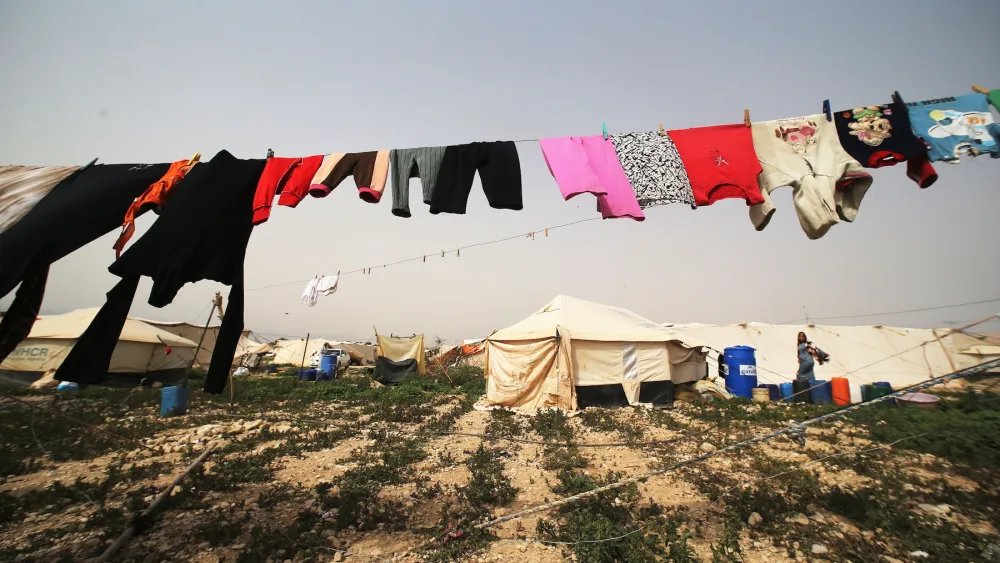
For some migrant garment workers in Jordan, a factory shift may not end until 10 p.m—their employer’s control, however, does not.
A recently published report, produced by the Invisible Workers research project, maps how overcrowded dormitories, mandatory housing and meal charges, curfews and the country’s kafala sponsorship system turn workers’ off-hours into another form of labor control.
The report has gained new urgency since U.S. Customs and Border Protection on June 23 directed officers to detain garments produced by Jordan-based Needle Craft and Casual Wear Apparel, citing information reasonably indicating the use of forced labor. “Threads of Life: Counter-Mapping Jordan’s Garment Labour Regime From a Worker’s Perspective” argues that the conditions enabling such abuses extend across a broader production model supplying duty-free apparel to major U.S. brands.
To note, the report names American Eagle, Columbia, Under Armour, Patagonia, Timberland, Adidas and Nike as Jordan clients, but it does not clearly connect every documented condition to a named brand’s specific supplier.
The University of Nottingham team spent three years researching the sector, beginning in 2023. Its 48, hour-long interviews focused on women, including Jordanian and Syrian workers and migrant workers from across south and south-east Asia, as well as Madagascar. Each woman was interviewed again about a year later. Researchers also ran open mapping sessions in Al-Hassan and worked with smaller groups of garment workers in closed mapping sessions over several meetings in Ad-Dhulayl in both 2024 and 2025.
Workers were later invited to review the resulting maps and other materials, allowing them to correct the researchers’ interpretations or request that identifying information be withheld. As a qualitative study, it does not measure how widespread the documented conditions are across Jordan’s garment sector.
“By thinking about labor beyond the factory space, you’re already doing something quite different,” lead author Katharina Grüneisl told Sourcing Journal. “What’s very powerful about something like a participatory process of mapping is that you change the narrative.”
Factory-based surveys, she explained, can elicit answers workers have been instructed to repeat by their employers. The mapping sessions unfolded over time and in settings outside the immediate control of employers. As participants grew more comfortable, conversations turned to dormitory life, restricted movement and the experience of spending nearly every hour inside the industrial zones.
Jordan’s garment industry employs approximately 80,000 workers and produces almost exclusively for the U.S. market, according to the report. Roughly two-thirds of those workers are migrants, predominantly young women recruited from South Asia on three-year contracts. More than 55,000 foreign workers live in employer-provided dormitories within or directly beside the country’s industrial zones.
In Jordan, work and residency permits for migrant laborers are linked to a sponsor, usually the employer, under kafala. Ending a three-year contract early or moving to another job generally requires the employer’s consent, typically provided through a release letter, Grüneisl said. Some employers make the release conditional on repayment of a part of the recruitment expenses or the worker’s own purchase of a return ticket, forms of compensation that are not legally permitted, she added.
Workers who leave without an agreement become undocumented, as their residency permits depend on employers. Most employers file complaints against absconding workers that expose them to detention or deportation, and undocumented workers cannot leave Jordan until fines for overstaying residency permits are paid, Grüneisl said. She said the system can enable forced labor by making it prohibitively expensive or legally dangerous for workers to escape coercive or abusive conditions.
Jordan’s national minimum wage is 290 dinars a month. Garment workers receive 230 dinars, with 100 of that amount designated for employer-provided housing and meals, according to the report. Grüneisl said the 100 dinars is subtracted from the wage of migrant workers, not added as a separate benefit. After social security and union contributions, workers generally receive around 110 dinars in cash from their base wage before overtime, though the precise amount varies, she continued.
Factories do not provide workers with a breakdown showing how housing and meal charges are calculated, Grüneisl said. The report argues that low cash wages incentivize workers to accept extensive overtime to send sufficient remittances home.
Workers often try to make up the difference with overtime. When they return to their dormitories, eight to 10 people may share a room and as many as 100 may live on one floor, the report said. A worker from Madagascar recalled arriving after a 10 p.m. shift to find more than 50 people waiting to use a kitchen with 18 outlets, along with limited hot water.
“So just to get hot water for a shower and a turn at one of the cookers, you wait until 1 in the morning before you have finally eaten and washed,” he told the researchers. “You can calculate yourself how much sleep I then get before getting up again at 6 a.m.”
The report describes that exhaustion as “time poverty,” arguing that inadequate housing infrastructure consumes the few hours workers have outside production.
Factory-run clinics frequently dispense Panadol, an acetaminophen brand, in place of more substantial treatment, workers said. Because clinic staff are employed by factories, workers also described concerns concerning confidentiality and fears that disclosing a serious condition could jeopardize their wages, medical leave or continued employment.
For workers who do not trust factory clinics, the alternative is private care they can scarcely afford. Clinics and pharmacies cluster around the industrial zones, but workers must pay for treatment themselves, unless there is a direct referral from factory doctors and employers agree to cover emergency treatment. Some said providers ordered tests they believed were unnecessary or gave diagnoses they did not trust. Experiences like those made them even less likely to seek care.
Back and leg pain were common complaints, which workers attributed to long hours at sewing machines. Women also reported urinary tract infections and kidney problems. To avoid taking bathroom breaks and falling behind on production targets, some said they drank less water, even as they questioned whether water in factories and dormitories was clean.
Workers also reported hoarse voices, chronic coughs and asthma-like symptoms. Textile dust and plastic microfibers circulated along production lines, neighboring plants polluted the outdoor air and pesticide residue persisted in poorly ventilated dormitories, according to the report. The researchers call that overlap a “continuum of harm” largely invisible to safety reviews centered on factory floors.
More than 80 percent of the 48 women interviewed underwent mandatory pregnancy testing during recruitment, according to the report, despite the practice being officially prohibited. Although migrant workers’ social security contributions formally entitle them to maternity leave, the researchers said pregnancy frequently results in contract termination.
Brands and Better Work Jordan started funding mental-health work in 2022. That effort included a union-run clinic that opened one morning a week and later closed, plus factory “mental health days” built around yoga and drawing, the report said. Two young Bangladeshi workers in Ad-Dhulayl died by suicide in fall 2023. To the researchers, the deaths exposed the limits of wellness programs that left the sources of workers’ distress untouched. The report points to long hours, debt, isolation, sexual abuse and racialized exploitation.
Its recommendations include allowing migrant workers to change employers and terminate contracts without sponsor approval, bringing garment wages in line with Jordan’s national minimum and requiring overtime to be voluntary and predictable. The authors also called for independent health insurance, paid sick leave and more precise health and safety standards covering dormitories, canteens and areas surrounding factories.
Grüneisl said the researchers briefed Better Work Jordan—an ILO-backed initiative established in 2008 at the request of the U.S. and Jordanian governments in response to widespread labor rights violations in the country’s garment sector—as well as the broader International Labour Organization on the findings. Some ILO representatives attended the report’s launch. Better Work was already acting on some of the findings, she said.
JGATE, Classic Fashion and Jordan’s Ministry of Labor were also informed about the research or invited to discuss the results but provided no specific response to the researchers yet, Grüneisl said. Adidas was the only brand to acknowledge receiving the report and express interest in its findings.
While Under Armour and Columbia Sportswear reportedly did not respond to the Nottingham team, both brands told Sourcing Journal about reports of labor violations at Needle Craft that prompted investigations and remediation efforts beginning in 2024.
Both companies also said they voluntarily raised the concerns with CBP and participated in a July 2024 meeting with the agency. Under Armour said it met with CBP again in August.
Columbia said senior executives traveled to Jordan to meet with Needle Craft management, worker-rights advocates and government officials. The company hired a third party to conduct remediation work, which it said concluded in fall 2025, but did not disclose the investigation’s findings or specific remedies.
Both brands questioned the WRO’s timing in light of those efforts. Columbia said it was “working to understand the timing and reasons for the WRO,” while Under Armour said the order “raises important questions” and that it was seeking more information from CBP.
After curfew, dormitory fire escapes double as gathering places where workers sing, socialize and call family members.
“When you see us hanging out on the dormitory stairs at night, singing or playing, we are doing this to survive,” one Bangladeshi worker told the researchers. “It’s the only thing that keeps us going.”