dailynewsnblog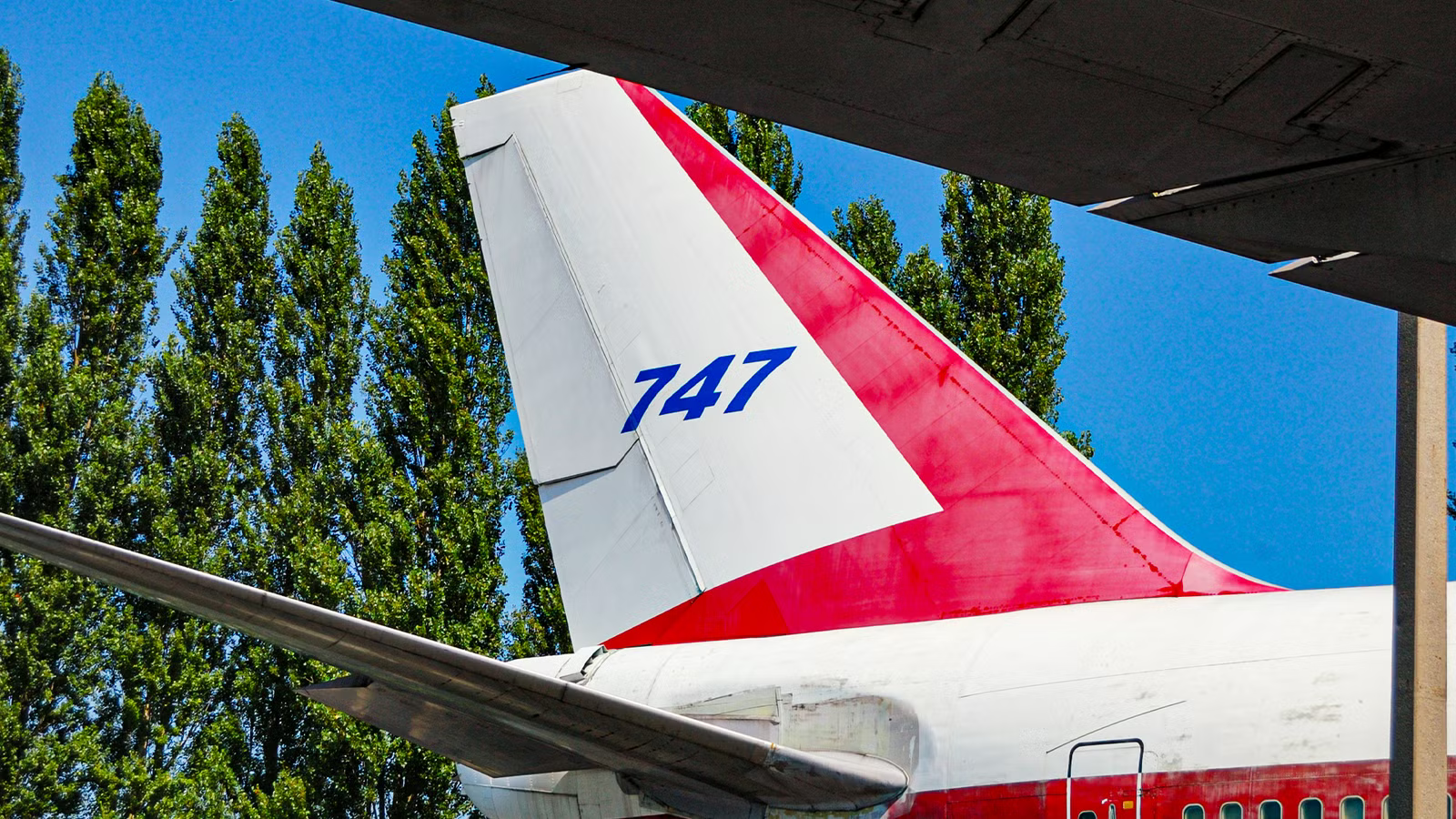
The Boeing 747 was the product of a high-risk program led by Joe Sutter, the engineer who became chief project engineer for an aircraft larger than anything the company had previously built. The National Air and Space Museum later called Sutter the “Father of the 747,” while the thousands of Boeing employees involved became known collectively as “The Incredibles.” Their achievement was both an airplane and a new industrial model for building one.
The 747 moved from conception to rollout in about 29 months. Boeing began production in 1967, built a new assembly facility at Everett, Washington, and rolled out the first aircraft on September 30, 1968. Its first flight followed on February 9, 1969, and Pan Am introduced the aircraft on its New York-London route in January 1970. Production ultimately lasted 54 years, with 1,574 aircraft built.
Joe Sutter & The Leadership Behind The Program

Sutter brought an unusual combination of aerodynamic knowledge, practical experience, and familiarity with Boeing’s production culture to the 747 project. He had joined Boeing in 1945 after studying aeronautical engineering at the University of Washington and worked on aircraft including the 377 Stratocruiser, Boeing 707, 727, and 737. By the mid-1960s, he had developed a reputation for solving difficult engineering problems, which made him a natural choice to lead a project whose central challenge was scale.
The assignment came as Boeing faced a strategic question. Pan Am wanted an aircraft capable of carrying roughly two and a half times as many passengers as the 707, while the industry was also pursuing supersonic transport technology. Sutter’s team had to balance structural weight, passenger capacity, range, engine performance, airport requirements, and manufacturability from the beginning. Sutter also fought to keep his engineering organization close to production in Everett after Boeing considered locating the engineers in California.
“The engineers have to be with the production people,” Sutter said, according to AirWingMedia.com.
Keeping the groups together let design decisions be tested against manufacturing realities. Contemporary accounts also describe him resisting efforts to reduce his engineering staff as development costs rose, reinforcing his reputation for defending the technical resources he believed the project needed.
The Incredibles therefore represented more than an engineering department. The term came to encompass the large workforce required to design, manufacture, test, and deliver the airplane. Smithsonian records describe Sutter as managing thousands, while Boeing and contemporary accounts have cited roughly 50,000 employees across the broader program. Sutter remained associated with the 747 for a decade before moving into senior engineering leadership.
The Design Choices That Created The 747

Wikimedia Commons | Simple Flying
The 747’s appearance was closely tied to practical engineering requirements. Its wide fuselage created two passenger aisles and substantially more usable cabin space than earlier single-aisle jets. The upper-deck hump, meanwhile, supported the airplane’s intended flexibility as a freighter. By placing the flight deck above the main fuselage, Boeing could accommodate a forward-opening nose cargo door on freighter versions.
That arrangement produced one of aviation’s most recognizable silhouettes, but the hump was not simply styling. Boeing expected supersonic passenger aircraft eventually to dominate long-distance travel, so strong cargo potential gave the 747 another market. The basic airframe later served passenger, combination, and dedicated freight roles. Another major decision was choosing a widebody layout rather than stacking two narrow passenger decks. The wider cabin provided twin aisles and more efficient passenger movement while avoiding some complications associated with a full double-decker arrangement. It established the basic architecture of the modern long-haul widebody.
Boeing 747-200 Design Overview | |
|---|---|
Category | Value |
Length | 225 feet, 2 inches (68.6 meters) |
Wingspan | 195 feet, 8 inches (59.6 meters) |
Height (on ramp) | 64 feet, 3 inches (19.6 meters) |
Empty weight | 375,100 lb (170,142 kilograms) |
Max takeoff weight | 833,000 lb (377,842 kilograms) |
Four engines were also necessary in the technological environment of the 1960s. The high-thrust engines required for an aircraft of this size were still being developed, and long overwater operations were not yet governed by the same twin-engine flexibility that airlines have today. The 747’s four-engine arrangement therefore reflected the capabilities and operating rules of its era rather than a permanent requirement for very large aircraft. The result looked radically different but remained grounded in familiar aerodynamic principles. Boeing describes the 747 as the first twin-aisle airplane, while the Museum of Flight identifies it as the first widebody jet. Its defining innovation was integrating unprecedented scale with a configuration airlines could use.
Everett Became Part Of The Engineering Solution

Building the 747 required more than designing a larger airframe. Boeing needed a place large enough to assemble it, so the company built a new facility in Everett while the airplane was being developed. Construction began in 1966, and the factory and aircraft program advanced in tandem. Workers began assembling the first 747 while construction crews were still completing portions of the facility. Manufacturing processes, tooling, workforce requirements, and building infrastructure therefore developed alongside the aircraft itself. Contemporary accounts describe early workers operating in a partially finished factory as Boeing rapidly expanded its workforce.
Everett also embodied Sutter’s preference for keeping engineering and manufacturing close together. Engineers could see how structures were assembled, identify problems, and work directly with production personnel. For an aircraft this large, that feedback loop helped turn a theoretically sound design into a repeatable manufacturing process.
The factory eventually became one of the program’s defining physical legacies. Boeing says construction began in 1966 and describes the Everett building as the world’s largest building by volume. The facility has since produced other Boeing widebody aircraft, but it was originally built for the 747. The first aircraft rolled out on September 30, 1968, carrying the registration N7470 and later becoming known as the City of Everett. Boeing had transformed an ambitious proposal into a tangible aircraft, but certification and flight testing remained.
First Flight Put The Engineering To The Test

The first 747 flight took place on February 9, 1969, from Paine Field (PAE) in Everett. Boeing test pilot Jack Waddell was at the controls, with Brien Wygle as copilot. Museum of Flight archives identify Waddell as the pilot who first flew the prototype and document Wygle’s participation. Thousands of spectators gathered around the airport that morning, including Boeing employees who had spent years bringing the project together. Contemporary accounts describe cold conditions, heavy cloud cover, and slushy ground around the runway. The setting contrasted with the scale of what was about to happen. After months of assembly and preparation, the world’s largest passenger aircraft was finally moving under its own power.
The first flight began a demanding test program covering handling qualities, structural behavior, systems, and performance. The aircraft also used Pratt & Whitney JT9D engines, another major technological undertaking. After the first flight, RA001 became a test bed for 747 system improvements and new engine developments for other Boeing aircraft. It is now preserved at the Museum of Flight, providing a physical link to the program’s earliest days.
The successful flight opened the final path toward airline service. Boeing continued testing and certification, and Pan Am became the launch operator. On January 22, 1970, the 747 entered commercial service between New York and London, turning a highly experimental industrial program into a working part of the global airline network.
The Incredibles Built More Than A Jumbo Jet

The 747’s significance became clearer after entry into service. Its wide-body configuration changed expectations for long-haul travel, allowing airlines to move large numbers of people across oceans with a new combination of capacity and range. Boeing describes the aircraft as a machine that enabled more people to fly farther, faster, and more affordably. The design also proved adaptable far beyond its original passenger role. Variants derived from the original 747 program include dedicated freighters, the shortened 747SP, the extended-deck 747-300, the extensively upgraded 747-400, and the later 747-8 . Other airframes were modified for unusual missions, including NASA’s Space Shuttle Carrier Aircraft, US military command-post roles, presidential transport, and Boeing’s Dreamlifter program.
That versatility helped explain why a design conceived in the 1960s survived for more than five decades. Boeing ultimately built 1,574 747s between the start of production in 1967 and the final delivery in 2023. The final aircraft was a 747-8 Freighter delivered to Atlas Air, ending a 54-year production run. By then, the aircraft had logged more than 118 million flight hours and nearly 23 million flight cycles, according to Boeing.
The program also made Everett a central hub in Boeing’s commercial-aircraft manufacturing network. The factory built for one unprecedented airplane later became the production home for other widebody programs. Sutter later became Boeing’s chief of engineering and product development, retired in 1986 after a four-decade career, and continued to advise the company. The Smithsonian recognized his contribution with its 2013 Lifetime Achievement Trophy.
The 747’s Real Inheritance

The 747’s most important legacy is not simply its size, distinctive profile, or passenger capacity. It demonstrated that a manufacturer could coordinate a massive engineering workforce, a new production system, emerging propulsion technology, and a global airline market around one ambitious product. Sutter’s role was to hold those pieces together while defending the technical decisions and organizational structure he believed the project required.
The industry’s later shift toward efficient twin-engine wide-bodies eventually reduced the economic case for new four-engine passenger aircraft, and Boeing ended 747 production in 2023. Yet the methods developed around the original program remain relevant. Modern aircraft programs still depend on integrating engineering, manufacturing, certification, suppliers, and airline requirements before production can scale.
That is where the story of the Incredibles points forward. Future aircraft may be smaller, more automated, more fuel efficient, and increasingly dependent on digital design and advanced materials, but their success will still depend on the ability to connect technical decisions with the realities of building and operating the finished machine. The 747 proved that lesson on a scale aviation had never previously attempted.