dailynewsnblog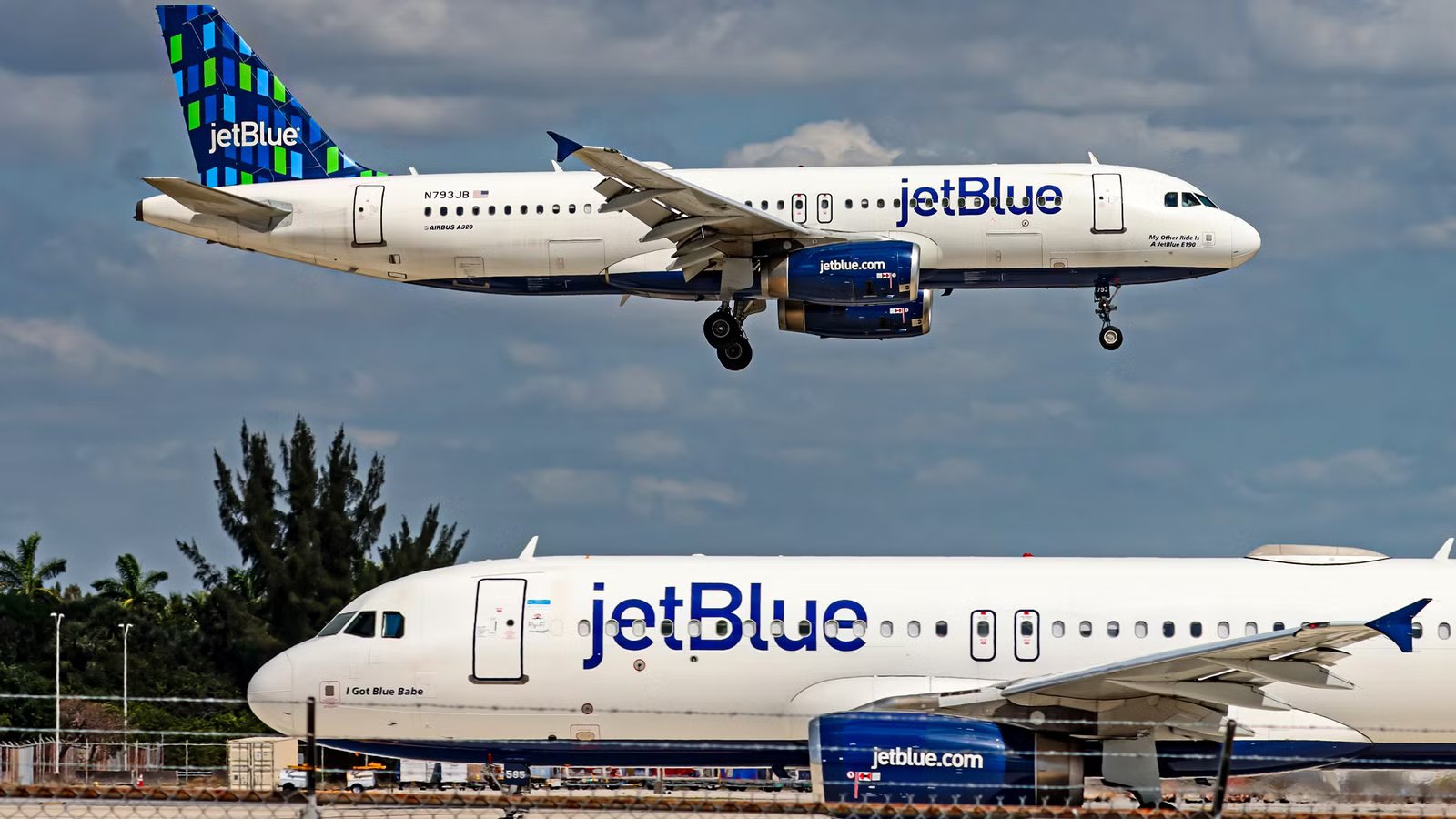
The most important number in  Fort Lauderdale-Hollywood International Airport’s (FLL) Terminal 5 saga is not the nearly $400 million increase in the project’s spending ceiling, although that figure is difficult to ignore. The bigger problem for JetBlue Airways is that the airline is now trying to operate one of its largest stations with roughly 130 to 150 daily departures, while the five-gate terminal intended to give it more room is no longer expected to be substantially complete until 2030. What was supposed to be a near-term capacity solution has therefore become a long-term constraint.
That creates an unusual situation because under its agreement with Broward County, JetBlue is managing construction of Terminal 5 at FLL, with Parsons providing project management services. The project began with a $306 million authorization in 2021, reached $404 million around the 2023 groundbreaking, and now carries an overall estimated program cost of approximately $829 million.
The Terminal Has Become A Moving Target

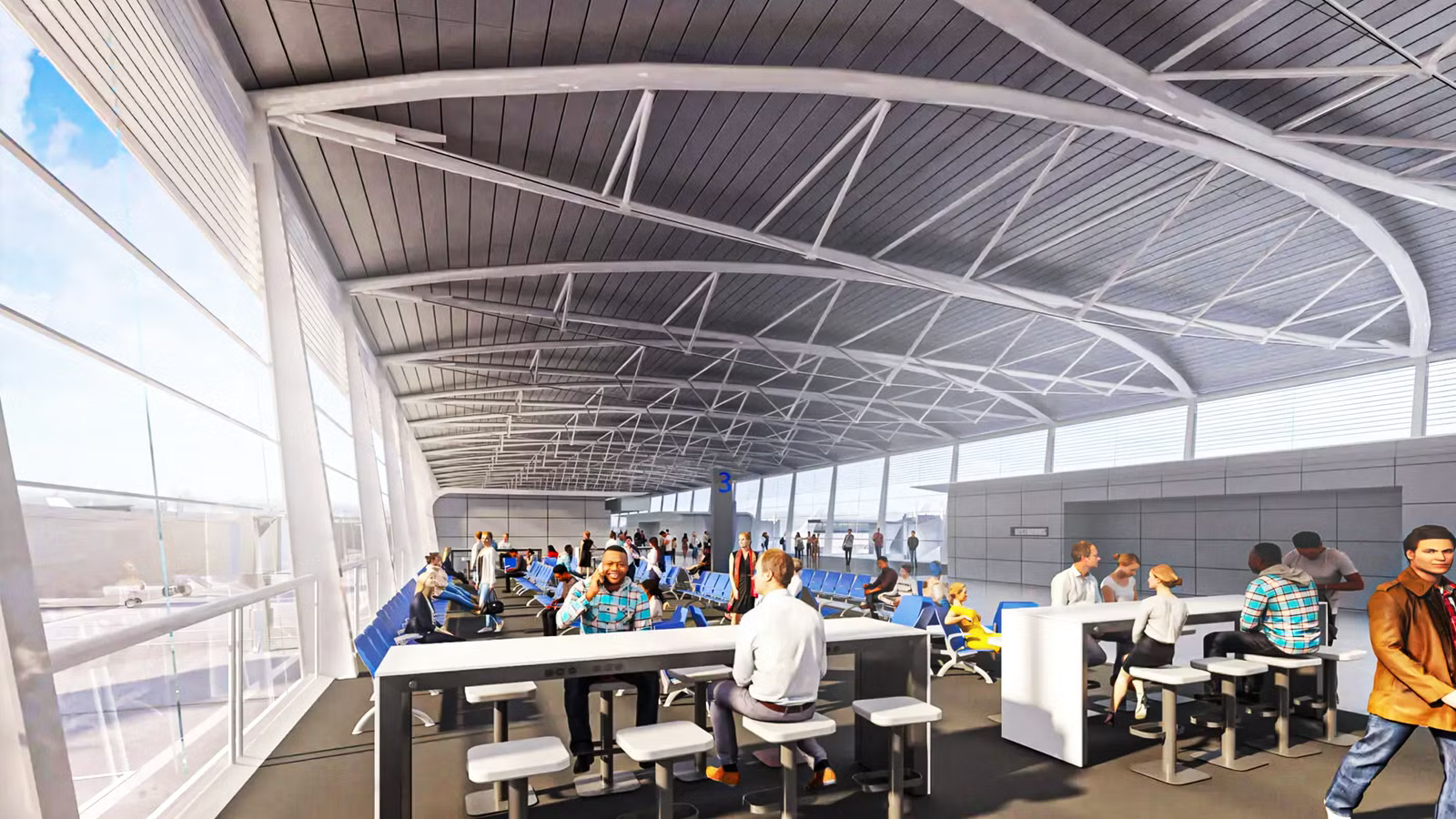
Terminal 5 was originally conceived as a relatively straightforward expansion of Fort Lauderdale-Hollywood International Airport, adding five domestic gates and roughly 230,000 square feet of terminal space east of Terminal 4. The facility includes ticketing, baggage processing, security screening, concessions, and pedestrian connections, while its aircraft-handling plan is designed around narrowbody aircraft such as the Boeing 737 MAX and Airbus A321neo, with space available also for one widebody aircraft.
When Broward County approved the JetBlue agreement in June 2021, the not-to-exceed amount was $306 million and substantial completion was scheduled within 890 calendar days after the third notice to proceed. By the October 2023 groundbreaking, however, the project had reached a $404 million budget, and officials were targeting completion around mid-2026. At that point, the terminal was being presented as a timely response to passenger growth rather than a distant infrastructure project.
The latest county material shows how quickly that schedule and price have changed. The project rose to $654 million at the 60% design stage in 2024, with additional contingencies later taking the estimate to $699 million, while the final guaranteed maximum price for construction reached more than $702 million after negotiations in June 2026. The overall program estimate is now approximately $829 million, while a proposed amendment would raise JetBlue’s contractual ceiling from $403 million to $802 million.
Why The Price Rose So Sharply

JetBlue
Broward County’s explanation is more complicated than simply blaming construction inflation. County officials have pointed to additional program definition, changes that emerged as the design advanced, utility infrastructure that was not identified in the original scope, and broader escalation in the cost of materials and services. Moving from an early conceptual design to a fully developed construction package also exposed costs that could not have been estimated with the same precision at the beginning of the project.
The progression is significant because the original $306 million figure was not a fixed construction price for an unchanged building. The 2023 increase to $404 million reflected program modifications, construction definition, and additional utility infrastructure, while the subsequent increase to $654 million followed the 60% design review and incorporated global economic conditions. Additional contingencies then lifted the estimate to $699 million before final pricing and negotiations pushed the overall program estimate to $829 million.
The contractual ceiling and the total project estimate should also not be treated as identical figures. Broward County is being asked to authorize an additional $398 million under the JetBlue agreement, taking that agreement’s ceiling to $802 million, while the broader Terminal 5 program is estimated at $829 million. The distinction matters because the larger number includes the overall program, whereas the amended agreement establishes the amount available under the specific Broward County-JetBlue arrangement.
JetBlue Is Both Customer And Project Manager

JetBlue’s involvement makes Terminal 5 different from an ordinary airport expansion in which an airline simply waits for an airport authority to deliver new infrastructure. Broward County selected the low-cost carrier to manage the construction on the county’s behalf, and JetBlue subsequently hired Parsons for program-management support. Parsons described the assignment as helping JetBlue implement the design and construction of a new five-gate terminal.
The arrangement does not mean JetBlue is acting without county oversight. Broward County Aviation Department continues to review and approve designs and invoices, while the agreement requires JetBlue to follow county contracting requirements and other applicable programs. Still, operationally and strategically, the airline has a much closer connection to the project’s delivery than an ordinary tenant would have, which makes the delayed opening particularly consequential for its own growth plans.
That connection is especially awkward because JetBlue planned its Fort Lauderdale strategy around future capacity that Terminal 5 was supposed to provide. In 2023, the airline said the expansion would help it reach more than 250 daily departures by 2027 following its planned merger with Spirit Airlines. The merger subsequently collapsed, but JetBlue has continued expanding at Fort Lauderdale-Hollywood International Airport, making the terminal delay relevant even though the original strategic assumptions have changed.
The Airline Has Already Filled The Available Space

JetBlue is no longer operating at the scale it envisioned during the proposed Spirit Airlines merger, but its current Fort Lauderdale operation is still substantial. In July 2026, the airline said it was operating more than 125 daily departures and expected to reach approximately 150 daily flights during the winter. Since Spirit Airlines’ collapse in May 2026, JetBlue’s expansion at the airport has included new services to destinations such as Barranquilla (BAQ), Cali (CLO), Indianapolis (IND), and San Diego (SAN), reinforcing Fort Lauderdale-Hollywood International Airport as a major component of the carrier’s Florida network.
The issue is that those additional flights have to be accommodated within the existing terminal footprint while the additional five gates remain unavailable. JetBlue currently operates from Terminals 3 and 4 at Fort Lauderdale-Hollywood International Airport, meaning its growth is being layered onto infrastructure that was already serving a large operation before the new terminal arrived. The additional capacity promised by Terminal 5 therefore cannot simply be pulled forward because the airline wants to add flights sooner. Data from the US Bureau of Transportation Statistics shows that Hartsfield-Jackson Atlanta International Airport (ATL) was the busiest domestic destination from the airport last year:
Ranking | Destination | Passengers |
|---|---|---|
1 | Atlanta (ATL) | 1,161,000 |
2 | Newark (EWR) | 699,000 |
3 | New York LaGuardia (LGA) | 684,000 |
4 | New York JFK (JFK) | 548,000 |
5 | Chicago (ORD) | 527,000 |
Operational data illustrates why that matters. Recent flight information for JetBlue at Fort Lauderdale-Hollywood International Airport showed a 70% on-time rate over the three months through September 13, 2026, with 14% of flights classified as having major delays and an average delay of 26 minutes. Those figures do not establish that the terminal project caused the delays, but they show the limited operational margin surrounding a fast-growing station while the physical expansion remains unfinished.
What JetBlue Can Do Before 2030

RECARO | Simple Flying
The obvious contingency is to moderate further growth until additional gates become available, but that would represent a significant change from the expansion strategy JetBlue has publicly pursued in 2026. The airline has described Fort Lauderdale-Hollywood International Airport as one of its largest hubs and has deliberately added routes and frequencies, so holding the schedule flat could preserve infrastructure flexibility while simultaneously limiting the benefits of the network it has spent the year building.
Another option is to extract more productivity from existing gates through scheduling, aircraft utilization and tighter coordination between arriving and departing flights. That approach can create incremental capacity without building a new gate, but it also reduces the amount of slack available when weather, maintenance, crew timing, or aircraft availability disrupts the schedule. At a station already handling a large daily operation, a few minutes of delay can therefore become a network problem rather than an isolated inconvenience. Prior to Spirit Airlines’ collapse, JetBlue was the second-largest airline at the airport by market share, ahead of third-placed  Delta Air Lines:
Ranking | Airline | Market Share |
|---|---|---|
1 | Spirit Airlines | 24.9% |
2 | JetBlue | 23.0% |
3 | Delta Air Lines | 12.7% |
4 | Southwest Airlines | 9.3% |
5 | United Airlines | 7.9% |
JetBlue can also shift some growth elsewhere in South Florida, particularly if it wants to preserve market access without adding as much pressure to Fort Lauderdale-Hollywood International Airport. Yet the airport has a particular strategic role because of its location, local customer base, and existing JetBlue presence, while Miami International Airport remains a fundamentally different operating environment. Moving flying away from Fort Lauderdale would therefore change the proposition rather than simply substitute one gate for another, and it would not make the four-year Terminal 5 delay disappear.
Does The Fort Lauderdale Alternative Still Work?

Fort Lauderdale’s appeal to JetBlue has always rested partly on offering South Florida access without relying entirely on  Miami International Airport (MIA). The airline’s current expansion demonstrates that the facility remains commercially relevant to JetBlue, with more than 125 daily departures in the summer and approximately 150 expected by the end of 2026. The carrier has continued adding destinations following the collapse of the ultra-low-cost carrier Spirit Airlines.
What changes with a 2030 opening is the timing of that strategy. A terminal designed to accommodate growth over the coming years was originally expected to enter service in 2026, meaning JetBlue could have expanded into new gates as its schedule grew. Instead, the airline must bridge several years with its current terminal footprint, while competitors including  Southwest Airlines and Spirit Airlines continue to have their own established presence at Fort Lauderdale-Hollywood International Airport. The airport’s broader growth also means the pressure is not limited to one carrier.
Terminal 5 is still intended to add meaningful capacity when it finally arrives, with Broward County describing the five-gate facility as part of the airport’s master-plan response to rising passenger demand. The immediate question is therefore less whether the building will eventually be useful and more what JetBlue can do between now and then. For an airline that is simultaneously the terminal’s principal intended user, its construction manager, and Fort Lauderdale-Hollywood International Airport’s largest operator, 2030 turns what was supposed to be an expansion project into a four-year exercise in managing around infrastructure that is not yet available.