dailynewsnblog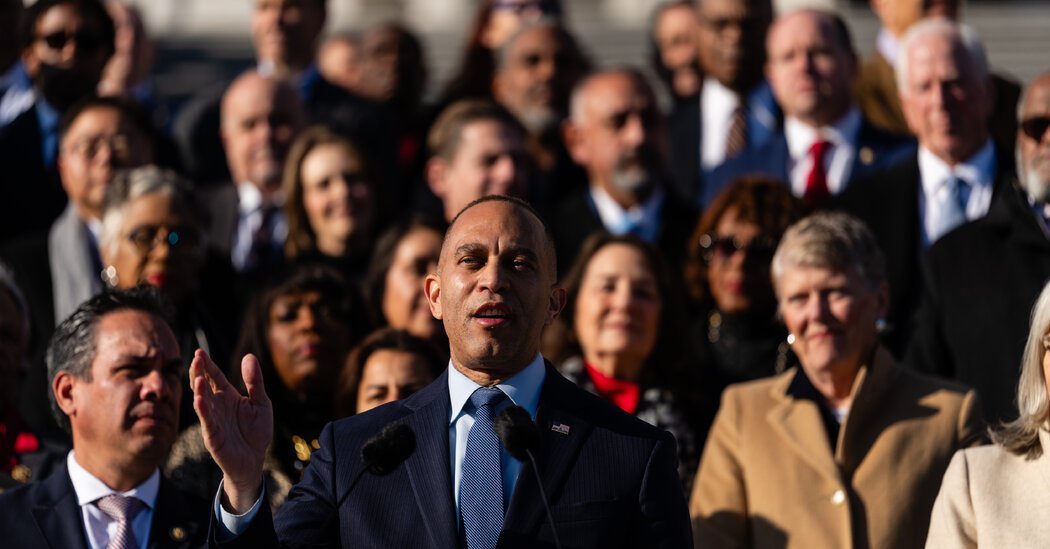
Just days after she was elected to Congress in 2018, Alexandria Ocasio-Cortez joined protesters outside Nancy Pelosi’s office, urging the speaker-in-waiting to take more aggressive action on climate change.
More than 50 people were arrested that day as Ms. Ocasio-Cortez, who had won her seat after upsetting one of Ms. Pelosi’s loyal lieutenants in a primary, told reporters she had not yet decided whether she would support the longtime party leader for speaker in January. (Eventually, she did.)
Now Representative Hakeem Jeffries, the New York Democrat who succeeded Ms. Pelosi as party leader and is in line to be speaker if his party wins the House in November, is facing a similar challenge.
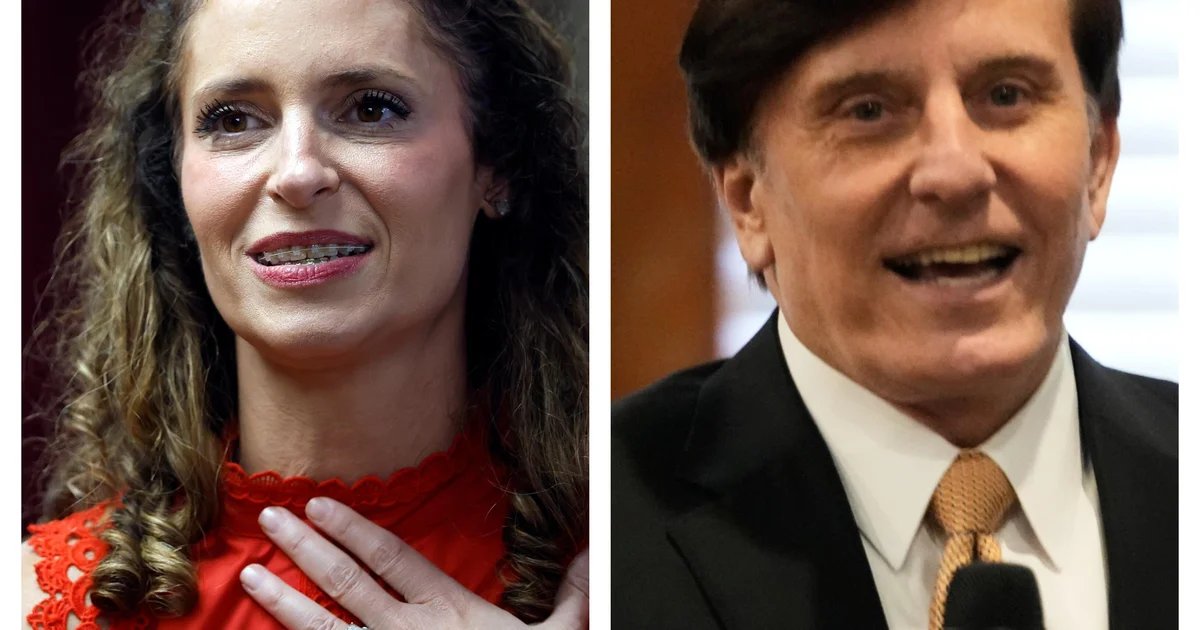
This time it is Darializa Avila Chevalier, the 32-year-old Democratic Socialist who defeated a longtime ally of Mr. Jeffries in a New York primary this week. She is now the most polarizing face of a new crop of far-left progressives across the country who are changing the face of the House’s Democratic caucus in ways that could pose a major challenge for their leaders.
Mr. Jeffries, who has led House Democrats since 2022, is poised to become the first Black speaker next year. With no other Democrat currently stepping forward to challenge him, it is unlikely the incoming faction of anti-establishment members would block his path.
But they could make his job very difficult, stoking the same kind of bitter divisions that have made the House Republican majority ungovernable in recent years.
Last week, Ms. Avila Chevalier scored an upset primary victory against Representative Adriano Espaillat of New York, the chairman of the Congressional Hispanic Caucus and one of Mr. Jeffries’s close confidants, whom he backed vigorously in his re-election campaign.
And like Ms. Ocasio-Cortez before her, Ms. Avila Chevalier is making no promises about supporting Mr. Jeffries or any other of her party’s leaders.
“That’s a conversation I’ll be having with my coalition, my community,” she said on Thursday on MS NOW when asked whether she would back Mr. Jeffries for speaker. “I will be looking at what makes most sense in terms of the strategy for how to deliver for New Yorkers.”
Many democratic socialist candidates like Ms. Avila Chevalier view Mr. Jeffries with particular aversion, regarding him as an establishment politician who has purposefully held back some of their progressives goals. They also see him as someone too closely aligned with AIPAC, the pro-Israel lobbying group that has come to be seen by many Democrats as politically radioactive.
Mr. Jeffries will have to negotiate with Ms. Avila Chevalier and like-minded Democrats for their votes. But it’s not clear what they want and what he will be able to offer. And he is under competing pressures from more centrist Democrats, who have privately warned him that the party will get flattened if he goes too far in appeasing the left.
How much power Ms. Avila Chevalier and other far-left Democrats will have to make demands of Mr. Jeffries will depend in large part on the size of the margin that Democrats have in the House. But there appears to be a growing bloc of anti-establishment progressives who could cause trouble for Mr. Jeffries next year if the party’s majority is small.
In Colorado next week, Representative Diana DeGette, a 30-year veteran of Congress, is facing a serious primary challenge from a 29-year-old democratic socialist and first-time candidate, Melat Kiros. In Pennsylvania, Chris Rabb, an anti-establishment candidate aligned with the Democratic Socialists of America, won his primary last month in a solidly Democratic Philadelphia district, all but assuring his election. And in central New Jersey, Adam Hamawy, a progressive who ran on abolishing ICE and dismantling the Department of Homeland Security, won the primary to succeed the retiring Representative Bonnie Watson Coleman.
Should they prevail and Democrats win control, they could pose a steep test for a new speaker who has never guided his party in the majority.
Ms. Avila Chevalier also appears to be more of a wild card than Ms. Ocasio-Cortez ever was. Her archive of deleted social media posts includes ones that used profane language to criticize the Democratic Party and leaders like former Vice President Kamala Harris, questioned the reported origins of the Covid-19 pandemic, and disparaged interracial relationships. She campaigned on a hard-line anti-Israel platform and has called for the abolition of prisons, favors open borders and wants an end to deportations.
She will arrive in Congress with no loyalty to any Democrat in leadership or the party, which did not support her. Her view of Israel was shaped by living for months in the West Bank.
Back in 2019, Ms. Pelosi managed, with some difficulty, to establish a working relationship with Ms. Ocasio-Cortez and a band of like-minded women of color who dubbed themselves “The Squad.” But the former speaker had a once-in-a-generation political talent for shutting down revolts and bending holdouts to her will, as well as decades of experience leading the Democratic caucus under her belt.
Mr. Jeffries, who has kept the caucus mostly united in the minority over the past four years, has yet to be tested as speaker, and many colleagues view him as stylistically remote. His style, so far, has been less cutthroat than Ms. Pelosi’s, and Democrats often grumble that they don’t hear directly from him the way they used to hear from her.
He has had some success in making allies of the progressives currently in Congress. Ms. Ocasio-Cortez serves on his task force addressing the critical issues of affordability and health care, and Mr. Jeffries gave her a coveted seat on the Energy and Commerce Committee.
After Ms. Avila Chevalier’s victory last week, it was Representative Katherine M. Clark of Massachusetts, the No. 2 Democrat, who reached out to her, not Mr. Jeffries himself.
Some progressives said they were not worried about the far left subjecting Mr. Jeffries to the same dysfunction that has reigned in the House G.O.P. as far-right Republicans have made life impossible for Speaker Mike Johnson and a long line of Republican speakers before him.
“They want to break things,” said Representative Greg Casar of Texas, the chairman of the Congressional Progressive Caucus, said of ultraconservative Republicans. “You just need one or two people to break in Congress. Progressives want to pass legislation, and that takes 218 votes.”
Mr. Casar added: “Freedom Caucus members deliver to their base by stopping action on the floor, by nothing happening. If we want a higher minimum wage, to create union jobs, to regulate big tech, we have to get to 218 votes.”
Former Representative Jamaal Bowman of New York conceded there would be “points of contention” between Ms. Avila Chevalier and Democratic leaders. But he said she was not coming to Congress to oust Mr. Jeffries or any other party leader.
“Darializa is an educator, a community organizer, who really wants to make our democracy better,” Mr. Bowman said. “She’s not there to just pop off for the sake of popping off just because you want to rabble-rouse against your leader.”
And Brad Lander, another progressive who won his primary this week against a more mainstream Democrat, Representative Dan Goldman of New York, said it was time to end party infighting and unite around Mr. Jeffries and an affordability agenda.
But he also suggested that Mr. Jeffries would have to shift on some critical issues, including embracing a push in his ranks to cut off military aid to Israel, to keep his caucus unified enough to achieve major priorities.
“People feel like the system is rigged and want to see some real substantive, concrete change,” Mr. Lander said in an interview. “And yes, people don’t want to keep sending military aid to Israel. We have a lot more to gain on making progress on those things than on factional fighting.”
Some said the test for Mr. Jeffries is starting now.
“A lot are looking to see how he tamps down a lot of the nastiness coming from key people in the Democratic Party,” said Representative Pramila Jayapal of Washington, a former chairwoman of the Progressive Caucus, referring to disparaging comments by the former party chair Jaime Harrison and the strategist James Carville about the far-left candidates prevailing in their primaries.
But she also noted that rifts between leaders and the left were nothing new in Congress.
Ms. Jayapal recalled a tough negotiation with leadership in 2019 as she withheld her vote on a rules package that needed to pass for the new Congress to get underway. In a series of frantic, last-minute calls before the vote, she asked for a public commitment from Ms. Pelosi that she could hold a series of hearings about Medicare for All. Ms. Jayapal got her hearings, and Ms. Pelosi got her critical vote.
“Jeffries will have to do that” to round up the votes for speaker and to get things done should he win, Ms. Jayapal said.
But she added that Mr. Jeffries also had work to do “untangling himself” from AIPAC and big money.
“AIPAC is toxic to our brand,” she said. “He’s going to have to figure out how to navigate that.”