dailynewsnblog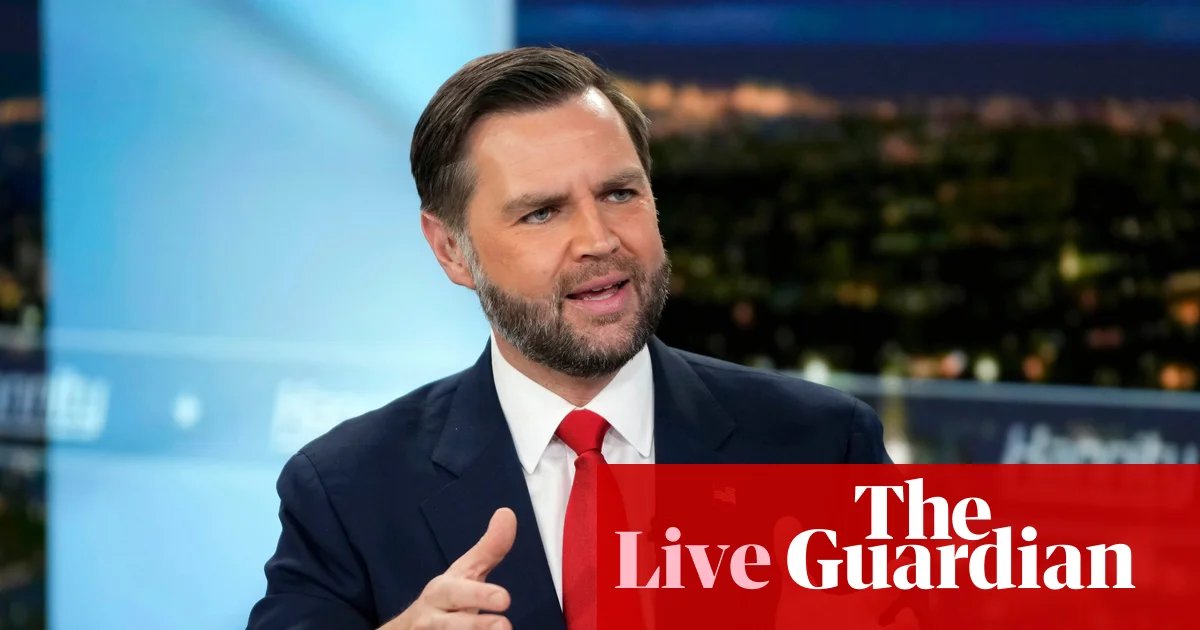
Iranian foreign minister says ending Israel’s war on Lebanon ‘most important issue’ in US deal
Speaking to diplomats in Tehran, Iran’s foreign minister, Abbas Araghchi, warned that any Israeli attack on Lebanon or continued presence on the country’s territory constituted a violation of the agreement with the US.
“The important point I want to emphasise here is that in our view, there are two parties to this memorandum – one side is America and Israel, and the other side is Iran and Hezbollah,” Araghchi said.
“This is perhaps the most important issue in the memorandum – the declaration of an immediate and permanent end to the war on all fronts, including in Lebanon,” he said, as he confirmed that Tehran and Washington will start a new round of negotiations on Friday in Switzerland.

This is scheduled to happen after the memorandum of understanding is signed in Geneva at a ceremony attended by the US vice-president, JD Vance, and the chief Iranian negotiator, Mohammad-Bagher Ghalibaf.
Even though the intensity of Israeli strikes on Lebanon has decreased since the announcement of the framework US-Iran deal, analysts say it is very unlikely they will stop altogether.
Israeli prime minister, Benjamin Netanyahu, said Israel would not leave the territory it was occupying in Lebanon despite the ceasefire agreement and has insisted on the right to protect northern Israeli communities from Hezbollah’s rockets and drones.

Israel says it is targeting Hezbollah assets and fighters but regularly kills civilians and destroys civilian infrastructure in broad attacks across southern Lebanon which have been carried out with effective impunity. But since Iran tied Lebanon to its negotiations with the US, Netanyahu, who is reliant on Washington for military and diplomatic support, has been forced to listen to Trump, at least somewhat.
Hezbollah, meanwhile, credited Iran with a “major achievement” in reaching the agreement, which it said could lead to “the full liberation of our land” and the “return of our prisoners to their homeland and families”.
Along with praising the deal, the Iranian-backed Lebanese militant group said it was committed to resisting Israel “until full withdrawal is achieved”.
Key events
Reports of continued Israeli shelling in Lebanon despite US-Iran agreement
Despite Iran warning that continued Israeli attacks on Lebanon will violate the agreement with the US, Lebanon’s state-run National News Agency (NNA) reported Israeli artillery shelling targeting the outskirts of al-Rayhan in Jezzine, a district in southern Lebanon, this morning.
The NNA also reported that a drone targeted a van in the Bint Jbeil district, also in southern Lebanon. There were no immediate reports of any casualties in both cases and we have not yet been able to independently verify these reports.
Overnight, Hezbollah reportedly claimed responsibility for attacking Israeli soldiers advancing towards Kfar Tebnit, a town around four miles north of the Litani river and close to the city of Nabatieh in the south.
Gaza’s health ministry said in its latest update that at least five people were killed and eight others injured in Israeli attacks across the territory over the past day.
The health ministry says 997 people have been killed in Israeli attacks since the ‘ceasefire’ between Israel and Hamas came into effect in October 2025.
It says that 73,008 people, many of whom were women and children, have been killed in Israeli attacks across Gaza since October 2023, when Israel launched its assault on the territory following the Hamas-led attack on southern Israel on 7 October 2023, in which about 1,200 people were killed and 251 taken hostage.
The Guardian’s international security correspondent, Jason Burke, has written an interesting piece of analysis about how the interim US-Iran deal doesn’t address any of the region’s deeper issues, leaving analysts predicting instability and war could soon return. Here is an extract from his article:
The interim deal now agreed does little more than commit both sides to further talks, while obliging Washington to lift its naval blockade of Iran and making Tehran allow free passage to all shipping in the strait of Hormuz, which usually carries a fifth of the world’s oil and liquid gas supplies but was blocked by Iran early in the war.
To the great displeasure of Israel, a ceasefire has been imposed once again in Lebanon as part of the interim deal and appears for the moment to be holding.
But such ceasefires count for little these days, said several experts, pointing to Gaza as an example, where almost 1,000 Palestinians have been killed since Donald Trump brokered an end to the war there last year. Israel has occupied more than 60% of the territory, Hamas has not given up its weapons, and there has been almost no progress towards a projected second phase of the deal, let alone the third, which was to have brought a massive reconstruction effort.
“Gaza is a case in point. The deal there didn’t contend with the past: the war crimes that had been committed. Nor the present: how to disarm Hamas. Nor the future: a pathway to a viable Palestinian state and a resolution of the conflict,” said Alia Brahimi at the Atlantic Council in Washington. “It’s almost as if … you can use the cover of a ceasefire to continue to achieve your aims, including military ones.”
The Iranian foreign minister, Abbas Araghchi, said the first round of talks with the US will cover issues including the status of the strait of Hormuz, the US’s naval blockade and reconstruction.
Then, at a later stage, he said negotiations will focus on issues such as Iran’s nuclear programme and sanctions relief that are hoped to be resolved in a final agreement.
Iranian foreign minister says ending Israel’s war on Lebanon ‘most important issue’ in US deal
Speaking to diplomats in Tehran, Iran’s foreign minister, Abbas Araghchi, warned that any Israeli attack on Lebanon or continued presence on the country’s territory constituted a violation of the agreement with the US.
“The important point I want to emphasise here is that in our view, there are two parties to this memorandum – one side is America and Israel, and the other side is Iran and Hezbollah,” Araghchi said.
“This is perhaps the most important issue in the memorandum – the declaration of an immediate and permanent end to the war on all fronts, including in Lebanon,” he said, as he confirmed that Tehran and Washington will start a new round of negotiations on Friday in Switzerland.
This is scheduled to happen after the memorandum of understanding is signed in Geneva at a ceremony attended by the US vice-president, JD Vance, and the chief Iranian negotiator, Mohammad-Bagher Ghalibaf.
Even though the intensity of Israeli strikes on Lebanon has decreased since the announcement of the framework US-Iran deal, analysts say it is very unlikely they will stop altogether.
Israeli prime minister, Benjamin Netanyahu, said Israel would not leave the territory it was occupying in Lebanon despite the ceasefire agreement and has insisted on the right to protect northern Israeli communities from Hezbollah’s rockets and drones.
Israel says it is targeting Hezbollah assets and fighters but regularly kills civilians and destroys civilian infrastructure in broad attacks across southern Lebanon which have been carried out with effective impunity. But since Iran tied Lebanon to its negotiations with the US, Netanyahu, who is reliant on Washington for military and diplomatic support, has been forced to listen to Trump, at least somewhat.
Hezbollah, meanwhile, credited Iran with a “major achievement” in reaching the agreement, which it said could lead to “the full liberation of our land” and the “return of our prisoners to their homeland and families”.
Along with praising the deal, the Iranian-backed Lebanese militant group said it was committed to resisting Israel “until full withdrawal is achieved”.
An estimated total of $24bn (£17.9bn) in frozen Iranian assets are due to be released in four instalments as part of the US-Iran deal, a source has told Israeli newspaper Hareetz.
The assets will reportedly only be released if Iran allows for the toll-free reopening of the strait of Hormuz and agrees on certain “understandings” in relation to the nuclear talks set to begin.
A Pakistani source said the money could be transferred to Iran under a pretext of economic assistance such as to help fund mine clearing operations in the strait of Hormuz (in order to make it a more palatable sell to the US public and sceptical lawmakers).
Iran’s Mehr news agency reported the US would release $12bn in frozen assets to Iran before the start of negotiations.
It quoted a 14-point memorandum of understanding between the two countries, which it said stipulated “the release of 24 billion dollars in frozen Iranian assets during the 60 day negotiation period” that begins after the MoU is signed. The official text of the deal has not been made public yet and both the US and Iran are giving different versions of what has been agreed to.
The US vice president, JD Vance, denied on Monday that Iran will receive “billions of dollars of assets” as part of the deal. Vance told ‘CBS Mornings’ that while the US is “open to a lot of things that are on the table,” the $24bn figure “just doesn’t appear anywhere in any of the texts that we’ve talked about with the Iranians.”
“What we have said is that we’re willing to talk about unfreezing assets, but a much, much bigger deal is unsanctioning their economy – so long as they make the long-term commitments on the nuclear program,” Vance said.
The Guardian’s senior international correspondent, Julian Borger, gives his take on the viability of the framework peace deal, which is only the prelude of what is likely to be a fraught period of negotiations including on Iran’s much contested nuclear programme:
JD Vance admits US-Iran memorandum of understanding is a ‘very general document’
Hello and welcome to the Guardian’s continuing coverage of the US-Israel war on Iran ahead of the expected signing of the framework peace deal in a couple of days.
America’s memorandum of understanding (MoU) with Iran is “a very general document”, the US vice-president, JD Vance, has said, adding that specifics of the deal will be worked out during further negotiations.
“The MoU … is about a page and half so it is a very general document,” Vance said on CNN on Monday night, as he did the rounds of US networks to talk up the deal. “On a number of issues, we are going to have to figure this stuff out during the technical negotiation phase.”
Vance’s comments came as many Republicans on Capitol Hill said they needed more information about the agreement, with some expressing skepticism as they ask the White House for details.
“I just don’t know enough about it,” the Senate majority leader, John Thune, told reporters in the Capitol. “Even the people who follow this stuff closely up here don’t know that much about it.”
The agreement announced Sunday to end the war on Iran, set for a ceremonial signing Friday in Geneva, is centred around reopening the strait of Hormuz and lifting the US naval blockade in the region, along with financial incentives for Iran if it meets certain benchmarks.
Vance also said nuclear inspectors will return to Iran as part of the deal with Washington to end the war.
“In fact, one of the core parts of the agreement is that the IAEA [International Atomic Energy Agency] and the United States are going to help Iran destroy the highly enriched stockpile, and that’s something that’s spelled out very clearly” in the memorandum of understanding the US and Iran had already agreed to, NBC News quoted Vance as saying.
What the deal specifies about the future of Iran’s nuclear program has not yet been made clear, as the details are still to be revealed publicly and both sides have given different accounts of what has been agreed so far.
Donald Trump has repeated that “Iran will never have a nuclear weapon” while officials from Pakistan, which mediated the deal, reportedly said talks on the nuclear issue would continue over the next 60 days under the agreement.
Trump has said the US could resume attacks on Iran if it failed to reach a nuclear deal. Here are some other key developments:
With a memorandum of understanding between the US and Iran signed, Trump said the strait of Hormuz “will be completely open” by Friday. A signing ceremony is scheduled to take place on Friday in Geneva, which Trump said he will probably not attend.
The deal included a ceasefire in Lebanon but did not provide for a withdrawal of Israeli troops from areas that they occupied. Lebanon’s prime minister Nawaf Salam has said diplomatic efforts with the US are continuing in order to achieve the full withdrawal of Israeli troops from territory in southern Lebanon.
However, in his first public address after the deal signing, Israeli prime minister Benjamin Netanyahu said that Israeli forces will also remain in Gaza, Lebanon and Syria “for as long as necessary”. He also announced he would be running for relection.
Hezbollah has welcomed the memorandum of understanding between the US and Iran, saying it had resulted in a comprehensive ceasefire across all fronts, including Lebanon. In a written statement, the Tehran-backed militant group warned Israel that it would not accept any attacks that violate Lebanon’s sovereignty or targeted its people. It said Lebanon’s inclusion in the agreement reflected Iran’s commitment to ending the war.