dailynewsnblog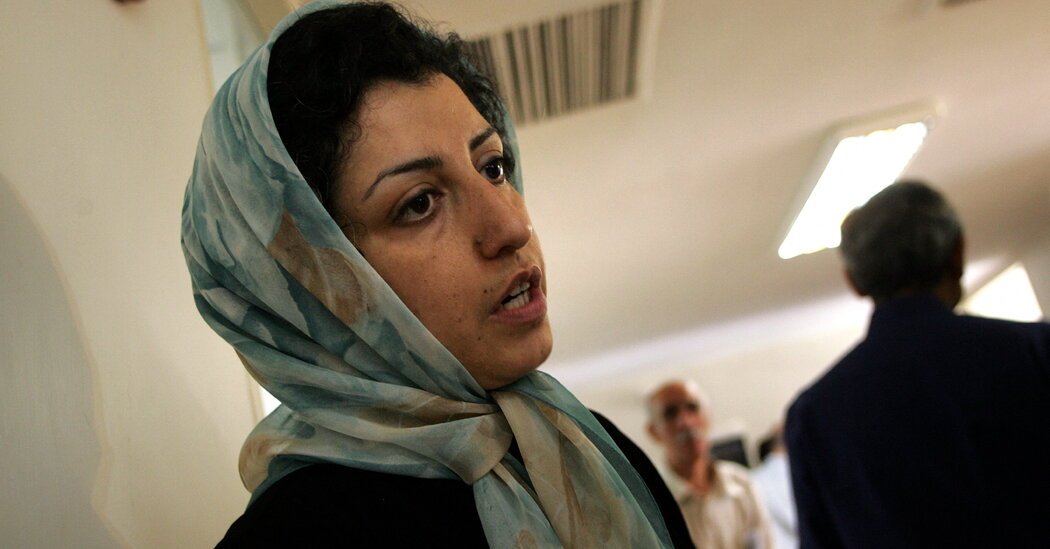
Narges Mohammadi, a jailed Iranian Nobel Peace Prize laureate and prominent human rights activist who collapsed earlier this month, has been transferred to a hospital in Tehran for treatment by her own medical team, a foundation run by her family said in a statement on Sunday.
Ms. Mohammadi, 54, has spent much of her adult life in and out of prison in Iran’s authoritarian theocracy and her health has deteriorated in recent months. She was hospitalized on May 1 in the city of Zanjan, where she had been in prison, after collapsing and losing consciousness, but requests to move her to Tehran for treatment were denied at that time.
Ms. Mohammadi spent 10 days in that hospital, before being transferred to another hospital in Tehran on Sunday, the Narges Mohammadi Foundation said.
Mostafa Nili, a lawyer for Ms. Mohammadi, said on social media on Sunday that she had been transferred to Tehran “following an order halting her sentence for medical treatment.”
The statement from the foundation called for “her unconditional freedom and the dismissal of all charges.”
“Narges Mohammadi’s life hangs in the balance,” said her husband, Taghi Rahmani, according to the foundation’s statement. “Narges must never be returned to the conditions that broke her health.”
Earlier this month, Mr. Rahmani said Ms. Mohammadi suffers from chronic heart problems and had suffered rough treatment in prison, including beatings by prison guards.
Ms. Mohammadi received the 2023 Nobel Peace Prize “for her fight against the oppression of women in Iran and her fight to promote human rights and freedom for all,” while serving a 10-year prison sentence on charges of threatening national security. Ms. Mohammadi was arrested again in December after she delivered a speech critical of the government while on a yearlong furlough from prison because of her health. In February, an Iranian court sentenced her to an additional seven and a half years in jail for her opposition to the government.
In a report accompanying an excerpt from Ms. Mohammadi’s upcoming memoir published by The Guardian on Sunday, Ms. Mohammadi was reported as saying there was “no hardship worse than illness combined with imprisonment.”
“Authoritarian regimes do not always need an executioner’s rope. Sometimes, they simply wait for the human body to fail,” she wrote.