dailynewsnblog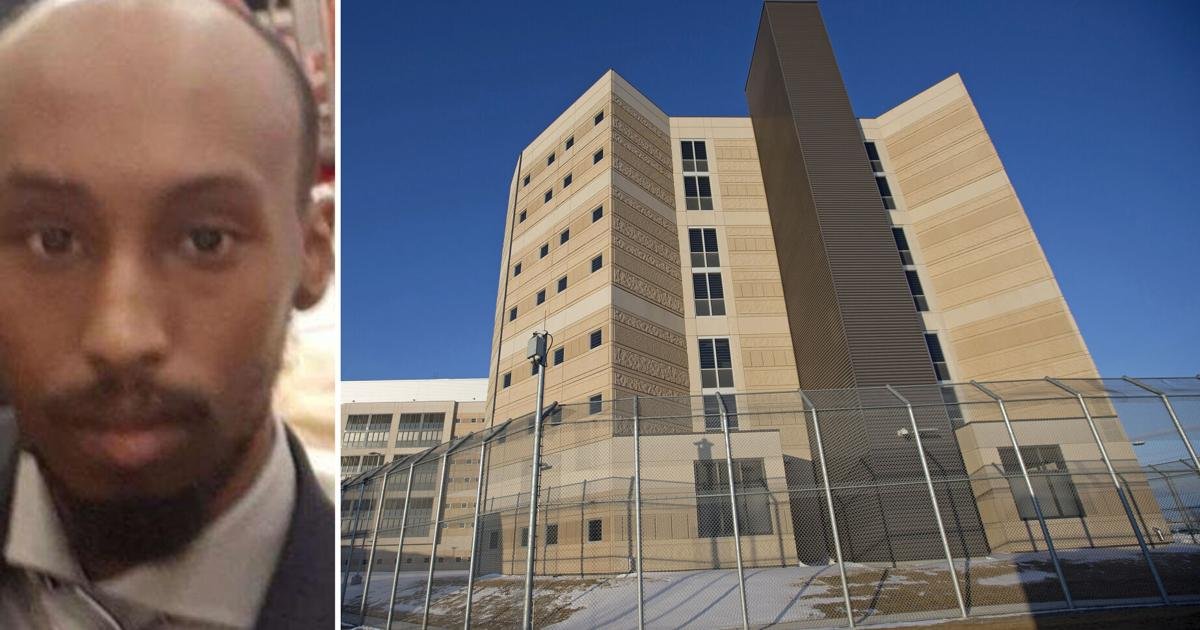
El Hasheem Samuel was under the delusional belief that his cellmate was a demon who was going to kill Samuel’s family.
On April 21, 2024, he pressed the emergency call button in his cell at the Toronto South Detention Centre, in the hopes that 31-year-old Ibrahim Ali would be removed.
But no correctional officer showed up.
And so, feeling he had no other choice to protect himself and his family, Samuel punched, kicked and stomped on the mostly immobile Ali. In the middle of the attack, Samuel again pressed the emergency button, but still no one came.
Both Samuel and Ali were suffering from serious mental illnesses during their time at the South where, like the majority of the jail’s inmates, they were being held in pre-trial custody and were legally innocent.
On Friday, Samuel, 29, was found not criminally responsible of second-degree murder due to a mental disorder in a case that has laid bare the dire state of affairs in one of Ontario’s most notorious jails, whose poor living conditions have been repeatedly condemned by the courts as inhumane.
In imposing the finding jointly requested by Crown attorneys Laura Liscio and Jackson Foreman and defence lawyers Karen Symes and Megan Andrews, Superior Court Justice Jane Kelly said it was obvious Ali was a loving brother and son.
“It is easy in such cases to simply view the victim as the deceased, and lose sight of the fact that Mr. Ali was a person who, like all of us, had hopes, dreams, and aspirations,” the judge said.
Standing in the prisoner’s box in a grey hoodie and black pants, Samuel politely waved to the court.
“Thank you so much, Your Honour,” he said. “Thank you to everyone.”
Ali’s death was a “completely avoidable tragedy,” Symes and Andrews said after court.
“Mr. Samuel did not want this to happen. He was the only one who tried to stop this from happening,” they said. “All of the systems that should have been in place to protect Mr. Ali and to protect Mr. Samuel failed them. This case makes it clear that our jails are not equipped to house individuals who are mentally ill. We are making sick people sicker, and as a result, society is less safe.”
Why Ibrahim Ali and El Hasheem Samuel were together in the same cell
Samuel, who has recently been diagnosed with schizoaffective disorder and bipolar disorder, arrived at the jail in September 2023 after his bail was revoked on charges including aggravated assault. He received medication for psychotic symptoms, but a psychiatrist testified Friday that he was likely “very under-treated” in the jail.
Ali, who suffered from schizophrenia, was initially arrested for allegedly stealing a pack of cigarettes in March 2023 from a convenience store. His mental illness made it difficult for him to abide by his bail conditions, and he continued to be arrested that year for other alleged thefts of cigarettes. He was sent to the South in October after his bail was revoked.
He was a bright child who was accepted into several universities, only to begin to struggle with his mental illness near the end of his degree in chemical engineering at Toronto Metropolitan University.
Father Abdi Osman and mother Khadra Dore both recounted how they rushed back from a trip to Somalia to find their son brain-dead and on life support.
“We had crossed the world to reach our son and what we were given was a machine keeping him alive,” Dore said. “That image — Ibrahim lying there with the bruising on his face, the injuries visible, connected to those machines — is something I will never be free of. It is in my mind every single day. It comes to me at night.”
Ali’s parents said they were faced with the decision no parent should ever have to make: removing their child from life support.
Osman said his fear is that his son becomes just a name in a file. “I’m asking this court to remember that a young man lost his life, that his parents had to make an impossible decision, and that we have been living with the consequences of that every single day since April 2024.”
Abdirahman Ali described his older brother as his role model, with whom he spoke by phone almost every day he was in jail. Younger brother Abdullahi Ali described Ibrahim as one of the most intelligent members of the family.
“It’s almost like we lost half our brain,” he said. “He was incredibly important, maybe not to the world, but to this family.”
Hartman and Dawson said the men should never have been put in the same cell together.
“And once they were in the same cell, they were entitled to be supervised in compliance with the law,” the lawyers said. “That didn’t happen, and (Toronto South) failed both these men.”
El Hasheem Samuel’s symptoms
Dr. Lemmie Odell Tan, one of the forensic psychiatrists who assessed Samuel, testified that he reported telepathic communications from Ali. He also experienced hallucinations that he was hearing and seeing a cousin with whom he believed he had a child, and that the cousin told him Ali was a demon who was going to harm them.
He thought that if Ali could simply be removed from his presence, then there would be no danger, Tan testified. “But with no response to the emergency call button, he’s left with the singular option of physically defending himself.”
Tan concluded that Samuel didn’t know that his beating of Ali was morally wrong, hence he was not criminally responsible; a psychiatrist hired by the Crown, Dr. Alina Iosif, concurred.
The finding of not criminally responsible means that Samuel will remain detained in hospital and fall under the jurisdiction of the Ontario Review Board, which will decide annually whether his detention should continue or if he should be released with conditions.
The details of Ali’s final hours at the South are documented in a statement of facts agreed upon by the Crown and defence. Before reading it into the record, Foreman added a preamble: that while the Crown agrees to these facts for the purposes of Samuel’s NCR hearing, “it shouldn’t be taken as an admission that holds other Crown entities or other Crown ministries to these facts in any related proceedings.”

20 years in isolation: Part 1
Hamblett may be the person who has spent the most time in psychiatric seclusion in any Ontario
Both men’s health had been deteriorating in the lead-up to the incident. Despite being diagnosed with a mental illness and designated as a special needs inmate, Ali was repeatedly placed in segregation at the South between October 2023 and April 2024 — “despite the clear prohibition of housing mentally ill inmates in segregation for any amount of time,” says the agreed statement.
Ali was moved into cell No. 6, where Samuel was already staying, on the morning of April 21, 2024, after several days of altercations with other inmates and refusing to follow officers’ directions. He was handcuffed and “forcibly moved” to the special needs unit, where he was put on the ground in the cell.
Ali’s head was hit against the cell’s doorframe as he was moved inside; he remained on the floor for most of the day, either lying down or sitting facing the wall, with his head covered with a piece of clothing. He was “unresponsive” when correctional officers tried to speak to him.
The unit was on lockdown, meaning the men were not allowed to leave their cell at all that day. While not specified in the statement, lockdowns in Ontario jails have been frequently caused by staffing shortages.
A registered nurse, Openyemi Giwa, conducted an assessment of Ali — as required because force had been used to move him — by standing at the door “for less than one minute,” according to the agreed statement. Ali didn’t respond to questions or to a request to come out of the cell. Giwa didn’t notice any injuries.
The nurse was not told that Ali had hit his head during the transfer to the cell. Had she been told, she would have been required to initiate a “head watch” protocol, meaning Ali would have had to be checked every 10 minutes, to see if he could speak and move normally, until cleared by a doctor.
The attack on Ibrahim Ali
Samuel assaulted Ali at various points between 5:14 p.m. and 5:35 p.m. in an attack partially seen on surveillance footage of the cell door window. The attack began when Ali was standing near the door; Samuel approached him from behind and punched him repeatedly. He continued to assault him as he lay on the ground.
Less than a minute later, correctional officer Bruce Lunario walked by the cell during his normal rounds, and Samuel briefly stopped assaulting Ali. Samuel then pressed the emergency call button in the cell, but there’s no evidence Lunario was notified.
According to the agreed statement, when an inmate presses the emergency button, the officer monitoring those calls in the sub-control unit above is supposed to notify the correctional officer on the unit, and that officer is required to respond to the cell immediately.
“A correctional officer is never permitted to ignore a cell call,” says the agreed statement.
About seven minutes after the attack began, Samuel again pressed the emergency button; this time, there is evidence that Lunario was notified, but “informed sub-control that he had just completed his round and that everything seemed fine in cell No. 6.”
Lunario did not go to the cell, and the attack continued. At some point, Samuel also removed Ali’s clothing.
Samuel would later tell psychiatrists that he recalled pressing the button more than twice, which the agreed statement says is possible; it was discovered after April 21, 2024, that the electronic records of the cell calls were lost due to technical issues.
The exact number and times that the call button was pushed “cannot be determined,” says the statement.
Ali’s body wasn’t discovered until just before 6 p.m., by guard Trewayne Jones, conducting his usual rounds. Ali was taken to St. Michael’s Hospital. He was pronounced dead after being taken off life support on April 29, 2024.
“We held him as he passed,” said Ali’s mother in her victim impact statement.
“I know there was no other path. But having to be the ones to let your child go — to give that instruction, to be in that room — is a weight I do not believe will ever fully lift.”