dailynewsnblog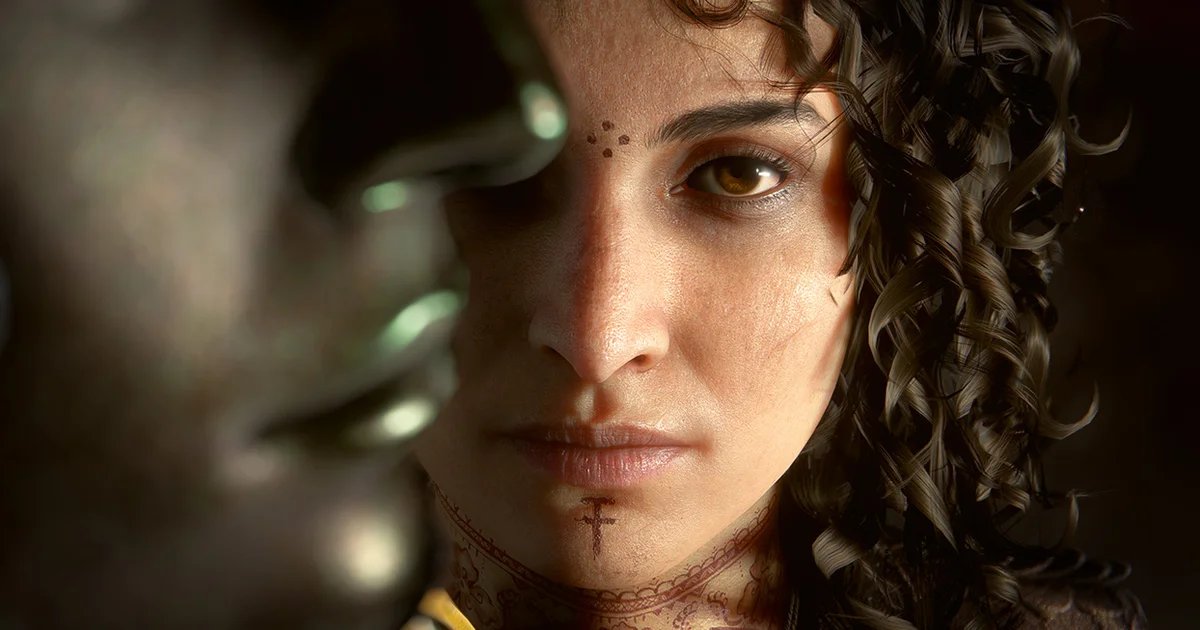
It’s all-change in Resonance: A Plague Tale Legacy. This series – known for stealth and the emotional adventures of brother and sister Hugo and Amicia in plague-ridden France – now no longer has stealth, no longer has Amicia and Hugo, and no longer takes place in France. But – and I say this as someone fond of the Plague Tale series and who’s played the new game for an hour or so – Resonance is undeniably a Plague Tale game, and a very promising one at that.
The star character is now Sophia, who we met in A Plague Tale: Requiem – an adventurer who served as a mentor figure to Amicia. All we knew of her in that game was that she can fight, she’s Greek, and she escaped a convent looking for her father when she was young, so: plenty of room to backfill a story here. In Resonance: A Plague Tale Legacy, we’re 15 years in the past, following Sophia as she explores a temple on the Greek island of Crete she used to have strange dreams about as a child. Dreams that are connected to a larger legend and, yes, the rat-controlling and rat-linked plague of the Macula.
“Legend” is an important word here, specifically the Greek legend of Theseus and the Minotaur, which this game revolves around, and there’s a dual timeline here to tell it with. There are occasions when Sophia is exploring the temple that we are whisked out of her body, back a couple of thousand years, and put into the body of Theseus himself. In effect, we play his legend – we experience what he experienced.
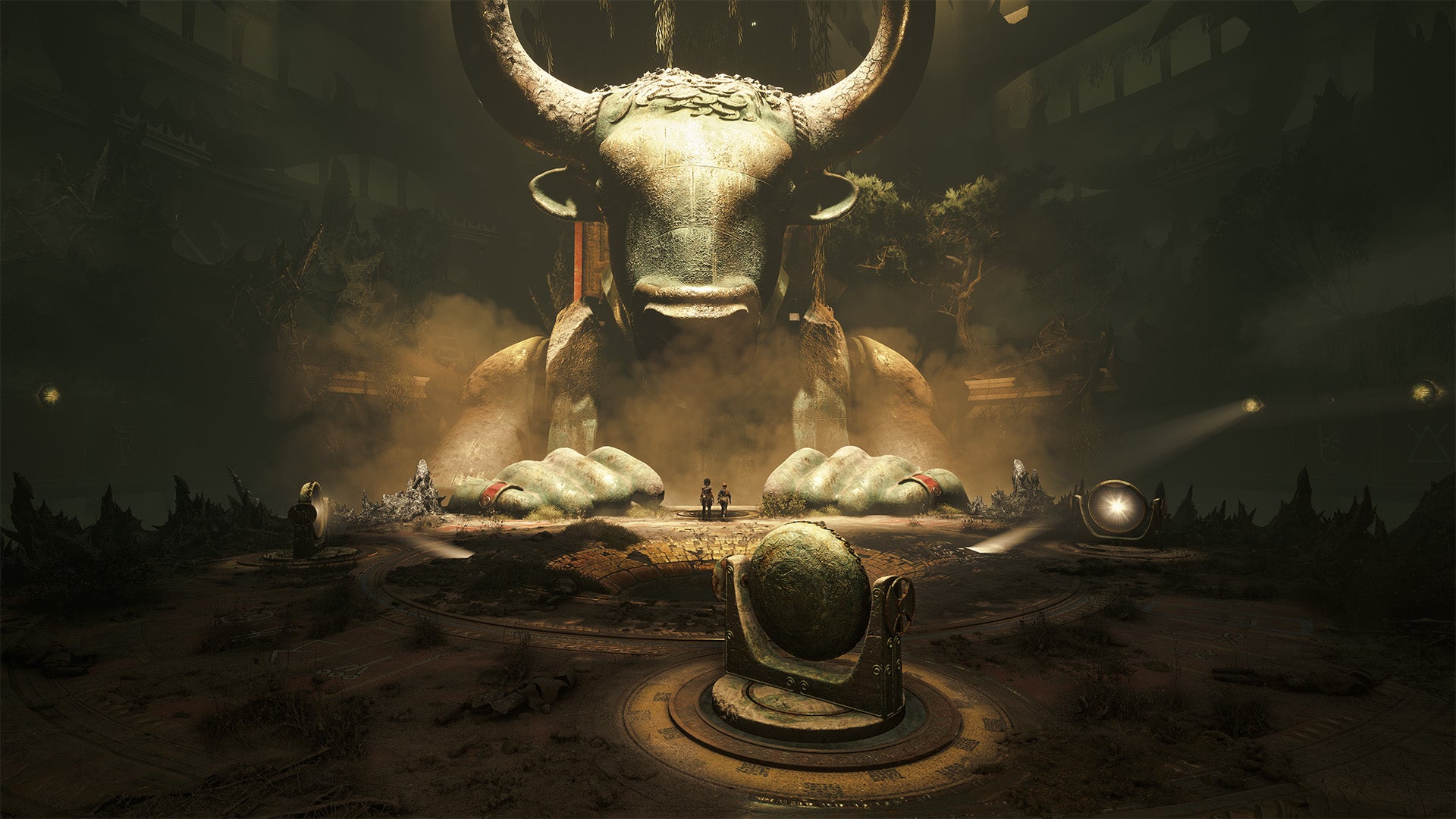
There’s a sequence near the end of the fourth chapter in the game, which I play, where Sophia walks towards a vast inner chamber with a huge Minotaur statue in the middle, and as she does so, we jump into Theseus’ body as he approaches the same place. But for Sophia, the place is empty, a ruin; whereas for Theseus, it’s packed, roaring with people here to see a gladiatorial battle that we’re going to fight in. The prize? A confrontation with, I presume, the Minotaur (I never see it, if it is).
Playing as Theseus means playing with a whole different moveset, and surviving a grand melee which involves spartan-kicking people off the edge of a doughnut-shaped platform, and chopping our way through combatants, until we’re the one victorious. It’s a heart-pounding spectacle, with drums reverberating, the bellowing voice of an announcer, and the air thick with ritual and cultish charm. It’s a thunderous change of pace from Sophia’s probing exploration of the ruins in her timeline.
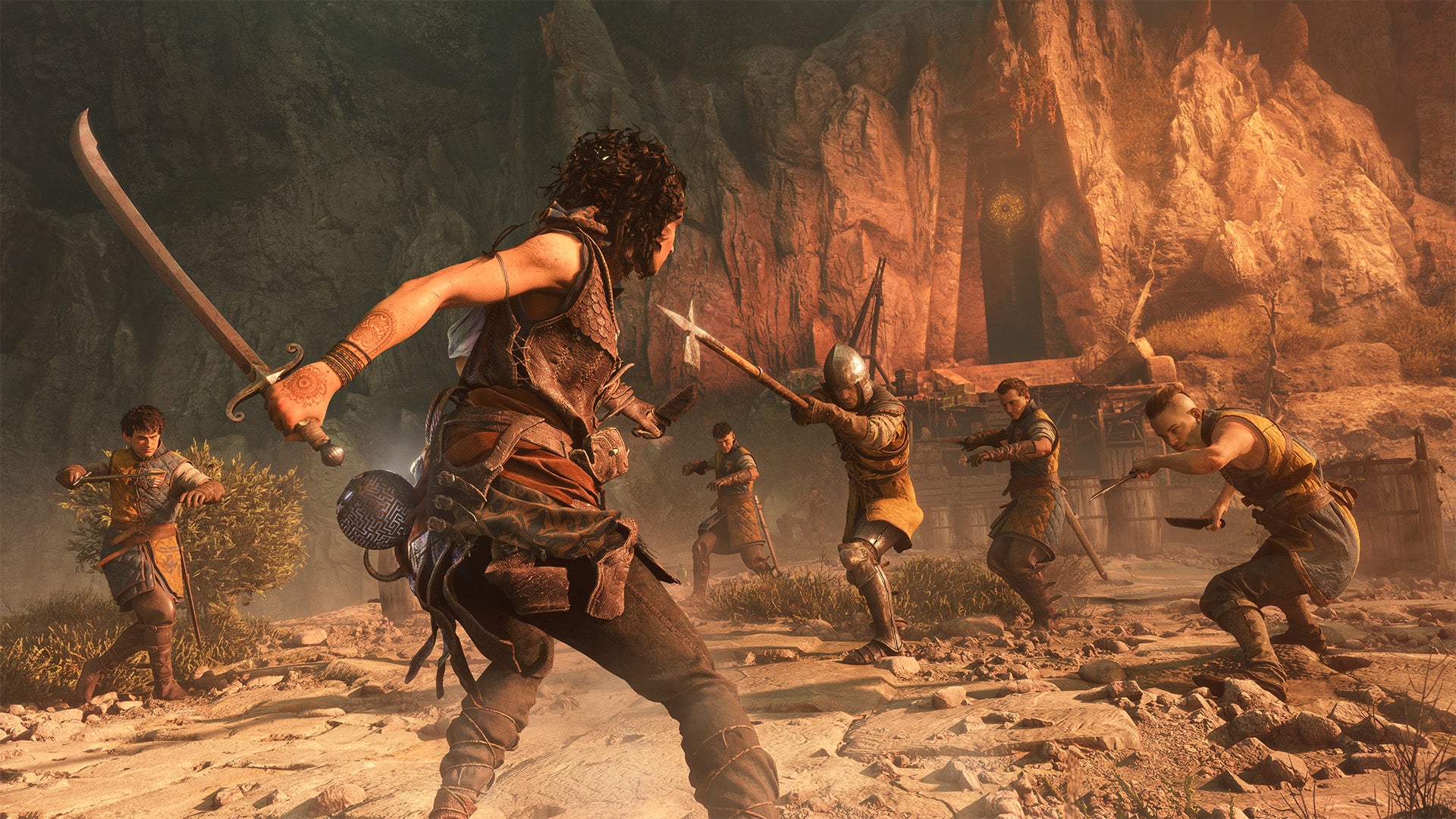
But Sophia’s no slouch in combat. Indeed, one of the biggest differences in Resonance: A Plague Tale Legacy is being primarily a combat-based game. Whereas Amicia and Hugo avoided enemies with stealth, Sophia is a head-on battle person. There is no stealth in the game, although producer Eric Chort caveats this when we talk in an interview by saying: “I can’t say too much about that! There are some mysteries. There will be something…” But bear in mind that Amicia is born the same year as this adventure takes place, so there’s no crossover potential with her showing up as a playable character.
To reiterate: this is a combat game, and it’s a surprisingly competent one, given this is developer Asobo’s first attempt. It’s been inspired by the rhythmic combat of Ghost of Tsushima and Batman Arkham and Marvel’s Spider-Man games, which I like, so providing you can master your timings, Sophia dances in a dazzlingly vicious blur of blades and strikes, stabbing and slicing and unleashing a lavishly realised repertoire of killing blows. The animation is incredibly well observed.
There’s depth here as well. There’s a surface level of blocks, parries and dodges and regular attacks, but beneath that are charged attacks, block-breakers, and a clever rope attack that deals with enemies at range, disrupting their attacks and yanking them closer (or down to whatever doom is below). There’s a small skill tree to progress in when levelling up, granting further moves, and you can collect swords that offer different combo finishers and combat possibilities. And Theseus also has his own developable moveset; I unlock a double-button area attack of his when I play, which is deliciously devastating.
Suffice to say that combat offers a broad arsenal of options to tackle packs of enemies. And they are thrown at you in challenging ways, which can be frustrating when you’re surrounded – especially when sturdier mini-boss characters enter the fray – but there’s a dance to learn. When you do, making your deadly way around a crowded battlefield can be incredibly satisfying to do. In short: it’s good.
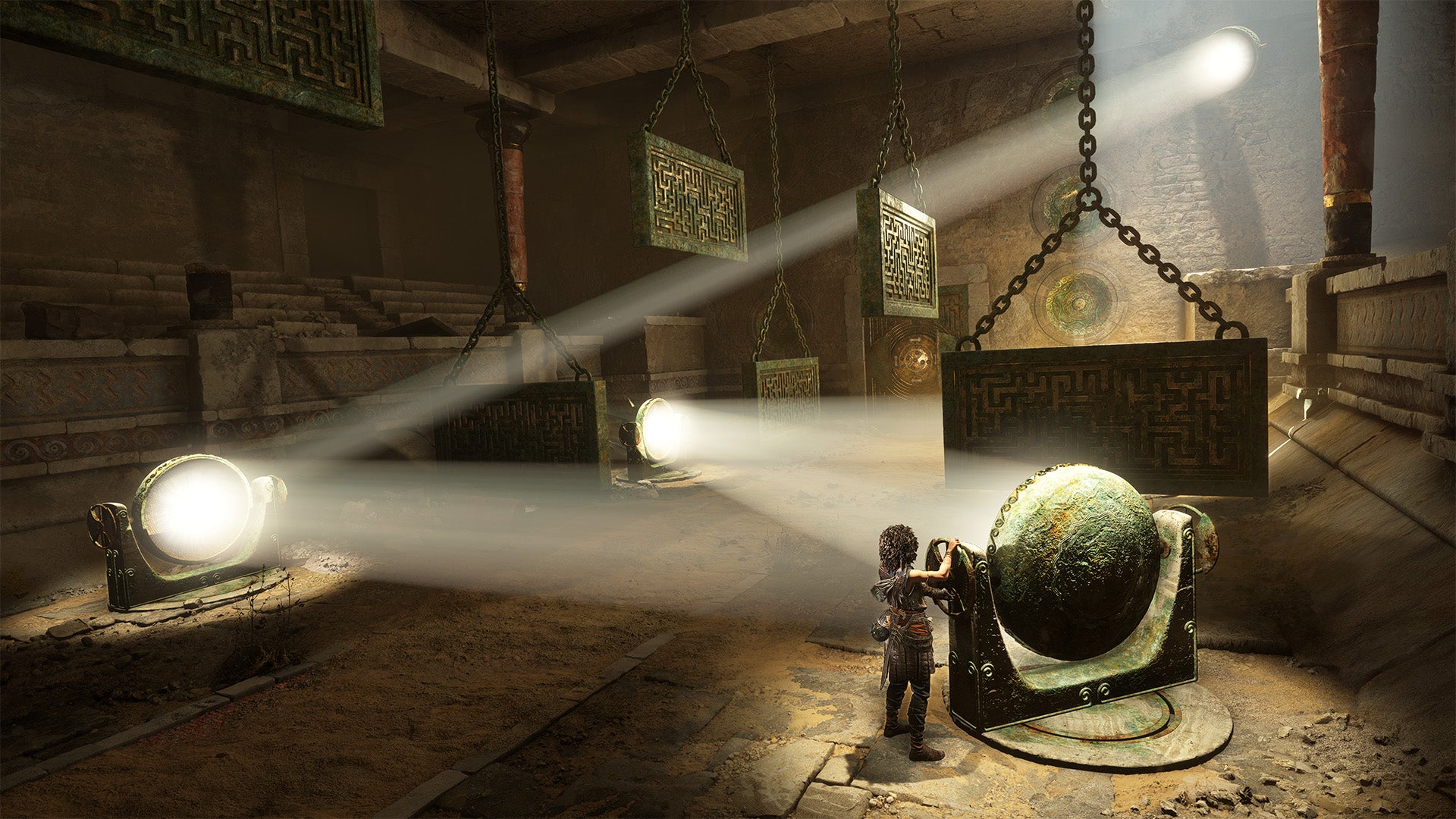
Combat forms a large part of the game, then, but it’s not all of it by any means. Puzzles and explorations are a major pursuit here, and it’s no surprise to hear that Uncharted and Tomb Raider provide major inspiration, Eric Chort says. Incidentally, the other consistent inspiration for the Plague Tale series is The Last of Us, for its emotional storytelling, which remains as true here as in the two games.
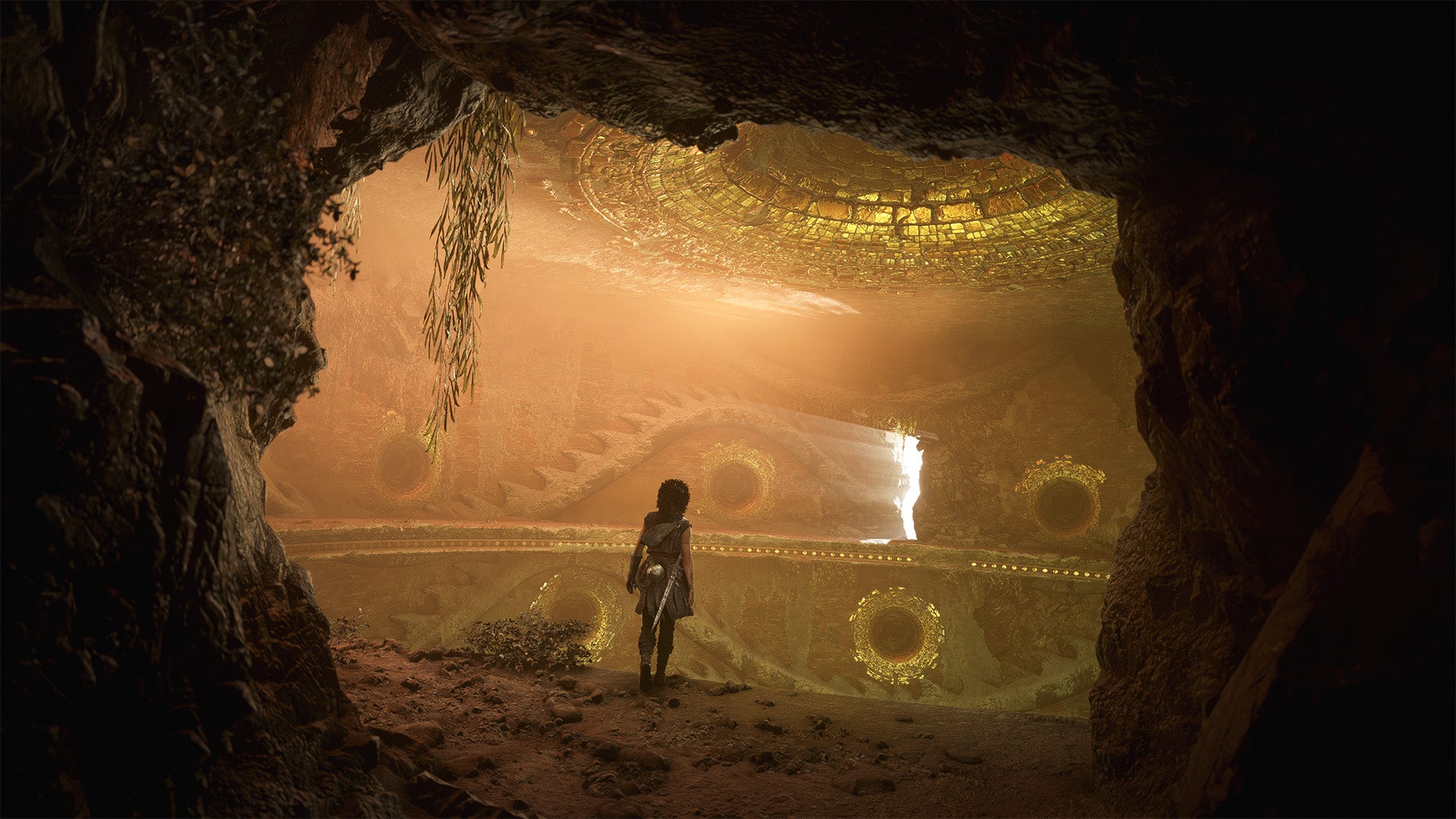
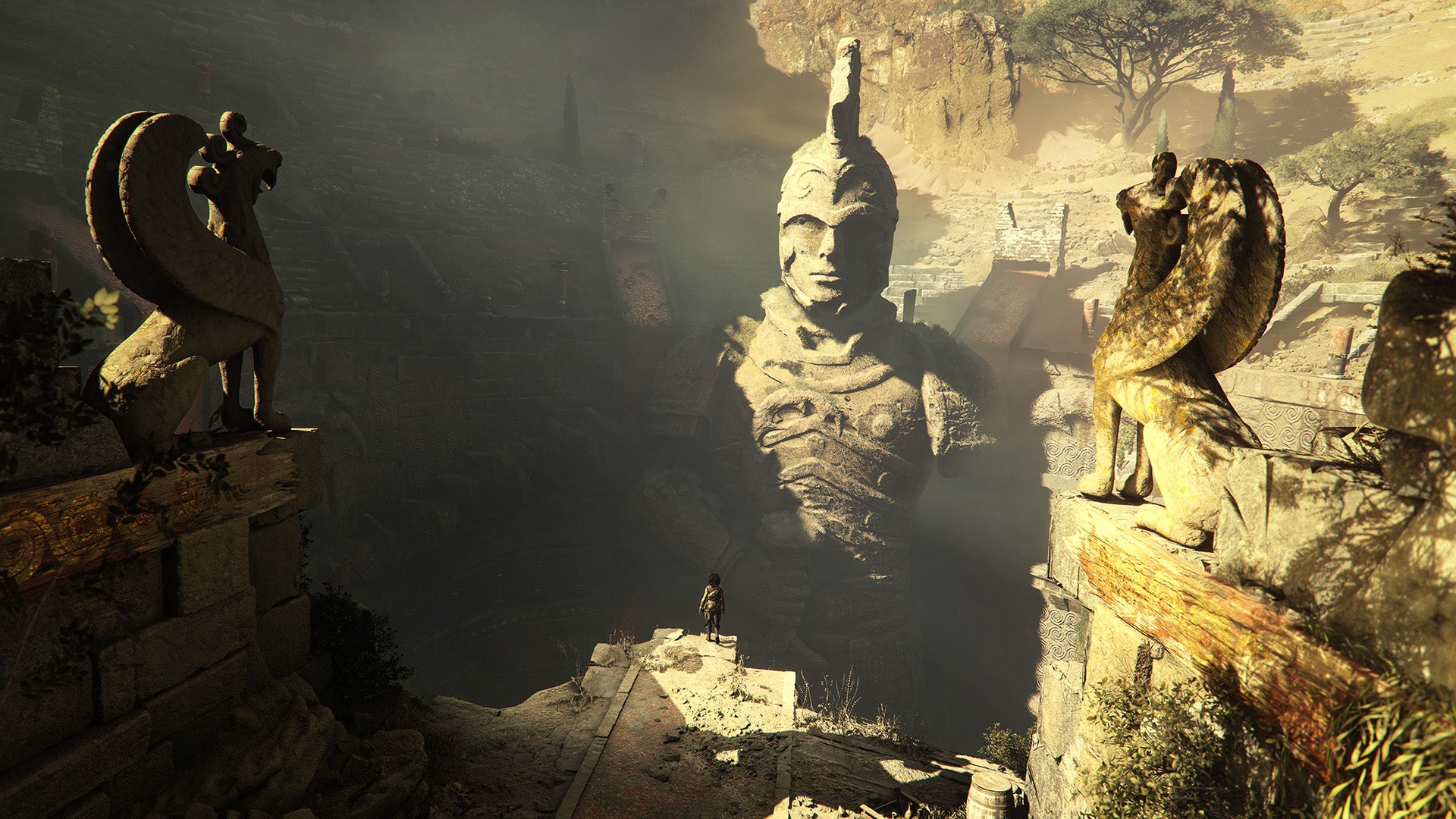
Puzzles here revolve around light, similar to the other Plague Tales. But you’re not trying to keep swarms of hungry rats away from you, rather you’re solving puzzles to descend further into the temple, which is improbably large – a sense of grandeur I adored in A Plague Tale Requiem. The descent never seems to stop, down and down it goes, deep under the earth, from one vast chamber into another. The architecture only ever gets larger and more elaborate. Some areas look as though Gaudi designed them, with organically warped walls and intricately detailed mosaics. The detail in everything in the game – on the characters and on the walls – is exquisite.
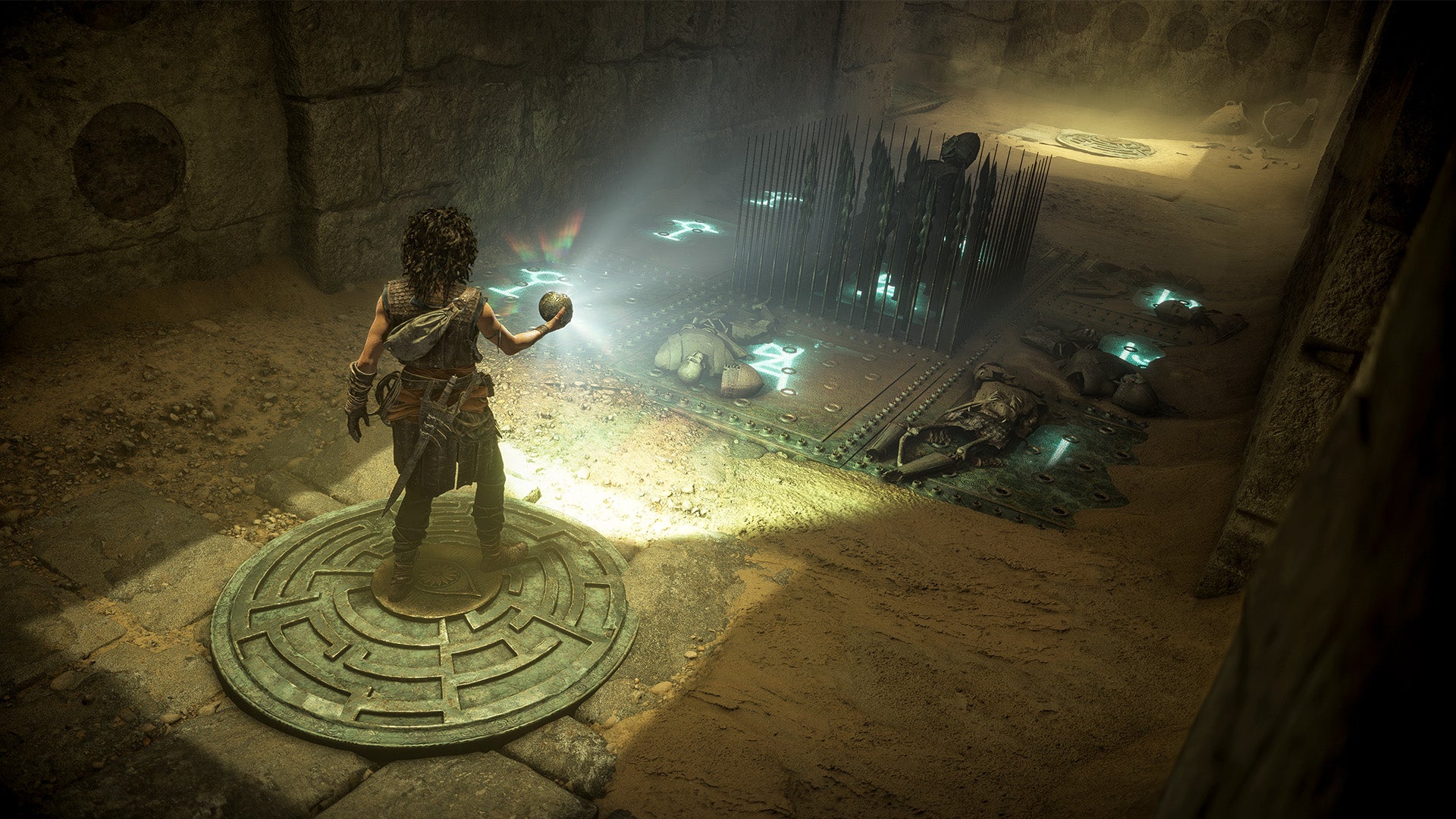
But it’s the puzzle’s refusal to bend to accommodate the player that I particularly like. There’s a clear emphasis here on having to actually think your way forward and refer to clues in Sophia’s journal – which is so like Nathan Drake’s journal in Uncharted it could be the same thing, with small sketches offering important clues. I remember two puzzles in particular: one was a tense walk across a room of spike traps. Sophia has a light-shedding tool that highlights a safe route, but unexpected periods of shade mean the tool can’t be used, prompting a panicked moment of memorisation as you try to recall what the route was – a piece of mental recall that’s easy near the beginning, but deep into the puzzle, it produces a nervous sweat. The other puzzle was a symbol-pairing puzzle in the inner sanctum where Theseus fights in his timeline – the place of the gladiatorial combat. This stumped me.
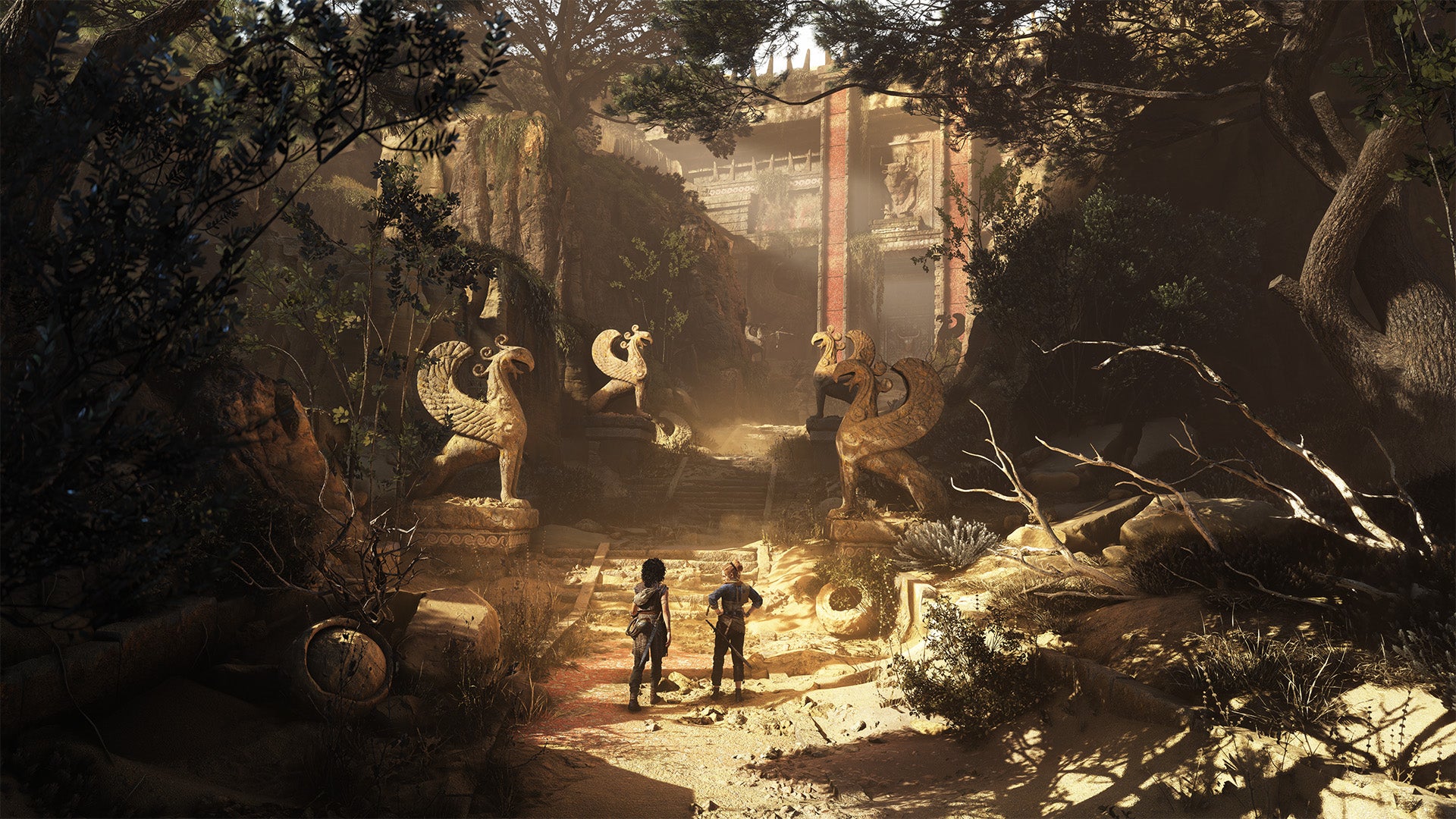
Fortunately, I was saved by Leni, a new character in the game and a close friend of Sophia’s, who accompanies her (there will apparently be other characters at other points, and some we may recognise) and who also serves a vital mechanical function in the game, offering clues if you should you need them. I emphasise that point because you don’t have to hear Leni’s clues; only if you accept the prompts that appear after moments of no progress from you does Leni offer them. They’re entirely optional. It’s an elegant approach.
There’s a lot that’s different in Resonance: A Plague Tale Legacy, then – it really is a bold departure for the series. But the undeniable hallmarks of the Plague Tale series are here. Once again, this is an extravagantly realised adventure tinged in the supernatural, and one that’s thick with emotion and focused on cinematic presentation and flair. And again it’s the thrill of being someone touched by a powerful destiny, and their journey to incredible places no person has been for thousands of years, that propels us. It’s perhaps slightly brighter in tone and setting than the previous Plague Tale adventures, but it’s unmistakably still A Plague Tale. I can’t wait for 15th August when it comes out.
This piece is based on a press event to Paris, with flights and accommodation paid by Focus Home.