dailynewsnblog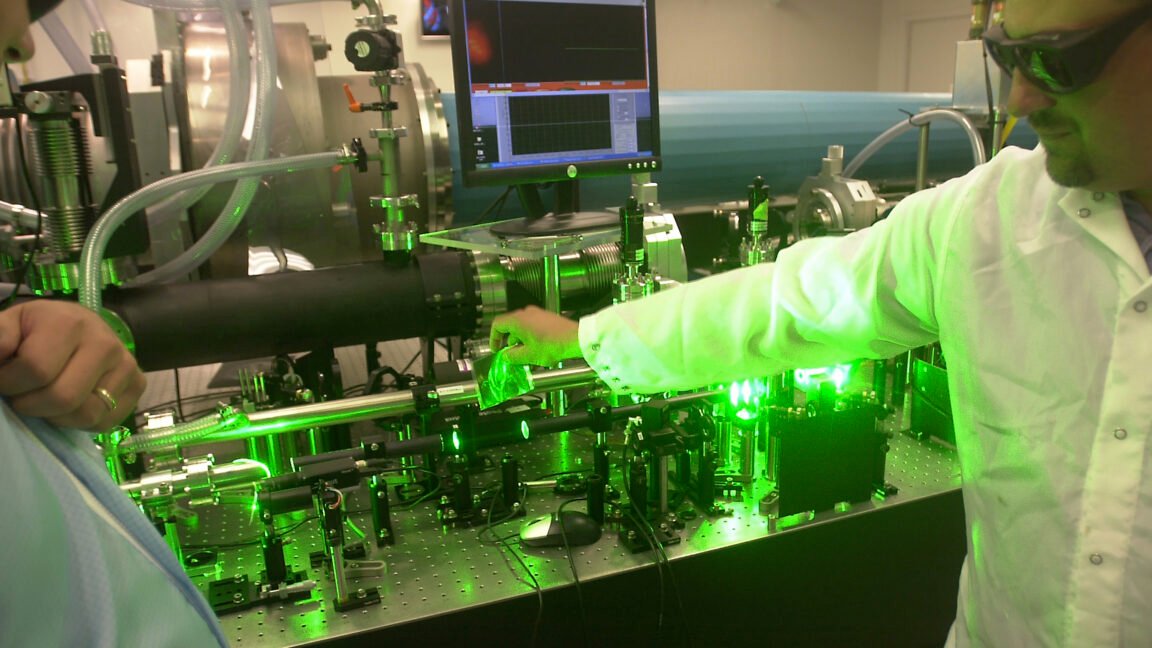
Back in the control room, I sit down and start charging the capacitor banks. At this point, there’s no going back except for an emergency shutdown, and that means losing the shot and waiting for everything to cool down.
“Charging.”
The room goes silent. Everyone’s eyes are on the monitors. Nobody talks.
I typically will share a glance with the researcher whose project the shot is for – today it’s Joe, a visiting scientist from Los Alamos National Lab, who designed the target we’re about to vaporize. He’s gripping his coffee cup like it owes him money. I turn back to the console.
“Charge complete. Firing system shot in three, two, one. Fire.”
I press the button. A loud thud rolls through the building as all that stored energy dumps into the beam. The monitors freeze, capturing everything at the moment of the shot: beam profiles, spectra, diagnostics—these metrics provide a full picture of exactly how the laser performed and whether the shot was clean. Downstairs, in the vacuum chamber, a spot smaller than a human hair just reached temperatures measured in millions of degrees.
I lean back in my chair and start recording laser parameters as everyone exhales. A radiation safety officer heads down first to check readings around the target chamber before anyone else can enter. The experimental team follows to collect data.
Sometimes it all works perfectly. Sometimes a shutter fails to open and you lose the shot.
For example, one afternoon in 2023, we’d spent three hours preparing for a high-priority shot. Target aligned. Capacitors charged. I pressed the button and heard nothing. A shutter had failed somewhere in the chain. The monitors stayed frozen, showing black. Nobody said anything. I wrote SHOT FAILED in the logbook and started the hourlong cooldown sequence. That’s the part they don’t show in movies: sitting in silence, waiting to try again. We got the shot four hours later.
This anticipation is all part of the job: hours of patience for 10 seconds you never quite get used to. Everything happens underneath a campus where thousands of people walk above, unaware that for a fraction of a second, a tiny point of matter hotter than the surface of the Sun just existed below their feet.
Ahmed Helal, research scientist, The University of Texas at Austin. This article is republished from The Conversation under a Creative Commons license. Read the original article.