dailynewsnblog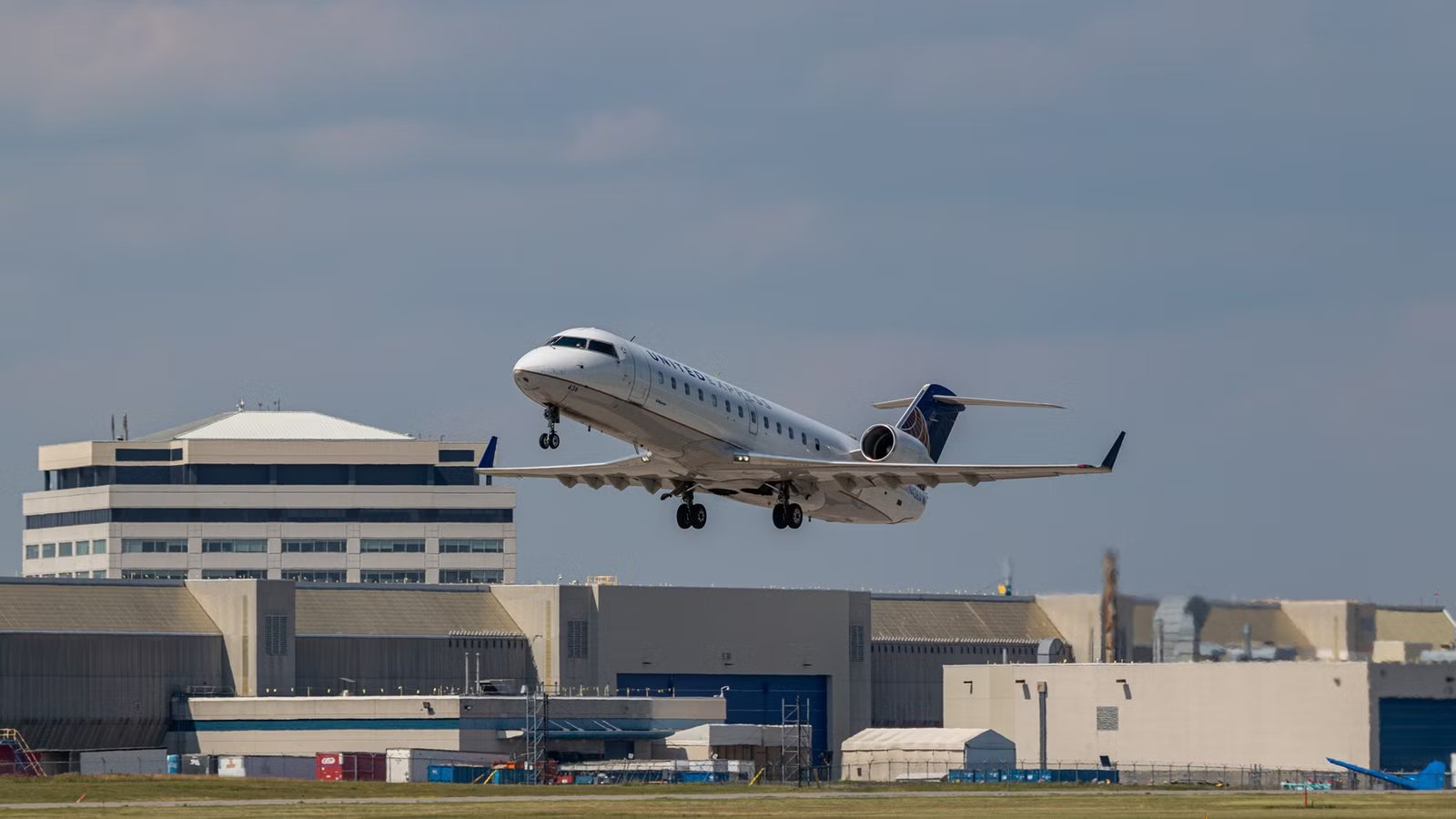
After a nearly two-year absence,  United Airlines is officially returning to Moab, Utah, restoring nonstop service between
  Denver International Airport (DEN) and Canyonlands Regional Airport (CNY). The route will resume in October, marking the carrier’s return to a market it previously served until early 2024. The service reestablishes a key air link for one of Utah’s most popular outdoor tourism destinations.
While the route itself is relatively small within United’s broader network, its importance to Moab is significant. The service will once again provide travelers with access to United’s extensive hub at Denver, where the vast majority of passengers are expected to continue to destinations across the United States and internationally.
United Resumes Denver To Moab Flights

United’s latest schedule update confirms that flights between Denver and Moab will restart on October 7. During the first month of operations, the airline will offer a combination of one and two daily flights before transitioning to a consistent daily schedule thereafter.
The published schedule during the first week of service is seen below. All flights will be operated using the 50-seat Bombardier CRJ200 regional jet. SkyWest Airlines will operate the service under the United Express name.
First Month Schedule for the DEN-CNY Service | ||
|---|---|---|
Route | Schedule | Frequency |
Denver (DEN) to Moab (CNY) | 8:00 AM to 9:30 AM | Five weekly flights |
Denver (DEN) to Moab (CNY) | 12:15 PM to 1:45 PM | Daily |
Moab (CNY) to Denver (DEN) | 10:10 AM to 11:35 AM | Five weekly flights |
Moab (CNY) to Denver (DEN) | 2:20 PM to 3:45 PM | Daily |
Route Returns After Almost Two Years

United previously served the Denver to Moab market from 2018 until January 2024, when the route was discontinued. The airline’s decision to return suggests it still sees strategic value in connecting the southeastern Utah community to one of its largest connecting hubs. Although Moab generates relatively modest local passenger demand, Denver functions as a powerful gateway within United’s network. According to U.S. Department of Transportation data for 2023, approximately 86% of passengers traveling on the route connected to another United flight at Denver rather than ending their journey there. That demonstrates the route’s role as a feeder service rather than one primarily dependent on local traffic between Denver and Moab.
It remains unclear whether United’s restored service will replace operations currently provided by Contour Airlines on the route. The latest schedule update also does not indicate that the flights are being supported through the federal Essential Air Service (EAS) program, which subsidizes commercial air service to smaller communities that might otherwise struggle to retain scheduled flights. Nevertheless, it will significantly increase connectivity for a remote part of the country.
Coast-To-Coast: United Airlines Debuts 2 Brand-New 6‑Hour 737 MAX Routes
The introduction of these flights will provide a new way to travel to the region of New England.
Load Factors Were Modest Before The Suspension

Historical traffic data provides some context for the route’s previous performance. In 2023, U.S. Department of Transportation statistics show that United filled approximately 64.5% of available seats on its Denver to Moab flights. While that load factor was below the network average for most U.S. airlines, it reflected the realities of serving a small regional market with limited local demand. Despite those figures, the route offers considerable connectivity benefits. Denver is one of United’s largest hubs, and the largest in the region, with nonstop service to hundreds of domestic and international destinations. For Moab residents and visitors, the restored flights substantially reduce travel times compared with driving several hours to larger airports in Utah or neighboring states.
Moab also serves as a gateway to some of the American Southwest’s best known outdoor attractions, including Arches National Park and Canyonlands National Park. United is also hoping to tap into the strong tourism market in the region. Restoring scheduled service gives visitors another convenient option for reaching the region while improving air access for the local community.
Whether the restored service proves more successful than its previous iteration will likely depend on sustained leisure demand and the strength of United’s connecting network through Denver. For Moab, however, the return of a major network carrier provides improved access to hundreds of destinations through a single connection, strengthening the region’s air service and offering travelers another convenient gateway to southeastern Utah.