dailynewsnblog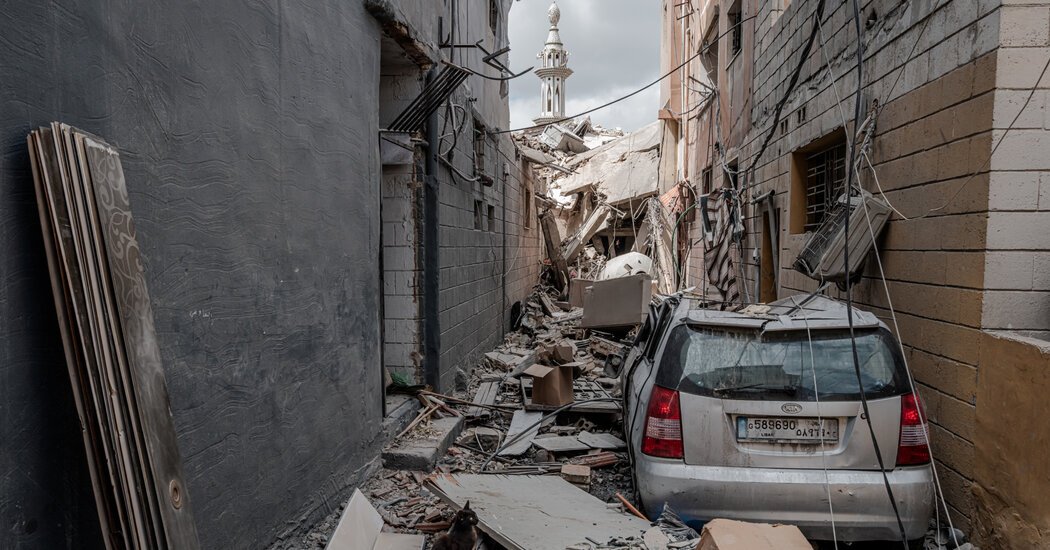
Prime Minister Benjamin Netanyahu of Israel said Friday that the military had advanced deeper into Lebanon, where Israel and Hezbollah have continued to trade attacks, further undermining a monthlong cease-fire that has done little to stem the fighting.
Speaking in the north of Israel, near the Lebanese border, while visiting troops, Mr. Netanyahu said Israeli forces had “crossed the Litani,” a river that has long been a demarcation line in cease-fire arrangements in southern Lebanon.
Israel also continued to issue evacuation warnings on Friday for towns and villages in southern Lebanon, as airstrikes pummeled the region. Over 3,300 people have been killed in Lebanon, according to the health ministry, since the latest fighting between Hezbollah and Israel began in early March.
The widening offensive comes as military officials from Lebanon and Israel were set to meet at the Pentagon on Friday, part of U.S.-brokered talks aimed at stabilizing the border and ending the fighting. A separate round of political talks are expected to take place next week.
Crossing the Litani carries symbolic weight in the conflict, and underscores that Israeli troops have been increasingly operating beyond what Israel calls its “forward defense line,” an area several miles inside Lebanon that it has occupied since invading in March.
For much of its course, the Litani runs roughly 15 to 20 miles north of Israel, but bends much closer to the border in the east, where there have been clashes in recent days. Israeli forces have crossed the Litani before, including earlier in the current war with Hezbollah.
Under pressure from hard-liners inside Israel, Mr. Netanyahu has ordered the military to intensify its campaign against Hezbollah in recent days, including a strike near Beirut on Thursday for the first time in nearly a month.
Hezbollah’s drone attacks on Israeli troops in southern Lebanon have remained a persistent problem for Israeli troops. And Mr. Netanyahu is under pressure to show that his government is restoring security to northern Israeli communities, which have faced rocket attacks from the Iranian-backed militant group.
The talks at the Pentagon on Friday were expected to focus heavily on the issue of Hezbollah’s disarmament, a key Israeli demand in negotiations. President Joseph Aoun of Lebanon spoke by phone with Secretary of State Marco Rubio on Friday, according to Mr. Aoun’s office, and said that reaching a cease-fire was the “basic entry point” for any further steps.
Israel’s ongoing offensive in Lebanon is unfolding against the backdrop of fragile talks between Washington and Tehran to end the broader war.
Iran has demanded that any deal includes an end to Israel’s strikes against Hezbollah, making Lebanon a potential flashpoint in efforts to reach an agreement.
Israel’s military chief, Lt. Gen. Eyal Zamir, echoed Mr. Netanyahu’s message on Friday, saying Israeli forces were “moving into new areas,” adding that Israel would continue striking Hezbollah “wherever we can.”
Johnatan Reiss contributed reporting.