dailynewsnblog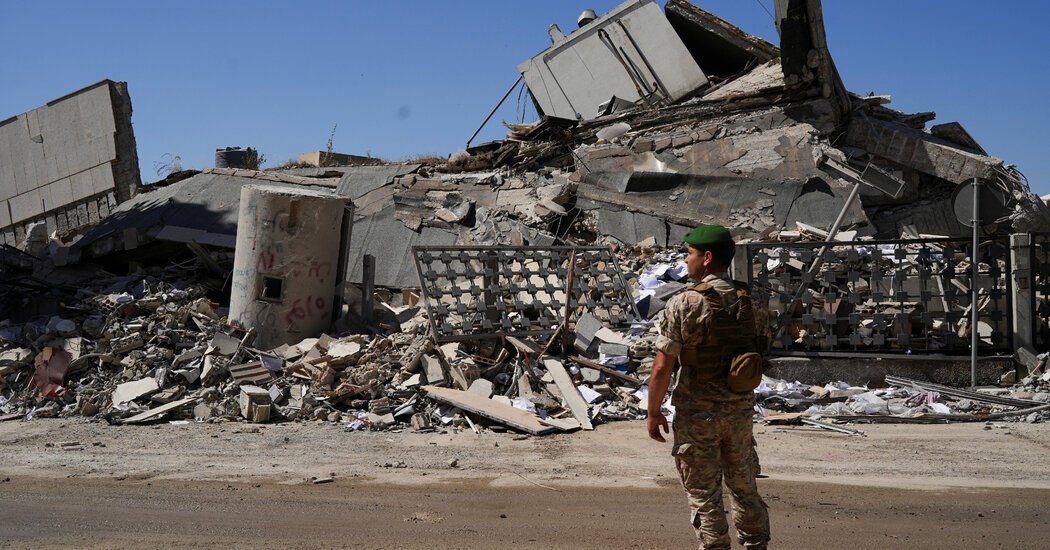
The fighting between Israel and Iran-backed Hezbollah appeared to ease on Sunday, a day after the Israeli government directed the military to restrict itself to defensive actions only in Lebanon.
There were no reports of Israeli attacks on Lebanon or Hezbollah strikes on Israelis by midday. Still, it was not clear whether the new directive, announced late on Saturday, would resolve the friction that led to deadly clashes on Friday and Saturday and threatened to derail a preliminary U.S.-Iran peace deal.
Cease-fires in Lebanon have been declared, broken and reinstated numerous times in recent weeks, but the fighting has persisted amid disagreements over what constitutes defensive actions by Israeli forces.
“There has never been, and there is no, restriction on IDF soldiers in Lebanon to act to eliminate threats,” Israel’s defense minister, Israel Katz, said in a statement on Sunday, referring to the Israeli military.
The clashes centered around the area of Tebnit and nearby Ali al-Taher, a strategic ridgeline overlooking the large city of Nabatieh in southern Lebanon.
The Israeli military says the area serves as a major stronghold for Hezbollah, the Lebanese militant group, and contains substantial underground infrastructure used by the group.
A statement from Israel’s military late on Saturday said Israeli forces should operate only within the country’s self-declared “security zone,” a stretch of territory its troops control in southern Lebanon that extends about six miles north of the Israeli border.
The Israeli military recently issued an updated map of the zone that placed Tebnit and Ali al-Taher just within the area under Israeli control. The ridgeline has emerged as a dangerous flashpoint.
Early on Friday, four Israeli soldiers, including a battalion commander, were killed in a tank that the military says was targeted by Hezbollah. A fifth soldier was killed in the area on Saturday, setting off waves of Israeli retaliatory strikes. The military said Hezbollah had launched more than 50 rockets targeting its soldiers operating in southern Lebanon.
Hezbollah said on Saturday that it had attacked Israeli forces advancing toward Ali al-Taher.
With both sides accusing one another of having violated a previous truce, Hezbollah said that while the group remained “committed” to the agreement, it would “not tolerate any attempt by the enemy to seize additional territory or expand its occupation.”
The Israeli government said on Saturday that the military struck 300 targets on Friday and Saturday in response to Hezbollah’s latest attacks and killed approximately 100 members of the group.
Lebanon’s health ministry reported casualties in nearly two dozen towns and President Joseph Aoun accused Israel of targeting “innocent civilians.”
The hostilities in Lebanon have threatened multiple times to upend progress toward a U.S.-Iran framework peace agreement.
On Saturday afternoon, the Iranian military announced the closure of the Strait of Hormuz, a vital shipping route for oil, in response to Israel’s actions in Lebanon. The U.S. military said that marine traffic in the strait continued to flow and asserted that Iran “does not control” the strait. The prolonged interruption of shipping in the waterway since the war began has sent energy prices soaring and roiled global markets.
Soon after the Iranian announcement, and with retaliation for Hezbollah’s strikes over, Prime Minister Benjamin Netanyahu and his defense minister, Mr. Katz, directed the military to cease its fire, according to two Israeli officials who spoke on the condition of anonymity to discuss internal decision-making.
The Israeli military then issued a statement late on Saturday saying it had received “updated directives” from the country’s political leaders and would not be “conducting proactive strikes” in Lebanon.
But it reserved the right to respond if Hezbollah did not abide by the cease-fire and targeted Israeli troops or civilians.
The statement also said the military was continuing to operate in the area of Tebnit “to remove immediate threats,” including Hezbollah militants and infrastructure, both above and below ground.