dailynewsnblog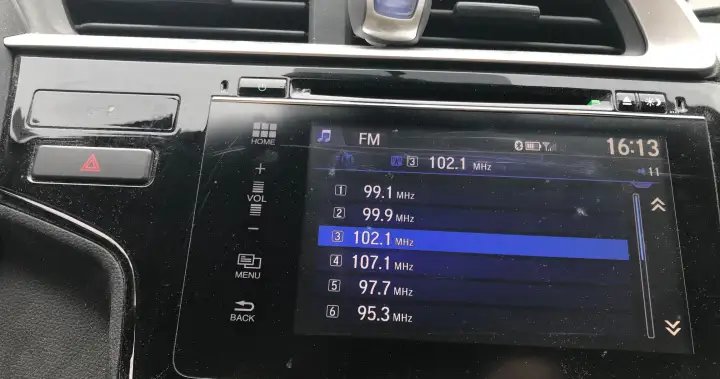
What’s the first thing you do when you get behind the wheel after buckling up and hitting the ignition? You probably dial up some audio entertainment — and more often than not, it’s the radio. We’ve been listening to the radio in the car since Paul and Joseph Galvin introduced their “travel radio” (brand name: Motorola) in 1930.

According to a 2025 Radio Connects study, about 80 per cent of Canadian radio listeners tune into terrestrial broadcasts on AM or FM. And it’s not just older drivers. About 60 per cent of people 18-34 also go for AM/FM listening, putting it on par with that demographic’s love for streaming services.
Not only is radio listening in the car a long-term habit, but it’s also cost-effective. AM and FM listening is free with the tuner in your dashboard, plucking electromagnetic waves out of the ether at no charge, often when we’re dozens and dozens of kilometres away from the source. You’ll have to be pretty far out into the boonies for there not to be any radio stations to be heard.
And when there’s breaking news, dangerous weather or an emergency, all you have to do is turn on the radio, and you get everything you need in real time.
Broadcasters love cars, too. Because so many people listen while commuting, it’s an excellent way to reach a captive audience, which, in turn, is good for clients who buy advertising. And if you’re listening to public or community radio, drivers don’t even hear commercials.
In short, we, the driving public and purchasers of vehicles, love free radio in the car. So why are some auto manufacturers trying to get rid of it?

Let’s start with AM radio. AM is the oldest broadcasting medium there is, with its underlying technology dating back more than 100 years. While it’s been a faithful servant, it does have its physical limitations. Frequency response is narrow (about 100 to 5,000 Hz) compared to FM (~50 to 15,000 Hz), making it a tough listen when it comes to music.
For voice, though, it’s perfectly serviceable. AM signals also have the advantage of being able to cover a larger area — hundreds and even thousands of miles from the transmitter — thanks to their ability to use the atmosphere, specifically the ionosphere, as a giant mirror. FM is line-of-sight, meaning that the moment the transmitter tower can’t be detected at the horizon beyond 100-120 km, we lose contact.

Get daily National news
Get daily Canada news delivered to your inbox so you’ll never miss the day’s top stories.
But that very property makes AM signals prone to static from lightning, overhead powerlines, and, increasingly, the electromagnetic fields generated by today’s electric vehicles. Consequently, manufacturers of EVs, including Tesla, BMW, Audi, Porsche, Mazda, Polestar and Rivian, say that the electronic noise created by the motors that drive the wheels make AM radio unlistenable. Funny how Ford, General Motors, Stellantis, Hyundai, and Kia have figured out a fix.
This move away from AM radio has greatly annoyed the U.S. government, which is advancing the bipartisan AM Radio Vehicle Act of 2025 through Congress. If passed into law, this will make it mandatory for AM radio to be included on all new vehicles. If an AM-less car is sold before the law is enacted, there must be full disclosure to the purchaser. This bill has a real chance of passing.
Fine. But no one would ever think of removing FM from vehicles, would they? Yes, they would. The reason will make your blood boil. The problem is that FM radio is free.
Vehicle manufacturers have discovered the cash cow that are subscription services. If you’ve been looking at a new car lately, you might have run across some unwanted options. Want heated seats? The hardware is installed, but if you want to be able to turn them on, you’ll have to pay a monthly fee.
BMW was first out of the gate with this little surprise in 2022, but was forced to drop it because of consumer backlash. Want remote start? That’ll be an extra monthly fee. What about a self-parking function? Same. Premium traffic data and map updates. That’ll cost you. On-board Wi-Fi? That, too.
Now some manufacturers want us to move away from free radio to subscriptions-based listening for all news and entertainment. This would not just generate a new source of income, but it will cut costs of making infotainment systems.
The first maker to do this was — shock! — Tesla, specifically the Model 3 and Model Y. The latest is Rivian R2, which doesn’t come with an FM tuner at all. Instead, it offers the Rivian Digital Radio, which was created with American broadcasting giant iHeartRadio. Not only will drivers pay to use RDR like you would with a Netflix account, but it operates on cellular services, meaning that you’re going have to pay for a dedicated sim card within the vehicle (with the complications that involves) so you can receive and pay for data.
And if you’re ever out of cell range, good luck. No audio for you, period. Good luck if you’re somewhere off the grid or there’s some kind of emergency when cell service goes down.
Rivian won’t be the only manufacturer to try this given the revenue potential. They’ll try to sell us on how this is a more flexible way to listen to audio and one that will offer more choice. It’s another example of a pseudo-innovation being pushed on us and a way to extract more money.
The joke may be on Rivian, though. According to these posts on Reddit, no free radio in a vehicle is a deal breaker for most people. The last thing any of us need is another subscription to something that used to be free.
© 2026 Global News, a division of Corus Entertainment Inc.