dailynewsnblog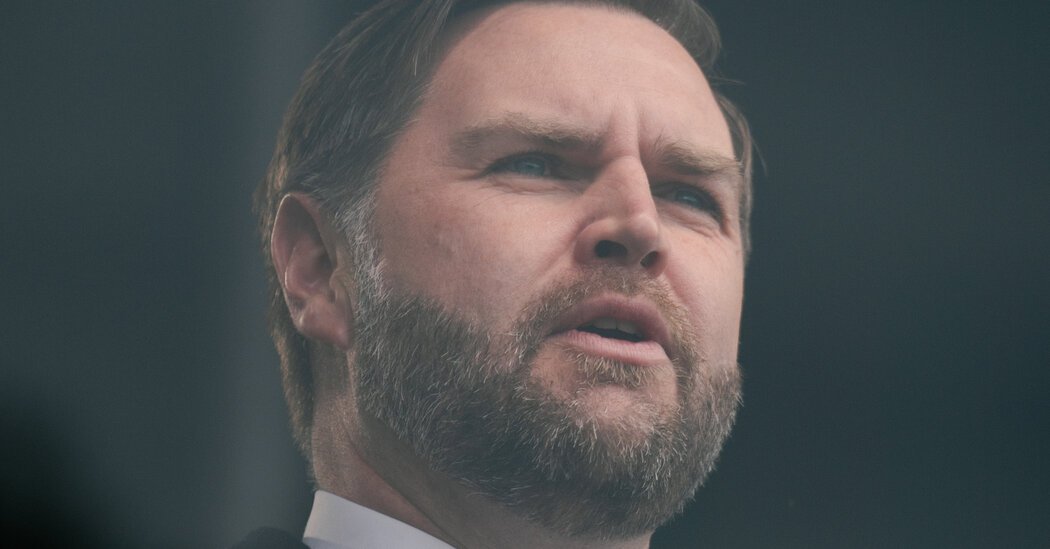
In recent conversations with aides and allies, President Trump often interjects with a question about his vice president: Does JD Vance have what it takes to go all the way?
He usually answers his own question: He’s not so sure.
It is not that Mr. Trump is abandoning Mr. Vance. He involves him in major decisions, has given him high-profile opportunities to position himself for 2028 and trusts the 41-year-old vice president to wage partisan warfare on his behalf. In a cabinet meeting this week, Mr. Trump compared Mr. Vance to Eliot Ness, the mob-busting federal agent, for working to ferret out fraud in mostly Democratic controlled states.
Mr. Trump has long conducted running focus groups on his closest aides, and appears to enjoy needling them and keeping them off balance as a way of asserting his dominance. Several people in the president’s inner circle have been subject to his quasi-public questioning of their performance and their future.
But when it comes to Mr. Vance, the stakes are higher. As the default front-runner for the Republican nomination and would-be inheritor of the president’s political movement, Mr. Vance’s fortunes ride to a substantial degree on the enthusiasm of the support he gets from Mr. Trump. And Mr. Trump’s regular polling of people on whether they prefer Mr. Vance or Secretary of State Marco Rubio has become one of the most closely watched early indicators of how power in the Republican Party might pass to the next generation.
When he conducts those polls in private, Mr. Trump often compares Mr. Vance’s performance to his own achievements. He has told several allies that Mr. Vance has never won a tough race without his help. (Mr. Trump’s endorsement got Mr. Vance over the finish line in a tight race for an Ohio Senate seat.) He has brought up the number of vacations Mr. Vance has taken as vice president. (Mr. Trump does not generally take them.)
He has repeatedly mentioned the vice president’s initial opposition to starting a war with Iran and has done so in front of Mr. Vance. (“I’m more of a peace person than you are — but I had to do it,” he has said to him.) The president has also questioned his decision to send a Vance-led delegation to a negotiation session in Pakistan that failed to end the war.
Mr. Trump, always keenly attuned to the optics of the presidency, has zeroed in on moments when Mr. Vance might not look the part. He has repeatedly brought up a moment from last spring, when Mr. Vance fumbled Ohio State’s national football championship trophy on the White House South Lawn. (Mr. Trump has said he is happy it wasn’t him.)
This account of Mr. Trump’s relationship with his vice president is based on interviews with more than a dozen people who are directly familiar with the dynamic between the two men. Some of them were granted anonymity to speak about Mr. Trump’s thinking.
“Vice President Vance has done a remarkable job of helping implement the president’s America First agenda,” Steven Cheung, the White House communications director, said in a statement. “There has been no vice president in history who has been more empowered, and that is a reflection of the strong trust and relationship between the two. Any false media narratives from unknown and unnamed sources fabricating stories clearly do not have any knowledge of the truth.”
Mr. Trump, who turns 80 next month, is generationally and stylistically different from Mr. Vance, a Midwestern millennial who rose out of a hardscrabble upbringing and made that struggle the animating force of his political brand. The president, a Queens-born real estate developer raised in wealth, prefers to be ensconced in gilded surroundings. When Mr. Vance is not in Washington, he enjoys taking his family home to Cincinnati or to Camp David, the woodsy presidential retreat that Mr. Trump has only visited once in his second term.
In meetings, Mr. Vance frequently scrolls his phone, and he uses social media to fight with his critics. The president frequently posts to Truth Social, but he does not spend time replying to people online, as Mr. Vance does.
Susie Wiles, Mr. Trump’s chief of staff, recently advised Mr. Vance to take a break from social media, as have other officials in the West Wing, according to people familiar with those interactions, because the fighting was beneath his office. (Mr. Vance said he took a break for Lent.)
Through it all, Mr. Vance has exhibited the one quality that Mr. Trump most prizes: loyalty. He has put aside his reservations about the war to back the president’s handling of the conflict and carried out the traditional No. 2 attack-dog role against Mr. Trump’s critics, even Pope Leo XIV.
He remains a popular figure among Mr. Trump’s MAGA base. Tony Fabrizio, a longtime pollster for Mr. Trump, said the president chose Mr. Vance as a running mate in 2024 because he appeals to those voters. In an interview, Mr. Fabrizio said that the president saw Mr. Vance as “a MAGA warrior who would go out every day and fight for the things the president wanted.”
Mr. Fabrizio added: “He knew that, and that was exactly what he got.”
‘Who Likes JD Vance?’
Even so, Mr. Trump has continued to needle Mr. Vance on matters of substance and style, from criticizing his shoes to ribbing him for his tendency to interject in conversations.
In November, the president wondered aloud why Mr. Vance was not more subservient, like the officials who work for President Xi Jinping of China.
“Why don’t you behave like that?” Mr. Trump asked Mr. Vance during a breakfast for Republican senators. “JD doesn’t behave like that! JD butts into conversations! I want to have that for at least a couple of days. OK, JD?”
People close to the president say that Mr. Vance is in Mr. Trump’s good graces.
“My father always brings up how JD is a savage and annihilates the fake news, like the made-up narrative of this story,” Donald Trump Jr., the president’s eldest son, said in a statement relayed through his spokesman. “Interviews, rallies, podcasts — he shows up and performs and that’s what my father cares about.”
To win the 2028 nomination, Mr. Vance must stay in good standing with Mr. Trump and reassure a Republican Party that has been molded in the president’s image but fractured by his choices. So far, like most vice presidents, Mr. Vance has prioritized his relationship with the president.
Despite his misgivings about the war with Iran, he has loyally defended Mr. Trump’s decision to start the conflict. And he has backed another politically fraught action, the creation of a $1.8 billion fund to compensate victims of what the administration contends is political persecution. Compounded by Mr. Trump’s recent retribution efforts against Republican lawmakers, that fund has sent Republicans into open revolt.
For Mr. Vance, whose political rise rested in part on his criticism of excessive American intervention abroad, the Iran war has left him balancing his loyalty to Mr. Trump against the antiwar sentiments of much of his political base
As Tucker Carlson, a close ally, recently put it, the violation of a campaign promise to not involve the United States in conflicts overseas has put Mr. Vance in a “tough spot.”
Marjorie Taylor Greene, like Mr. Carlson, recommended Mr. Vance to Mr. Trump for the running mate job. Both have since fallen out of favor with Mr. Trump. In an interview, Ms. Greene warned that, should he run for the presidency, Mr. Vance will have trouble regaining trust from Republicans who oppose the war.
“He is no longer in a place where he can hang on to his former reputation,” Ms. Greene said of Mr. Vance, whom she said she still considers an ally. “There’s nothing that can protect him anymore.”
As Mr. Vance works to shore up Mr. Trump’s policies, the president has pondered his vice president’s future.
Last summer, Mr. Trump said Mr. Vance was “most likely” to be his political heir apparent: “In all fairness, he’s the vice president,” Mr. Trump told reporters in August, adding that he thought Mr. Rubio could eventually be added to a presidential ticket but that it was “too early, obviously, to talk about it.” Since that interview, Mr. Trump has praised Mr. Rubio and has told people close to him how impressed he is with the job Mr. Rubio is doing.
Mr. Rubio spends more time with Mr. Trump than Mr. Vance does, as is typical of a national security adviser. Mr. Rubio frequently travels with Mr. Trump on Air Force One, and they have bonded over weekends in Florida. Mr. Vance, by nature of being vice president, does not travel on the same plane as Mr. Trump.
At a dinner in the Rose Garden earlier this month, Mr. Trump quizzed his guests about who would be the better choice: “Who likes JD Vance?” “Who likes Marco Rubio?” He made it clear that he was not endorsing either man.
In an interview with Fortune in the Oval Office this month, the president was asked, again, about who best was positioned to carry on his legacy.
“Whoever gets this is going to be very important,” the president said. “And if you get the wrong person: disaster.”
During that interview, Mr. Vance was watching from the back of the room as Mr. Trump answered.
‘He came up empty’
Mr. Vance is one of the most recognizable figures in American politics other than Mr. Trump and Robert F. Kennedy Jr., the Health and Human Services secretary. One of his advantages as vice president is that he serves as the finance chair of the Republican National Committee, with direct access to donors.
Allies of Mr. Trump and Mr. Vance say that the vice president is still best positioned to be Mr. Trump’s successor. Despite widespread concern over affordability and the cost of the Iran war, Mr. Trump remains popular with Republican voters.
According to a Quinnipiac poll published last week, some 73 percent of Republican voters still widely approve of the job Mr. Trump is doing. According to a poll released by Pew in February, 75 percent of Republican voters view Mr. Vance favorably.
They are both broadly unpopular, however. The president’s overall approval rating has sunk to a second-term low. According to Quinnipiac, Mr. Vance is similarly unpopular, with 39 percent of voters approving of the job he is doing.
Recently, Mr. Vance has faced criticism among conservatives for his support for the Iran war, and for engaging with Mr. Trump’s attacks on Pope Leo for speaking out against the war. Mr. Vance, who converted to Catholicism in 2019 at age 35, advised the leader of the world’s 1.4 billion Catholics to stick to religion.
Critics have characterized him as a political shape shifter.
Gov. Andy Beshear of Kentucky, who is widely seen as a likely 2028 Democratic presidential candidate, has repeatedly accused Mr. Vance, who was born in Middletown, Ohio, of overstating his blue-collar roots and misrepresenting himself as a product of Appalachia. (Though Mr. Vance’s relatives were from Appalachia, Middletown is not part of the region.)
In an interview, Mr. Beshear accused Mr. Vance of “governing in a way that only hurts the places he claims he was from.”
Mr. Beshear added: “JD Vance doesn’t have a real bone in his body. Last week he’s appointed the fraud czar, and this week he’s defending a new $1.7 billion slush fund for the Trump administration to give to their allies.”
Mr. Vance’s allies say that he is doing the work that would be most helpful to Mr. Trump by traveling the world on diplomatic missions and crisscrossing the country to bolster Mr. Trump’s domestic agenda. They say he is not worrying about netting political wins.
On the international stage, Mr. Vance campaigned for a hard-right overseas ally, Viktor Orban. Mr. Orban went on to lose his race to be re-elected prime minister of Hungary. Mr. Trump’s advisers say he expected that outcome, but the president wanted to help an ally who had stood by him in the years he spent as a political pariah.
A major test of Mr. Vance’s domestic political sway came last summer, when he was asked by the White House political operation to visit the Indiana Statehouse to encourage Republicans to vote to redraw the state’s electoral maps. In the end, the lawmakers declined to redraw the maps, and Mr. Trump waged a mostly successful retribution campaign to unseat those who defied his wishes.
Local officials believe Mr. Trump’s attacks have done long-term damage to the Republican Party and that Mr. Vance has a perilous path ahead of him if he decides to run for the presidency.
“He came up empty in Indiana the same way that he came up empty in Hungary,” State Representative Ed Clere, a nine-term Republican from southern Indiana who voted against redistricting, said of Mr. Vance.
Mr. Clere, who said he will run for mayor of New Albany, Ind., as an independent when his term ends, added that the vice president’s involvement in the redistricting fight “should be a wake-up call for anyone who thinks Trump will be able to pass the MAGA torch to Vance, or anyone else.”
James Blair, one of Mr. Trump’s top political advisers, said that Mr. Vance was willing to try to persuade Indiana Republicans even if it meant coming away with nothing.
“The vice president was willing to take on the fight in Indiana because he’s not afraid to do what needs doing, even if it’s an uphill battle,” he said in a statement. “The vice president takes on some of the toughest tasks and keeps at it until the job is done.”
As part of his anti-fraud work, Mr. Vance traveled to Bangor, Maine, earlier this month, telling a crowd of supporters there that fraud had festered in the state under the state’s Democratic governor, Janet Mills. In Maine, supporters were receptive to the idea that Mr. Vance could lead the party in 2028.
John Lugo and his wife, Denise Dineen, were in the crowd, wearing matching hats that said “Make America Healthy Again.” Mr. Lugo, a small-business owner, said that he saw Mr. Vance as an “extremely articulate” partner to Mr. Trump.
When asked if he thought the vice president should be the next Republican presidential nominee, Mr. Lugo kept his options open.
“Him or Rubio,” Mr. Lugo said. “Rubio would be good, too.”
When Mr. Lugo and his wife turned to face Mr. Vance as he took the stage, another name was inscribed on the back of their ball caps: “KENNEDY.”
Alain Delaquérière contributed research.