dailynewsnblog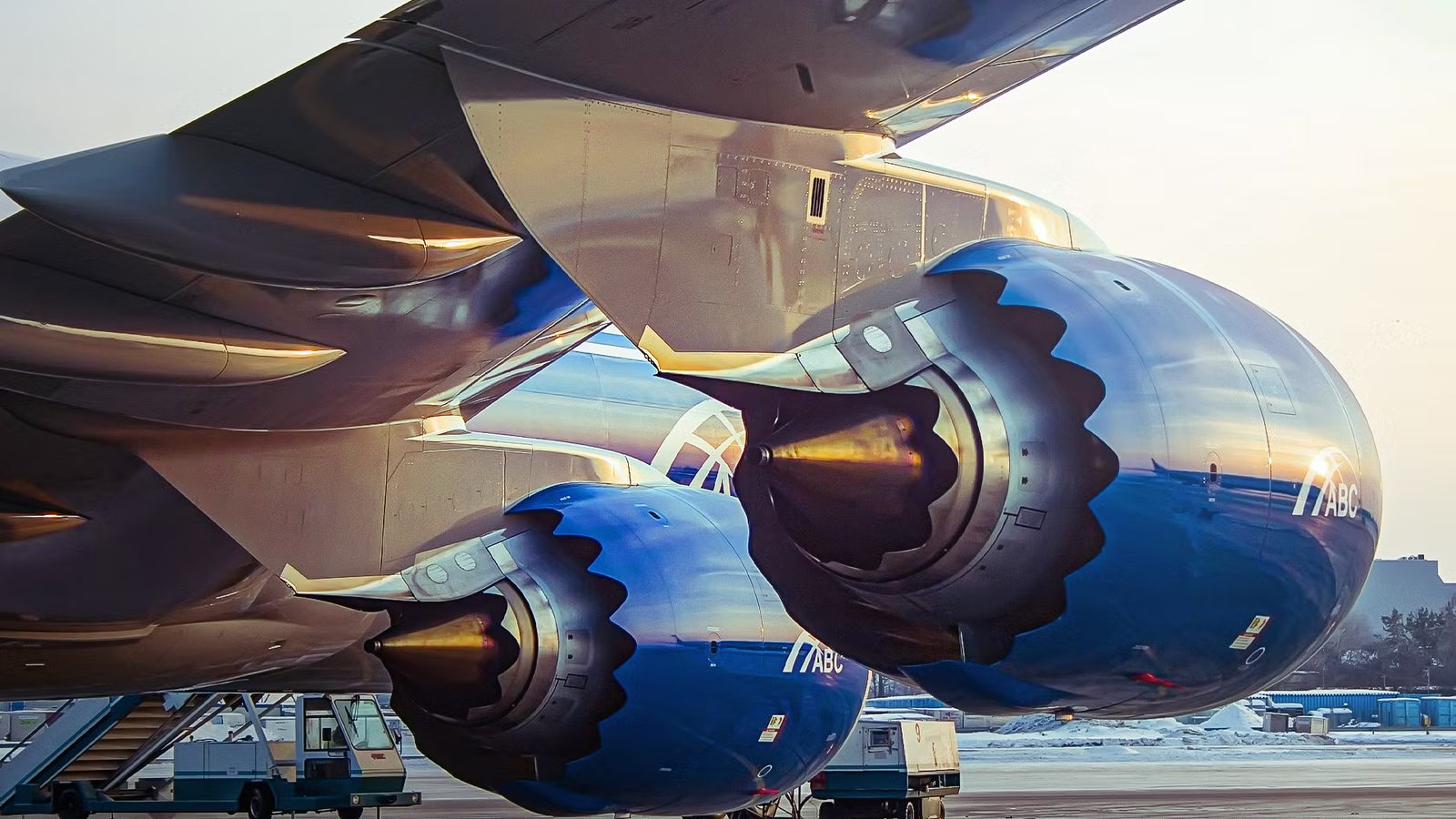
It is true that both the 747-8, the final iteration of the Boeing double-decker, and the 787 Dreamliner, its latest and greatest clean sheet design, use the same engine as their power plant. However, each of these aircraft uses a different variation of that same turbofan that is tailored to its unique needs and engineering qualities.
The 747-8 exclusively uses the GEnx-2B while the 787 Dreamliner is the only jetliner to ever be equipped with the GEnx-1B. Boeing chose the GEnx for the 747-8 primarily to modernize the aging jumbo jet with next-generation technology. Both aircraft feature distinctive serrated chevrons on the engine nacelles, which mix hot exhaust with cool air, significantly reducing noise.
For airlines that operate both the 787 and 747-8, using the same engine family simplifies maintenance, parts inventory, and technician training. The GEnx-1B is a larger, more powerful, and more-electric engine designed for a modern twin-engine jet. The GEnx-2B is a smaller, simplified variant that incorporates traditional pneumatics to breathe life into the older 747 systems while providing modern fuel efficiency.
The Broad Strokes

While the GEnx-1B (787) and GEnx-2B (747-8) share a common high-pressure core and 80% of their Line Replaceable Units, they are distinct engines optimized for different aircraft architectures. The most fundamental difference is how the engines interact with the aircraft’s internal systems. The GEnx family is designed to stay on wing 20% longer than previous generations, with some fleet leaders exceeding 30,000 hours without a major overhaul.
Both engines offer approximately 15% better fuel efficiency than the older CF6 engines they replaced. Tom Levin, General Manager of the GEnx/CF6 engine product line at GE Aviation, commented on the engine’s success when the 1,000th GEnx engine was developed in 2015. He said that:
“The GEnx was the fastest selling engine in GE’s history, and now it is the fastest production ramp up of a GE widebody engine program. The GEnx engine has proven itself with outstanding performance and reliability.”
The 787 uses a bleedless architecture where most systems are powered electrically. The 747-8 uses a traditional bleed air system to power environmental controls and start the engines, requiring the GEnx-2B to include bleed air ports. The GEnx-2B features fewer stages in the booster and low-pressure turbine to optimize it for a four-engine configuration.
The  Boeing 747-8, on the other hand, uses a traditional bleed air system. It must bleed high-pressure air from the compressor to power the 747’s pneumatic systems, including cabin pressurization and thermal anti-icing.
GEnx Head-To-Head

To fit the 747’s wing and ground clearance, the GEnx-2B has a smaller fan diameter, 105 inches, compared to the 787’s 111 inches. Because the 747-8 has four engines while the 787 has only two, the -2B is simplified internally to be lighter and more optimized for its lower per-engine thrust requirement. The -2B produces roughly 66,500 lbs of thrust, whereas the 787 variants can reach up to 76,100 lbs.
The GEnx-1B has more power because it is intended for a twin-engine aircraft (787) that must maintain performance in the event of an engine failure during takeoff. Because the GEnx-2B’s power is distributed across four engines on the 747-8, its thrust rating is 66,500 lbf lower. Compared with older engines like the CF6, the GEnx-2B’s technology improves fuel efficiency and cuts emissions by 15%.
Feature | GEnx-1B (Boeing 787) | GEnx-2B (Boeing 747-8) |
|---|---|---|
Max Takeoff Thrust | 69,800 to 80,400 lbf | 66,500 lbf |
Bypass Ratio | 9.0:1 to 9.6:1 | 8.0:1 |
Fan Diameter | 111.1 inches | 104.7 inches |
Overall Pressure Ratio | Up to 58.1:1 | 52.4:1 |
System Architecture | Bleedless (Electric) | Bleed Air (Pneumatic) |
In contrast to the 1B, the GEnx-2B has de-staged components to maximize weight and performance for a four-engine setup. In contrast to the 1B’s four stages, the 2B’s low-pressure compressor has three stages. In the low-pressure turbine, the 1B has seven stages, whereas the 2B has six.

Comparing The 2 Boeing 787 Dreamliner Engines
The Boeing 787 comes with both GE and Rolls-Royce engine options, although GE’s engines have become more popular in recent times.
Burning Cash

Compared with the Boeing 747-8, the 787 Dreamliner delivers bettereconomics and is much more efficient in the widebody market, as it is a lightweight twin-engine composite aircraft. These engineering variations determine their efficiency and commercial success. The 747 uses about 3,800 gallons of fuel per hour, while the 787 uses about 2,900 gallons. The 787-9 is extremely efficient, using approximately 2.31 liters per 100 km per passenger, which is significantly better than the 747-8’s 2.82 liters per 100 km per passenger.
Boeing’s Dreamliner also costs significantly less to operate, with a lower cost per available seat mile. Airlines typically prefer smaller twin-engine aircraft because they are less dangerous to fill and fly. The 787’s design and performance have allowed it to thrive in the modern aviation market, while the 747-8 has seen limited passenger orders before the end of its production in 2017 and the full shuttering of the 747 assembly line in 2023.
The Dreamliner has essentially eliminated the conventional hub-and-spoke paradigm that made the 747 necessary. While the 747 required a high passenger capacity to be successful, the 787’s efficiency allows it to travel the same distances with fewer seats, making it a better match for today’s point-to-point market.
The 787’s efficiency allows airlines to launch new, nonstop point-to-point routes that would not have been economically viable with older, bigger, four-engine planes. Despite being more efficient than previous 747s, the 747-8 is still best suited to high-volume hub-to-hub services. Airlines such as United have made large 787 orders to replace a mix of 747s, 767s, and early 777s with a single, simpler aircraft family, resulting in significant cost savings for pilot training and component inventory.
What Makes GE9X The World’s Monster Jet Engine?
Unravel the secrets of the massive GE9X, a jet engine that redefines scale and efficiency in the skies.
The Generational Difference

The 787 incorporates a large amount of carbon composite material, making it lighter, more resistant to fatigue and corrosion, and allowing for higher cabin humidity and lower cabin altitude, which enhances passenger comfort and reduces structural stress. The 747-8 is a development of a traditional aluminum design, with a heavier base structure.
 Lufthansa has incorporated the 787-9 to handle flights that need the same range but have about 70–90 fewer people, even though it is still a 747-8 operator. Because of this, even at off-peak times, the airline can maintain high load factors (percentage of seats filled).
  British Airways switched to the 787-10 for important transatlantic flights to New York and Chicago after retiring its entire 747 fleet. The 787-10 is 25% more fuel-efficient than the 747 while offering comparable cargo capacity and contemporary comforts.
This Is The Fastest Boeing Jet In Service
The fastest Boeing found on the flightline today is more than just that, it’s also the last Queen of the Skies to ever take to the air.
A New Era In Long-Haul Flying

Compared to the 747, the 787 Dreamliner offers a better long-haul passenger experience because of its composite airframe, which creates a cabin environment that more closely resembles ground conditions. When compared to older aircraft like the 747, which have a cabin altitude of 8,000 feet, the 787’s cabin altitude of 6,000 feet makes a significant difference for passengers. That lower-pressure altitude does many things to improve the effects of fatigue on passengers inflight.
The composite construction of the 787 is not only 50% by weight but 80% by volume. Thanks to that light yet incredibly durable construction, it can do things no previous aircraft could. That includes having larger windows, higher humidity (15% or double that of legacy jets), and a more spacious interior with more natural lighting and better overhead storage.
While the 747 is much loved for its incredibly smooth landing characteristics and gentle handling and flight, the 787 uses a new technology known as ‘smooth ride’ to counteract turbulence in flight. This is the same technology that the 777X will use when it finally debuts in 2027. Although the 747 was known as the Queen of the Skies, the Dreamliner has become the best-selling widebody in history. It has been the flagship product of the legendary plane maker, as its 737 MAX has flailed in the wake of a disastrous debut.
This is not only a major improvement for the long-haul market, but also for operators that use these aircraft for high-density hub-to-hub transport, and makes a major improvement for the densest routes in the world. A 787 Dreamliner is not only a game-changer for the operators that fly it, but it also marks a paradigm shift in the experience for flyers. While the era of the 747 ushered in a golden age of jet-powered commercial aviation, the 787 and future successors such as the 777X herald the next era in air travel.