dailynewsnblog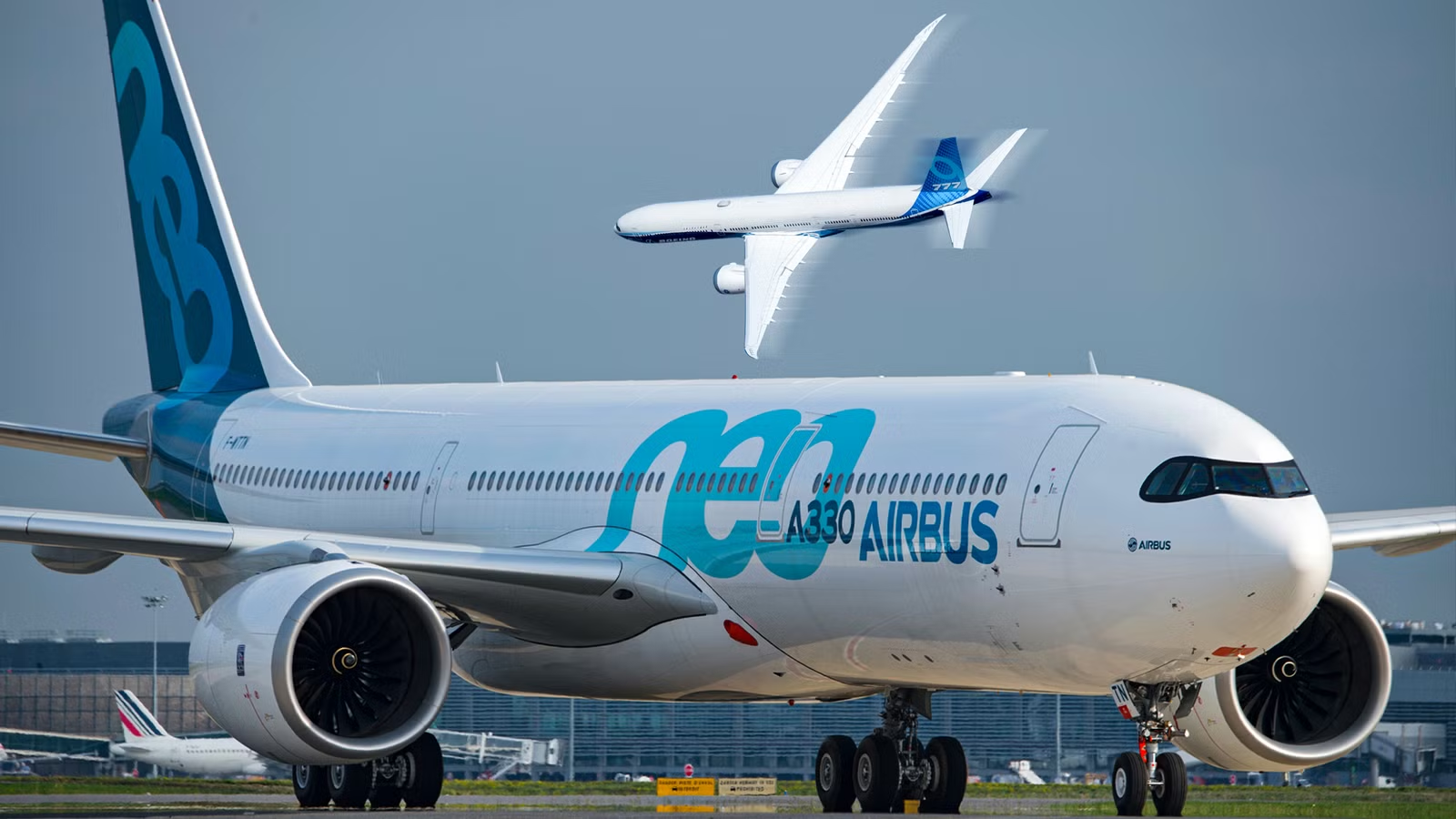
The question of whether  Boeing’s obsession with a clean-sheet carbon-fiber wing actually bought meaningful efficiency, or just a massive bill, has become a central debate among industry analysts. This specific comparison asks if it is factually correct that the development budget for a single component of the Boeing 777X matched the entire cost of bringing the Airbus A330neo to market.
This exploration will dive into the technical geometry of both wings, the financial fallout of Boeing’s $15 billion program charges, and the pragmatic approach Airbus used to achieve a record-breaking aspect ratio. Examining the trade-offs between clean-sheet composite engineering and the iterative evolution of aluminum, we can clarify if Boeing’s $2 billion wing gamble represents a revolutionary leap or a case study of diminishing returns in aviation design.
Program Within A Program

The math is as jarring as a sudden patch of clear-air turbulence for those used to traditional development budgets. While Boeing poured at least $2 billion into just the research, development, and manufacturing infrastructure for the 777X’s carbon-composite wing, Airbus managed to bring the entire A330neo aircraft to life for roughly the exact same figure. This stark parity highlights a fundamental split in how the two aerospace giants view the future of widebody travel.
Confirmed figures suggest that Boeing’s wing development alone was a program within a program, requiring a dedicated composite wing center and entirely new tooling to handle the massive scale of the 235.4-foot (71.75 m) structure. This investment was not just about the wing itself, but about creating the capability to manufacture the largest composite wings in commercial aviation history.
Airbus, conversely, opted for a minimalist redesign of the existing A330 platform, focusing its capital on the engines and aerodynamic refinements rather than a structural overhaul. Through avoiding the cost of a new fuselage or a clean-sheet wingbox, the European manufacturer kept its total program cost at the same $2,000,000,000 level that Boeing spent on a single flight surface. Such financial symmetry has become a defining data point in discussions regarding the efficiency of modern aerospace spending.
Changing The Rules

Developing a wing of this magnitude involves completely rewriting the laws of airport logistics. Boeing’s 777X wing features an innovative folding wingtip mechanism designed specifically to meet Code E airport gate constraints. Without this complex hinge system, the jet’s massive span would prevent it from docking at standard gates, a hurdle that cost hundreds of millions in engineering alone to ensure the mechanism is both fail-safe and aerodynamic.
The folding architecture allows the jet to maintain a 235.4-foot (71.75 meters) span during flight for maximum lift, while retracting to 212 feet (64.6 meters) on the ground. Critically, the use of carbon fiber rather than aluminum allows for a much thinner, more efficient airfoil that can handle higher loads without the weight penalty of traditional metals. However, the unit cost of this advanced tech is steep, with each wing estimated to cost approximately $50 million to produce even after development is finished.
|
Feature |
Boeing 777X Wing |
Airbus A330neo Wing |
|
Primary Material |
Carbon-fiber composite |
Optimized aluminum |
|
Full Wingspan |
235.4 feet (71.75 meters) |
210 feet (64.0 meters) |
|
Development Cost |
~$2 billion (Wing Only) |
~$2 Billion (Total Plane) |
|
Special Feature |
Folding wingtips |
11.3 Aspect Ratio |
|
Manufacturing Hub |
Everett Composite Wing Center |
Integrated wing factory |
Every square inch of the 777X wing is designed to maximize the per-seat-mile efficiency of an aircraft that carries over 400 passengers. While the budget seems astronomical, Boeing’s bet is that the long-term fuel savings of a composite wing will outweigh the initial capital expenditure over the 25-year life of the airframe. Whether airlines agree depends largely on if the 2027 delivery date holds firm after years of delays.
Why Might The World’s Most Environmentally Progressive Widebody Aircraft Have Airbus Worried?
Will this bold move redefine the future of international air travel?
More Than Good Enough

Industry analysts often point to the A330neo as a masterclass in good enough engineering. Lengthening the existing aluminum wing from 197.8 feet (60.3 meters) to 210 feet (64 meters) and adding composite Sharklet extensions, Airbus achieved a dramatic boost in performance without the multi-billion dollar risk of a new material build. This pragmatic approach targeted the sweet spot of the widebody market, offering a modern aircraft that is significantly cheaper to lease and operate than its clean-sheet rivals.
Airbus achieved an aspect ratio of 11, currently the highest of any commercial aircraft in production, by using 3D aerodynamic optimizations to refine the shape of the metal. This allows the A330neo to deliver an estimated 4% improvement in fuel consumption purely from wing efficiency. While it lacks the futuristic allure of the 777X’s folding tips, the A330neo wing proves that aluminum still has a place in high-performance long-haul flight if the design is sufficiently matured.
Opinions from the leasing community often favor the A330neo’s lower development cost because it translates to lower capital costs for airlines. For many carriers, a 4% gain from a cheap aluminum upgrade is a better business move than a 10% gain from a $2 billion wing that causes years of delivery delays. The A330neo has essentially become the sensible, but future-focused option: reliable, efficient, and built on a proven foundation.
A Financial Masterpiece?

Contrasting the two programs reveals a fundamental divergence in risk appetite. Boeing’s total program charges for the 777X have now ballooned to over $15 billion, including a massive $4.9 billion hit taken in a single quarter due to certification and testing delays. This means the wing’s $2 billion development cost was just the beginning of a financial spiral that has put immense pressure on the manufacturer’s liquidity.
Airbus, on the other hand, kept the A330neo lean by utilizing existing supply chains and assembly lines. This allowed the program to reach profitability much faster than the 777X ever could. The 777X aims to dominate the ultra-large category where no other plane exists, whereas the A330neo competes in the heart of the mid-sized widebody market where price sensitivity is paramount.
|
Metric |
Boeing 777X Program |
Airbus A330neo Program |
|
Total Dev. Cost |
~$15 Billion+ (accumulated) |
~$2 Billion |
|
First Delivery |
2027 (current est.) |
2018 |
|
Recent Loss |
$4.9 Billion (one quarter) |
Program is profitable |
|
Efficiency Goal |
Clean-sheet superiority |
Iterative optimization |
The diminishing returns mentioned in industry discussions are clearly visible here: Boeing spent nearly eight times more than Airbus did to chase a fuel-burn advantage that is measured in single digits over its predecessor. For airlines, the question is now far more about whether a plane that costs this much to develop can ever be cheap enough to buy. The 777X wing is an engineering masterpiece, but the A330neo is a financial one.
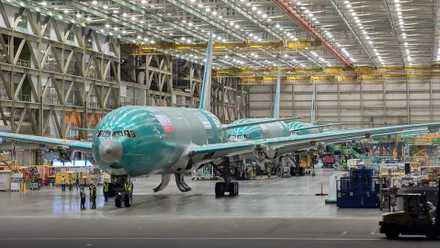
Why Did Boeing Already Build Over 20 Examples Of The 777-9?
The Boeing 777-9 is not due to enter commercial service until 2027.
Still Delayed

Technical hurdles remain the primary antagonist in Boeing’s narrative, with the wing being both a crowning achievement and a source of significant complexity. The single quarterly loss of $4.9 billion that recently hit the 777X program was largely attributed to the prolonged certification process for its unique technologies, including those folding tips. When you innovate on this scale, the unknown unknowns of the testing phase can evaporate billions in capital in months.
Airlines watching the program must balance the promise of the 777-9’s capacity against the risk of further timeline slips. The A330neo is already in widespread service with a proven trackable fuel-burn history, and the 777X remains a theoretical advantage until it enters revenue service in 2027. It is likely that further program charges in Boeing’s financial reports will appear, as these often signal that the cost of manufacturing that complex wing is still higher than initially projected.
Exceptions to the ‘A330neo is better’ argument exist for airlines with massive hubs that are slot-constrained. For a carrier like  Emirates, a $2 billion wing is a justified expense if it allows them to fly more than 400 people in a single flight with the efficiency of a smaller jet. In these specific high-density scenarios, the brute force innovation of Boeing makes more sense than the smart upgrade of Airbus.
A Proven Winner?

Ultimately, the 777X wing vs. A330neo plane debate highlights the diminishing returns of pure innovation. Boeing’s $2 billion wing budget bought a leap in composite technology and airport compatibility that is unmatched, but it did so at the cost of massive program instability and financial losses. Airbus proved that for $2 billion, you could build an entire, profitable aircraft that meets the needs of 80% of the world’s widebody routes.
What really sets these two aircraft apart is the reality that one is in service and one is not. Until both are fully established in fleets and route networks around the world and enough real-world data can be extrapolated to provide a true performance comparison, the A330 stands as the objective winner of the two. The promises of the 777X program for now are merely promises, and it remains to be seen whether a manufacturer that has failed to deliver on its initial production promises can deliver the performance it promotes so much.
The next decade will most likely favor the Airbus evolutionary model as manufacturers prioritize financial stability over clean-sheet risks. While the 777X will eventually be the leader of the long-haul skies, its birth has been the most expensive in aviation history, largely due to that magnificent, folding composite wing. For travelers, this means the planes of the future might look remarkably like the planes of today, just with much smarter, more efficient wings hidden in plain sight.