dailynewsnblog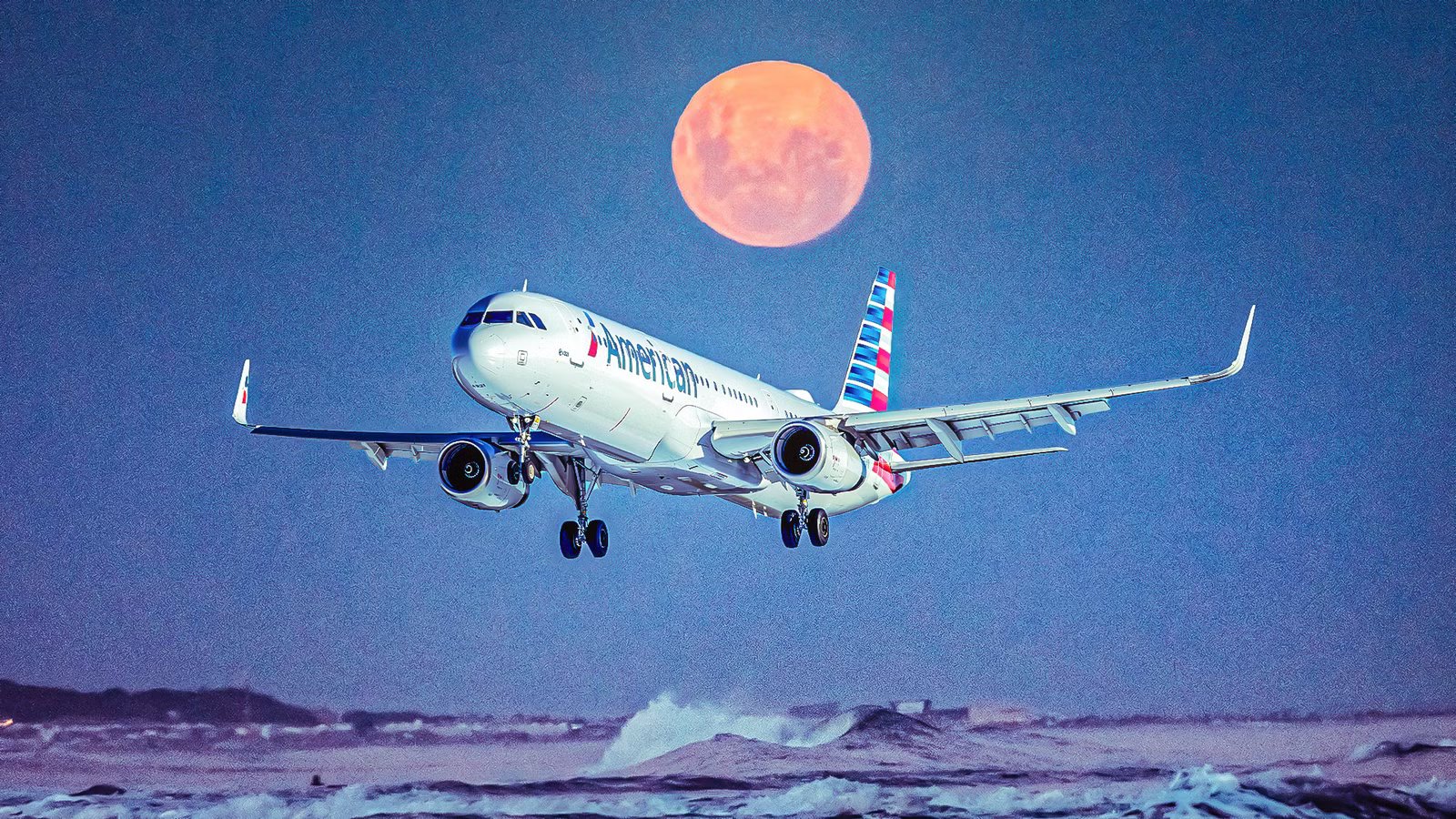
For airlines operating long routes over water, regulatory approval is not just a technical requirement but a foundational element of network planning. One of the most critical certifications in this context is ETOPS, or Extended-range Twin-engine Operational Performance Standards. This certification allows twin-engine aircraft to operate routes that take them far from diversion airports, enabling efficient transoceanic travel that would otherwise require larger aircraft or more circuitous routing.
In recent years, questions have circulated about whether  American Airlines removed ETOPS certification from its Airbus A321 fleet. The short answer is yes, but the full explanation is more nuanced. The airline did remove ETOPS certification from a specific sub-fleet of older A321 aircraft, but this move was part of a broader fleet modernization strategy rather than a retreat from overwater operations. To understand the significance of this decision, it is necessary to examine what ETOPS entails, how American previously used ETOPS-certified A321 aircraft, what changed around 2020, and how the airline’s fleet strategy has evolved since then.
What ETOPS Means & Why It Is Operationally Critical

ETOPS certification governs how far a twin-engine aircraft can fly from the nearest suitable diversion airport. Without it, aircraft must remain within a limited distance of alternate landing sites, which restricts routing options and can make certain flights impractical or uneconomical.
For aircraft like the Airbus A321, ETOPS certification is essential for operating routes that cross large bodies of water. Flights between the US West Coast and Hawaii are a prime example. These routes require extended diversion capability because aircraft spend long portions of the journey far from land-based airports and must do so within strict operational safety margins.
Achieving ETOPS certification is not a simple process. Airlines must meet strict regulatory requirements related to engine reliability, maintenance procedures, crew training, and operational oversight. Aircraft must demonstrate a high level of technical reliability, and airlines must maintain ongoing compliance through specialized maintenance programs and operational controls. This creates a trade-off. ETOPS enables more efficient and flexible routing, but it also introduces additional cost and complexity. Airlines must decide whether the operational benefits justify the investment, particularly when only a portion of the fleet is used for such missions.
American Airlines’ ETOPS-Certified A321 Sub-Fleet

Before 2020, American Airlines operated a dedicated group of Airbus A321ceo aircraft configured specifically for ETOPS operations. These aircraft, commonly referred to as A321H within the airline, were used primarily on routes between the US West Coast and Hawaii. This approach allowed American to deploy a narrowbody aircraft on routes that might not consistently justify the capacity of a widebody jet. Compared to larger aircraft, the A321ceo offered lower trip costs and the flexibility to better match capacity to demand. For leisure-heavy markets like Hawaii, this was an efficient solution during certain periods.
However, maintaining a dedicated ETOPS sub-fleet came with operational challenges. These aircraft required distinct maintenance procedures, additional regulatory oversight, and specialized crew training. They also had to be scheduled carefully to ensure they were available for routes that required ETOPS capability. The reverse is also an important consideration; only ETOPS-certified aircraft can fly certain routes.
|
Current American Airlines Narrowbody Fleet |
|
|---|---|
|
Aircraft |
Total in fleet |
|
A319 |
132 |
|
A321-200 (ceo) |
48 |
|
A321neo |
86 |
|
737-800 |
303 |
|
737 MAX 8 |
98 |
|
Source: Planespotters.net |
|
While this strategy was effective in enabling narrowbody service to Hawaii, it introduced complexity into the airline’s broader fleet management. In fact, in 2015, American mistakenly operated a non-ETOPS-certified A321 to Hawaii, underscoring how easily errors can occur when managing a small, specialized sub-fleet. Maintaining ETOPS certification for just a portion of the fleet required meticulous tracking of aircraft status, engine cycles, and maintenance intervals. Flight dispatchers and operations teams needed to carefully match aircraft to specific routes, considering not only ETOPS status but also crew qualifications, payload restrictions, and fuel planning for extended overwater operations. Over time, as fleet priorities shifted and new aircraft with improved performance entered service, this operational complexity became increasingly burdensome. Airlines began to recognize that consolidating ETOPS responsibilities onto newer, more capable aircraft would reduce risk, simplify scheduling, and improve reliability across the network.

What Plane Has The Highest ETOPS Rating?
The A350 has the highest ETOPS rating of 370, meaning it can fly up to six hours and 10 minutes from the nearest usable landing strip.
The Removal Of ETOPS Certification

Around 2020, American began systematically removing ETOPS certification from its A321ceo sub-fleet. Reports indicated that all 18 A321H aircraft were slated to lose ETOPS status, with several already undergoing the change during scheduled heavy maintenance checks. This decision effectively eliminated the airline’s dedicated ETOPS-configured A321ceo fleet. Once the certification was removed, these aircraft were no longer eligible to operate routes requiring extended overwater authorization, including flights to Hawaii. The removal process itself was methodical, involving updates to maintenance records, operational manuals, and regulatory filings to ensure compliance with FAA oversight.
The timing of this move was not coincidental. It coincided with a broader fleet modernization program that prioritized newer, more capable aircraft with better fuel efficiency, range, and reliability. By phasing out ETOPS certification on older A321ceos, American could retire specialized operational procedures that applied only to a small subset of its fleet. This allowed the airline to consolidate crew training, simplify operational planning, and reduce regulatory oversight for a fleet that was increasingly heterogeneous in terms of aircraft capabilities.
Strategically, the change reflected a deliberate reallocation of resources. Instead of maintaining a small, specialized fleet with higher operational constraints, the airline shifted focus toward the A321neo and other newer aircraft capable of covering similar routes with fewer restrictions. This transition also had network-planning implications: by concentrating ETOPS capability on a smaller number of versatile, next-generation aircraft, American could maintain reliability and flexibility on overwater routes while improving operational efficiency. The move was emblematic of a wider industry trend toward fleet simplification, where airlines aim to reduce the number of sub-fleets with unique certifications, streamline maintenance logistics, and optimize aircraft utilization across their route networks.
Shifting To The A321neo

Importantly, the removal of ETOPS certification from the A321ceo did not signal the end of narrowbody overwater operations for American. Instead, the airline transitioned these missions to newer aircraft, particularly the Airbus A321neo. The A321neo offers several advantages over the older CEO variant. It is more fuel-efficient, has improved range, and is better suited to long-distance routes. These characteristics make it a more effective platform for ETOPS operations, especially on routes like those to Hawaii.
At the same time, American continues to rely heavily on widebody aircraft for long-haul transpacific and transatlantic routes. Aircraft such as the Boeing 777 and Boeing 787 Dreamliner remain central to its international network. These aircraft provide the capacity and cargo capability required for high-demand routes and long-distance travel. While these widebodies handle most of the long-haul volume, the airline is deploying the Airbus A321XLR on some transatlantic routes, signaling its commitment to innovation.
This dual approach allows the airline to optimize its fleet. Narrowbodies like the A321neo can serve thinner or seasonal domestic routes more efficiently, while widebodies handle routes with higher demand. By shifting ETOPS operations to newer aircraft, American maintains its operational capabilities while improving efficiency in its resource allocation.

The Striking Differences Between The Airbus A321XLR & Boeing 737 MAX 10
The Airbus A321XLR and Boeing 737 MAX 10 represent the pinnacle of evolution in the aviation industry, pushing narrowbodies to their absolute limits.
The Change Made Sense

Several factors help explain why American chose to remove ETOPS certification from its A321ceo fleet. Cost is one of the most significant. Maintaining ETOPS compliance requires ongoing investment in maintenance, training, and operational oversight. For a relatively small sub-fleet, these costs can be difficult to justify. Fleet simplification is another important consideration. Airlines benefit from operating aircraft with similar configurations and capabilities, as this reduces complexity in scheduling, maintenance, and crew assignments. Eliminating a specialized sub-fleet streamlines operations and improves overall efficiency.
The introduction of newer aircraft also played a key role. The A321neo provides better performance and lower operating costs, making it a more attractive option for ETOPS missions. As these aircraft entered service, the need to maintain ETOPS certification on older A321ceo aircraft diminished. External factors likely contributed as well. The aviation industry experienced significant disruption around 2020, prompting many airlines to accelerate fleet restructuring efforts. Retiring or repurposing older aircraft and simplifying fleets became common strategies across the industry.
From a broader perspective, organizations such as the International Air Transport Association emphasize efficiency and sustainability as key priorities. Fleet modernization, including the adoption of more efficient aircraft, is a central part of this effort. American’s decision aligns with this industry-wide focus on reducing costs and improving operational performance.
Adapting Fleets Amid Changing Economic & Operational Conditions

Overall, it is true that American removed ETOPS certification from its A321ceo aircraft. However, this decision should not be interpreted as a withdrawal from overwater operations or carry any negative connotation. Instead, it reflects a strategic shift toward newer, more efficient aircraft and a simpler fleet structure. By transitioning ETOPS operations to the A321neo and continuing to rely on widebody aircraft like the 777 and 787 Dreamliner, the airline has maintained its ability to operate long overwater routes while improving efficiency and reducing complexity.
This case illustrates how airlines continuously adapt their fleets to changing economic and operational conditions. Decisions about certifications like ETOPS are not static but evolve alongside technology, market demand, and strategic priorities. For passengers, these changes are largely invisible. For airlines, they are a critical part of maintaining competitiveness in a demanding and dynamic industry.