dailynewsnblog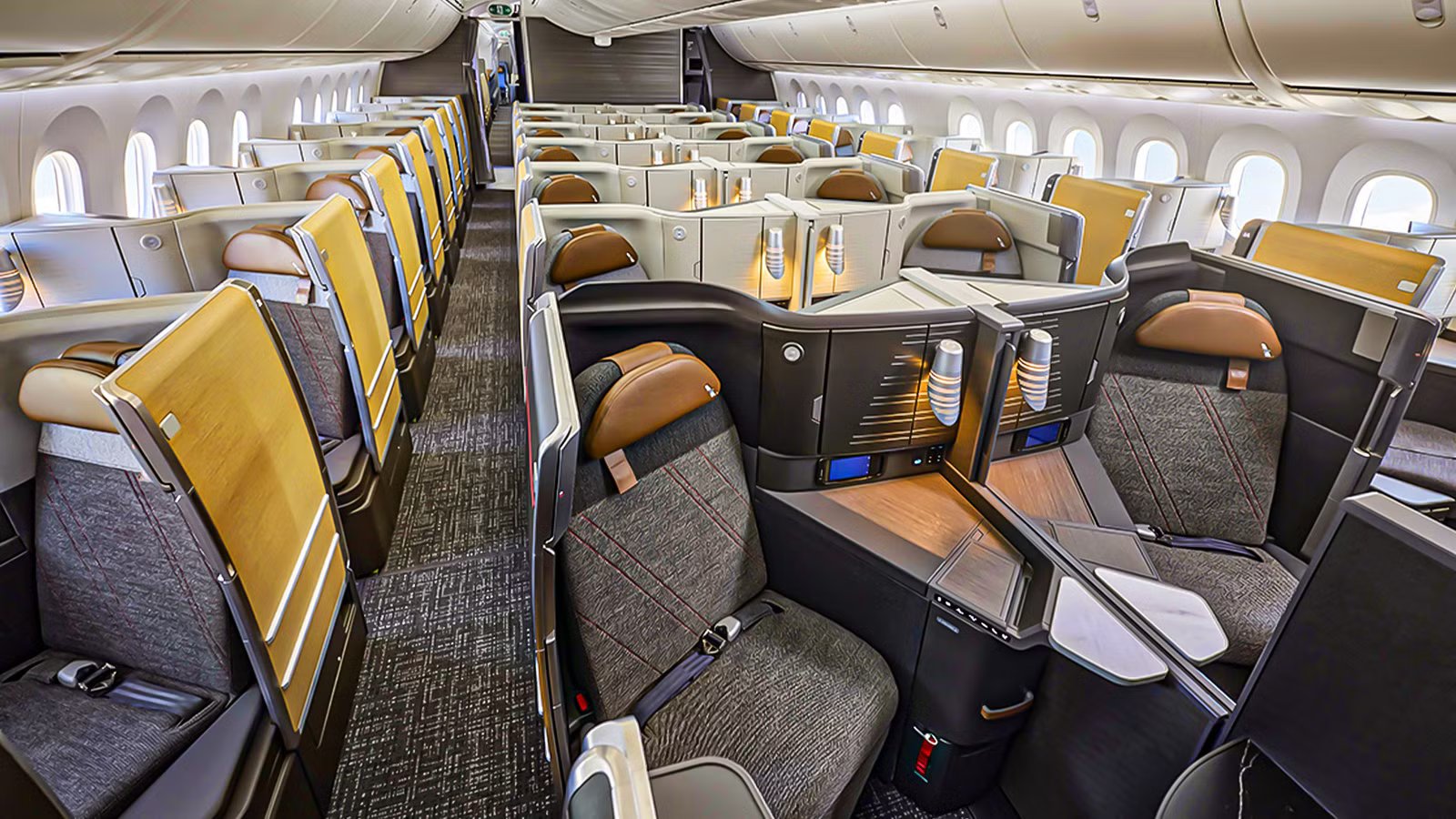
At first glance, it sounds like an illogical claim. Why exactly would  American Airlines’ newest and most premium business-class product, especially Flagship Suites, sometimes price below the airline’s more traditional Flagship Business seat? Nonetheless, there are some travelers who have been spotting exactly that on long-haul searches, prompting a simple question with a complicated answer. Are the suites themselves actually cheaper, or is this simply an illogical conjecture made on the internet? We decided it was time to investigate. This discussion sits at the intersection of cabin branding and advanced airline revenue management strategies. The airline now sells multiple experiments that can share the same aircraft, route, and departure date, but not necessarily the same fare buckets, inventory controls, or bundled benefits.
The result we find is that two seats that may look similar on a seat map can be governed by extremely different rules behind the scenes, especially as American elects to roll out new suites on select widebody routes and calibrates pricing during the transition period. We unpack what Flagship Suites are, how they are both marketed and sold by the airline, and under what scenarios a suite can price less than a non-suite Flagship Business fare. Cash fares, award pricing, and upgrade offers are also worth keeping in mind here. Therefore, it is important to consider what one is buying before actually putting down a credit card.
What Exactly Are Flagship Suites?

American’s Flagship Suites are the carrier’s newest premium business-class product, designed as a step up from its older Flagship Business seats on select widebody aircraft. The defining feature of these seats is privacy, as each seat has a sliding door that cuts it off entirely. Higher sidewalls help create a more enclosed mini-cabin feel compared with more traditional open business-class layouts. The seat still converts into a fully flat bed, but the suite adds more personal space, better storage, and a more premium finish.
The seat itself is built with upgraded materials, larger or more modern screens, and improved lighting and surfaces. More importantly, Flagship Suites are both a seat and a brand. It signals American’s latest-generation business-class hard product, not a separate cabin like first-class. These seats are designed to help give the airline even stronger pricing power on premium routes, something especially valuable for premium revenue growth. American’s competitors, including both  Delta Air Lines and United Airlines, have only continued to expand their premium offerings.
On routes where the suites are offered, passengers will generally still receive American’s Flagship service elements that are associated with taking any kind of premium long-haul flight with the airline. The airline’s priority services and an elevated onboard experience will certainly be available to passengers, including access to the carrier’s award-winning lounge network. The exact amenities, however, will undoubtedly vary by aircraft type and specific route. Thus, Flagship Suites are American’s door-equipped, privacy-focused evolution of business-class cabins, rolling out gradually across parts of the long-haul fleet as cabins continue to be refreshed and new aircraft eventually enter service.
Where Are These Flagship Suites Being Deployed?

Flagship Suites are currently concentrated on two different aircraft types, including American’s newest Boeing 787-9, with the latest deliveries often being referred to in marketing materials as the Boeing 787-9P (the P stands for premium). The seats are also set to be featured on the incoming Airbus A321XLR. On the Boeing 787-9, American’s published rollout has indicated that the new cabin will be first deployed on services from Chicago O’Hare International Airport (ORD) to London Heathrow Airport (LHR). The cabin will then be featured on flights from Philadelphia International Airport (PHL) to London and from Philadelphia to Zurich Airport (ZRH). Deployments from Dallas/Fort Worth International (DFW) are also under consideration. The cabin may also appear on a handful of domestic positioning legs, since American used service from Chicago to Los Angeles to showcase the cabin before it entered international rotations.
On the Airbus A321XLR, American is using Flagship Suites to replace the older Airbus A321T on premium transcontinental routes. The first service with the type took place on December 18, 2025, and it connected John F. Kennedy International (JFK) with Los Angeles International Airport (LAX). The airline has further signaled that other A321T-style markets like JFK to San Francisco and JFK to Orange County (SNA) could soon see the type. Flights to the West Coast from Boston Logan International Airport (BOS) could also be key places where the aircraft is deployed.
Beyond transcontinental services, American Airlines has said that the XLR is key for long-and-thin international routes, and the carrier has cited a JFK-Edinburgh deployment. Looking ahead, American says that its suites will be standard on newly delivered Boeing 787-9s and Airbus A321XLRs, and it plans widebody retrofits on aircraft like the Boeing 777-300ER.

What Are The Benefits Of Flying In American Airlines’ New Premium Economy?
The refreshed premium economy seats are more comfortable, aesthetically pleasing, and technologically advanced than older seats.
How Does American Price Flagship Suites?

American Airlines does not publish a separate Flagship Suites fare chart. When a flight is operated by a suite-equipped aircraft, the seat is generally sold as Flagship Business, and it is sometimes bundled into a higher Flagship Business Plus fare. Pricing then follows standard airline revenue management procedures, as American Airlines loads multiple fare buckets within business class and opens or closes them based on forecasted demand, competitor fares, seasonality, and how many premium seats it still expects to sell.
Instead of a fixed suite surcharge, the new seat value is pretty much just embedded in whichever fare bucket one is offered when they land on American’s or a third-party website. Within the cabin, a handful of bulkhead seats are labeled as “Flagship Suite Preferred.” For now, several independent reviews have reported that American often lets business-class customers select these seats at no additional cost on the seat map.
After booking, American Airlines may also present instant paid upgrade offers in cash or miles. Those offers re-price dynamically as departure approaches and inventory changes. On routes where American mixes older cabins with suite-equipped jets, differences in business-class seat counts and demand can make the suite flight price noticeably lower.
Can Regular Business Ever Price Above Flagship Suites?

At times, Flagship Business can price above a Flagship Suites flight, and it is typically not some kind of system glitch. Flagship Suites are mainly a newer business-class seat on a certain aircraft, not a separate cabin that mandates its own kind of surcharge. Thus, pricing is still managed through revenue buckets and overall inventory controls. Airlines routinely open and close fare availability, and thus pricing, as bookings and forecasts may change over time.
If the suite-equipped departure has lower-priced buckets available (or demand is softer), it can cleanly undercut an older-cabin departure on the same route. Further rules will also widen the gap even further, as a fully refundable, change-flexible, or more heavily bundled Flagship Business fare can be materially higher than a restricted fare on a flight with a suite, even when the hard product may be inferior. The convenience of schedules is also important to keep in mind here.
A nonstop flight at a better time of day, a stronger connecting itinerary, or a day with strong corporate command can create a high price premium regardless of whether the seat has a door. Post-booking cash or miles upgrade offers are also dynamic, which can skew comparisons in many ways. Lastly, aircraft swaps can create weird comparisons. If American Airlines changes which jet operates a given flight, the market may be paying for the time and routing, not the product itself.

Luxury Comfort: Inside American Airlines’ New Premium Boeing 787-9
The airline has introduced brand new business class suites and revamped the premium economy and main cabin.
How Can You Figure Out If You Are Getting A Good Deal?

Passengers should start by comparing different kinds of itineraries. They should ensure that both booking options have the same fare type (whether refundable or nonrefundable), and the same change and cancel terms, baggage allowance, and whether they are looking at Flagship Business Plus bundles. A cheaper suite is often just a cheaper and more restrictive fare bucket.
Next, passengers should evaluate by aircraft and the seat. Equipment details are also important here, especially when one is considering booking a seat in a Flagship Suite. Opening up the seat map to confirm that they can actually select a suite is another important step. Some remaining suites may be undesirable (such as those near the galleys), and they will thus be priced at a discount.
Alternatives also matter here, with cash fares and mileage redemptions pricing differently. Customers should also try to consider what it would cost to directly upgrade to the cabin. Sometimes, the best value can be unlocked by buying a ticket in a cheaper cabin and taking a reasonably priced upgrade offer at the gate.
What Is Our Bottom Line?

At the end of the day, American Airlines is looking to fundamentally change the way that it offers seats in premium cabins, focusing on higher-end products like its Flagship Suites. The challenge with this is that the airline now has multiple different kinds of premium cabins onboard its aircraft, sometimes making it difficult to nail down the one you want.
Nailing down the kind of cabin you want is hard enough in and of itself, but even harder is actually doing so at an optimal price point. That requires significantly more effort, especially on some of the highest-demand transcontinental routes.
However, if you plan carefully and specifically focus on the routes, dates, and aircraft type that offer the cabin of service you want, you should be able to get yourself a fairly decent deal. Under some unique circumstances, you may even find Flagship Suites priced below standard business class.

![17-Hour Nonstop Flights: American Airlines’ Ultra-Long Routes In 2026 [Map]](https://dailynewsnblog.com/wp-content/uploads/2026/06/823-american-airlines-boeing-787-9-austin-deppe-_-shutterstock-1.jpg)