dailynewsnblog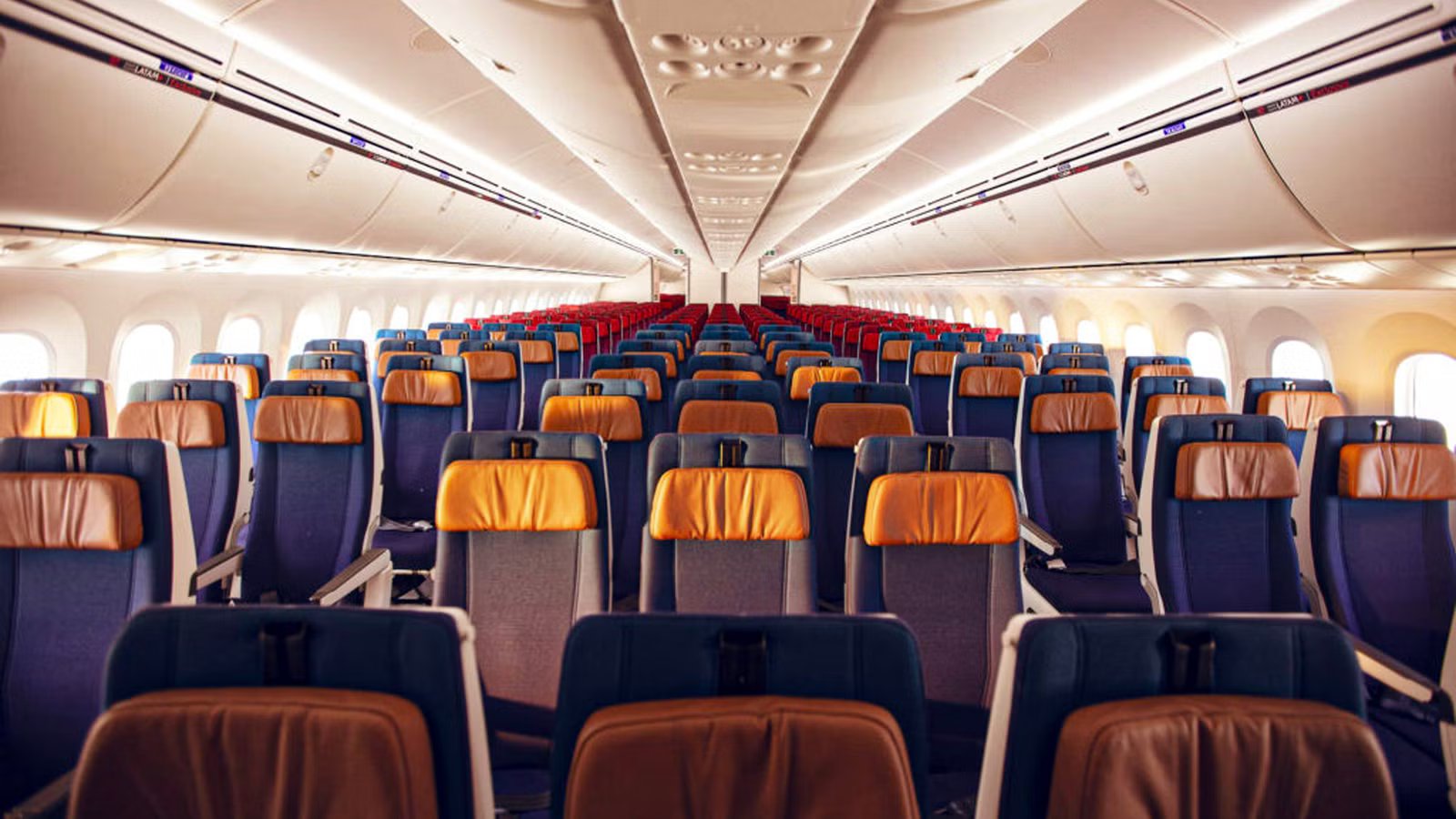
Passengers walking through the boarding door of a modern widebody aircraft are increasingly greeted by sprawling rows of massive business suites and spacious premium economy loungers, while the traditional economy section is squeezed further into the back. So are economy cabins actually shrinking in favor of those with more spending power looking for a getaway?
Network legacy carriers have long designed their entire business model around securing high-paying corporate contracts, treating the economy cabin as a low-margin space to fill remaining baseline capacity. However, a major economic shift has altered this landscape, leaving airlines to seek an entirely new demographic of self-funded, affluent leisure travelers who are willing to pay thousands of dollars out of pocket for premium space.
Where The Money Is At

There may actually be some truth to this apparent favoritism, as global airlines are actively reducing their standard economy real estate to make room for higher-margin premium seats. The change is not really a temporary tactical response to post-pandemic travel patterns, but rather a permanent, structural reassessment of how aircraft cabins generate revenue. Rather than maximizing total passenger volume, network fleet managers are deliberately optimizing revenue density by removing low-yield coach seats.
These changes manifest clearly across the world’s major carriers, who are spending billions of dollars to alter the layout of their fleets. For instance, major North American airlines like  American Airlines and international airlines are taking delivery of widebody aircraft configured with historically low economy seat counts while packing the forward cabins with massive business class footprints. Travelers looking to book a flight on key transpacific or transatlantic corridors will find that the expected rows of standard economy have been replaced by expanded premium economy sections and private suites equipped with sliding privacy doors.
Airlines have treated the premium cabin as an exclusive playground for corporate travelers flying on company expense accounts, relying on these business contracts for stable profitability. However, recent financial cycles have revealed a massive divergence where corporate travel spending remains flat while premium leisure demand has skyrocketed. Naturally, if revenue is being gained more consistently through these channels, then affluent vacationers paying out of pocket will have completely replaced the traditional suit-and-tie business flyer as the primary target for luxury onboard seating for the foreseeable future.
Catch what other flight trackers miss
Emergency squawks, holds, NOTAMs — live signals, no signup.
Open tracker
Catch what other flight trackers miss
Emergency squawks, holds, NOTAMs — live signals, no signup.
Open tracker
Airlines Jumping At The Opportunity

Airlines are known to operate on thin margins where every square inch of cabin space must justify its weight and fuel burn during flight. When older revenue models began showing signs of systemic fatigue, the focus turned entirely to the stark profitability differences between the front and back of the aircraft.
The revenue-generating power of premium seating is enormous and is often underestimated, as a single business class seat can generate three to five times the revenue of a standard economy position, if not more, while occupying only a fraction of the comparative footprint. Furthermore, recent comments by  Delta Air Lines CEO Ed Bastian highlighted how households earning over $100,000 annually now make up roughly 95% of the airline’s revenue. As a result, this gives carriers the confidence to eliminate rows of economy seating, knowing that premium spaces yield significantly higher profit margins per flight.
Real-world examples from major carriers confirm that this financial logic is being implemented rapidly across domestic and global routes. Even giants like  Emirates are retrofitting their existing mid-sized and large aircraft to reduce overall passenger capacity while driving up the ratio of premium options. Even on shorter, high-density domestic routes where standard coach seating once ruled exclusively, passengers are witnessing the installation of premium configurations designed specifically to harvest dollars from wealthy vacationers heading to premium resort destinations.
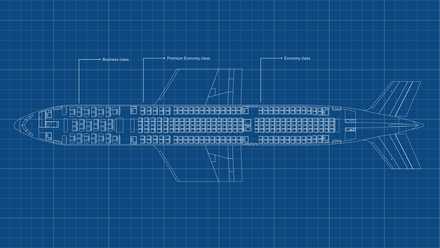
The Key Differences Between Economy, Premium Economy, Business & First Class
Walk the aisle with a seat designer to decode the real differences between economy, premium, business, and first class. Is the upgrade worth it?
All In Agreement

Those making these radical decisions are remarkably transparent about the reasoning for these changes, explicitly stating that future growth strategies will focus heavily on premium revenue streams. Financial disclosures highlight a historic tipping point where premium products have officially overtaken standard economy as the primary financial driver for major network airlines. Executives are openly acknowledging that their corporate regulars have been permanently joined, and in some cases supplanted, by high-net-worth vacationers.
The numbers published in recent financial statements tell a compelling story of this structural transformation. For example, Delta reported that its premium cabin revenue reached $5.70 billion, exceeding its main cabin revenue of $5.62 billion for the first time in its history, with executive leadership confirming that virtually all planned seat growth will occur in premium categories rather than economy. Similarly,  United Airlines posted an impressive 12% year-over-year surge in premium revenue during recent quarterly reporting, while its standard economy revenue grew by a mere 1%.
Carrier | Premium Revenue Trajectory | Fleet Structural Realignment Plan | Core Strategic Focus |
Delta Air Lines | $5.70 billion premium vs $5.62 billion main cabin | Restricting expansion of standard economy rows | Households with incomes over $100,000 |
United Airlines | 12% year-over-year premium revenue growth | Upgrading narrowbody fleets to signature interiors | Maximizing Polaris and premium economy mix |
American Airlines | Highly accelerated premium yield growth | Planning a 45% increase in premium suite capacity | Dense business-plus premium seating layouts |
Executive stances are very uniform on this subject, showing that the consolidation of the economy cabin is a concept that is widely agreed upon. Fleet planners are no longer designing aircraft around the concept of packing maximum passenger volume, unless it is a low-cost airline. Instead, they are purely focused on optimizing yield density, and the best way to do that is by upping the premium revenue. The sweeping consensus among industry analysts confirms that as long as affluent individuals prioritize physical comfort and privacy over basic transportation, the contraction of the economy cabin will continue unabated.
Differences In Requirements

Legacy carriers have long relied on corporate travel managers to fill premium seats through long-term contracts that guaranteed steady traffic. Business class would not be at the point it is today without this connection, driving revenue for all airlines that have a dedicated business class cabin. Today, however, that traditional volume has plateaued, and the revenue void is being aggressively filled by self-funded premium leisure travelers.
These wealthy vacationers display entirely different consumption habits, prioritizing physical comfort, high-end in-flight amenities, and the overall luxury experience over schedule frequency. Corporate travelers typically book their tickets within a narrow window of two weeks before departure, whereas premium leisure flyers frequently secure their seats three to six months in advance, which changes how airlines manage their cash flow and cabin inventory throughout the year.
To capture these high-yield vacationers without alienating remaining corporate clients, global airlines are restructuring their ticket options through unbundled premium fares. Often designated as business light, these categories strip away perks like lounge access or advanced seat assignments to lower the upfront entry price for a private suite. It allows carriers to fill physical real estate with price-sensitive leisure buyers and leaves full-fare corporate travelers needing to purchase expensive top-tier bundles.
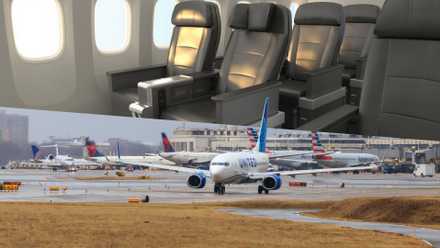
Why US Carriers Are Doubling Down On Premium Cabins
Airline luxury is going mainstream.
The Big Squeeze

Even as the industry rushes to dismantle standard economy rows, yielding exceptional profits during economic expansions, it introduces severe operational vulnerabilities during a macroeconomic correction. Over-premiumization creates a highly rigid cabin configuration that cannot be easily adjusted when consumer spending habits suddenly change. If an economic downturn forces households to ease off on luxury spending, airlines will find themselves stuck with heavy, empty premium seats that drag down flight margins.
The financial danger of maintaining an unbalanced cabin layout becomes highly visible when examining structural failures at the opposite end of the aviation spectrum. The high-profile recent shutdown of Spirit Airlines illustrates that single-focused capacity strategies carry immense risk when a core consumer demographic heads elsewhere. Legacy operators face a mirrored vulnerability if they over-allocate their entire fleet footprint to the top tier of the market, leaving themselves with no defensive flexibility.
Everyday passengers are also experiencing the negative side effects of this trend as the boundaries of standard economy hit historic lows. To accommodate more premium rows, some carriers are actively reducing the baseline legroom in the back of the aircraft. For instance, as airlines install domestic first class recliners, they frequently drop economy seat pitch from a generous 32 inches (81 cm) down to a highly restrictive 30 inches (76 cm), making passengers feel more squeezed than ever before.
Where Is The Best Value Spot?

The continuous contraction of the standard economy cabin is something that seems to be here to stay rather than a passing trend. Many airlines have abandoned the old philosophy of trying to serve every tier of the traveling public equally under a single fuselage. Main cabins are being managed down to highly optimized, high-density commodity spaces while forward sections function as sophisticated, high-margin revenue engines.
For regular travelers, this long-term industry alignment means that shopping purely for the lowest baseline fare will increasingly demand a severe sacrifice in comfort. To protect personal space without paying thousands of dollars for a business suite, the only logical option at the moment is the premium economy segment. The mid-tier cabin is quickly becoming the ultimate sweet spot for flyers, getting the most out of the flight cost, offering a vital buffer before economy class undergoes further consolidation.
Layouts of global commercial fleets will complete this profound polarization when all airlines unanimously decide to follow this new normal. International widebody aircraft will likely settle into configurations where standard economy rows occupy less than half of the cabin length on high-demand routes. The global skies will be governed strictly by the cold metrics of premium yield density, permanently reshaping the modern travel landscape as airlines need to stay profitable no matter what.