dailynewsnblog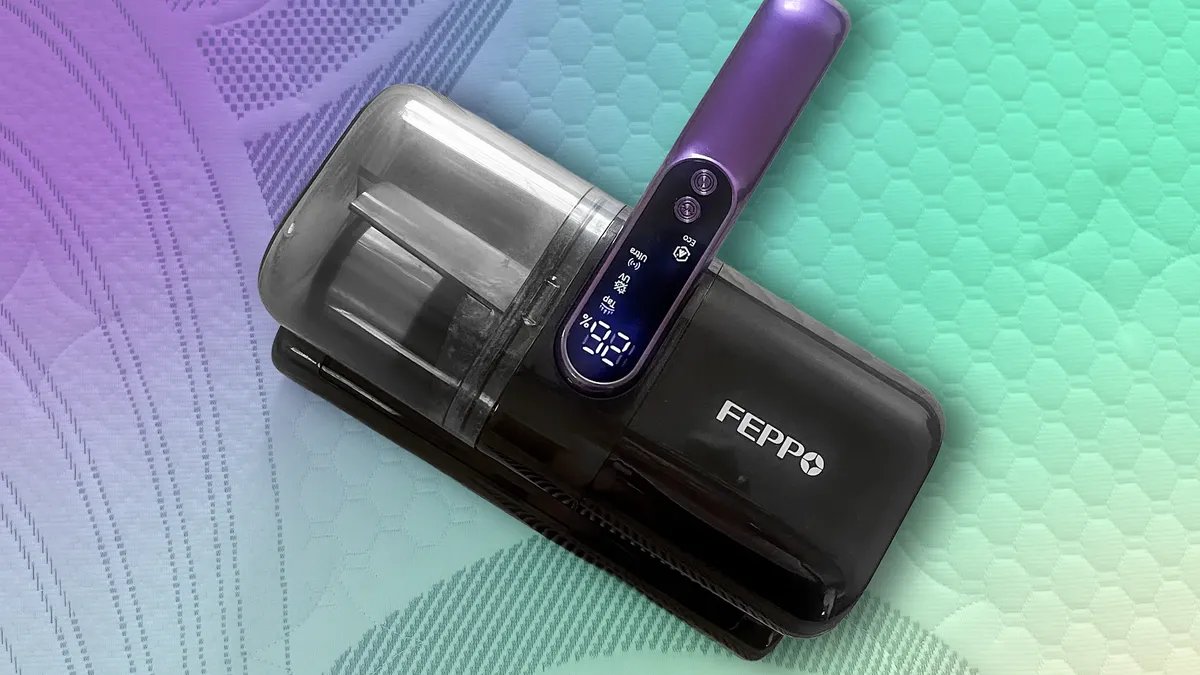
Most people know they should wash their sheets regularly, but there’s more to mattress hygiene than weekly laundry, especially if you have allergies.
“Mattresses can be a major reservoir for indoor allergens, particularly dust mite allergens, because we spend roughly one-third of our lives in bed,” Pediatric Allergist and Clinical Immunologist Dr. Zachary Rubin told CNET in an email. “Mattresses accumulate skin cells, moisture from perspiration and other organic material that supports dust mite growth.”
Dust mites, microscopic pests that feed on dead human skin cells, aren’t the only things that can sneak into our bedding, though. Rubin says that mattresses can also collect pet dander, pollen and even mold spores.
Since a mattress isn’t something you can simply throw in your washing machine to clean, companies have begun releasing handheld mattress vacuums to do the dirty work. But do these bed vacuums actually work? Here’s what an allergist says, plus my thoughts after testing one myself.
How do mattress vacuums work?
Like most handheld vacuums, the Feppo is very lightweight and easy to use.
Last year, I found out I have a dust mite allergy, so I started taking my mattress hygiene more seriously with regular deep cleans using baking soda and washing all bedding more often. Because of this, I was excited to test out the Feppo Cordless Mattress Vacuum Cleaner.
The handheld vacuum claims to remove 99.9% of “unseen substances” and has an LED screen that detects dust levels while vacuuming. My favorite feature, though, is its HEPA filter, which captures 99.97% of fine particles.
With the Feppo, there are two modes: eco and boost, but it works similarly to a handheld vacuum cleaner. The eco mode provides less suction and works well with softer fabrics, while the boost mode is more powerful and uses more battery power.
However, while a mattress vacuum, or simply vacuuming your mattress, can improve general cleanliness, it isn’t a cure-all for allergies.
“Mattress vacuums can reduce the amount of dust and allergens present on the mattress surface, but studies have generally found that vacuuming alone is unlikely to produce major improvements in allergy symptoms,” Rubin said, adding that mattresses “are only one part of the exposure picture.”
What about the UV-C light?
A lot of mattress vacuums include a UV-C light, but according to Rubin, there’s scant evidence that there are meaningful allergy benefits in real-world applications.
“While UV-C may reduce the viability of mites or microbes, limited evidence suggests that consumer UV-C devices produce meaningful reductions in allergic disease symptoms,” he said. “For most patients, I would not rank UV-C high among evidence-based allergy interventions.”
My experience using the Feppo Cordless Mattress Vacuum Cleaner
The Feppo Cordless Mattress Vacuum Cleaner was easy to use right out of the box. It includes a charging cord for its 27-minute battery life that recharges in 2.5 hours, but after using the device a few times, I haven’t needed to recharge it yet.
To see how well the vacuum truly worked with its 8-kPa suction, 253.7-nanometer UV-C light for disinfection and 52,800 taps per minute that claim to shake deeper particles to the surface, I sprinkled baking soda directly on my mattress, let it sit for an hour and then used the Feppo to clean it up. The vacuum picked up all the powder, and the percentage on the LED screen also seemed to be working, since it showed a higher “dust” percentage at that time than I’d seen during regular cleaning.
I also tested it on my couch and rug and was pleasantly surprised with how much it picked up. It captured a good amount of dust from a couch that had been in storage for years, along with loose feathers from my couch pillows.
It’s lightweight at 2.9 pounds and quieter than my cordless vacuum, so I have no complaints there.
One thing that slightly confused me, though, is that the company says it’s “not suitable for pet hair.” Since I do let my dog on the furniture and he sleeps on the bed too, I expected that to be a downfall. But when I emptied the dust canister, I saw plenty of dog hair had accumulated, showing that it did pick up at least some of my dog’s fur.
Do you need a dedicated mattress vacuum?
For most people, a dedicated mattress vacuum isn’t a must-have. If you have a vacuum cleaner with an upholstery attachment, it can essentially do the same thing.
However, a dedicated mattress vacuum may be worth it if you prefer using separate cleaning tools for different chores, and I look forward to continue using mine on my mattress and couch.
If you don’t already own a vacuum with an upholstery attachment, though, the Feppo is a decently affordable option at $130. (However, it’s a bit more expensive than some other handheld vacuums we’ve tested.)
Although it’s marketed as a mattress vacuum, I found it to work well on my couch and rug, too, making it more versatile and valuable. Ultimately, though, a mattress vacuum may be a useful addition to your chore routine, but it’s not an allergy fix.
For people with allergies, Rubin recommends purchasing allergen-proof encasements and washing bedding regularly.
“A dedicated mattress vacuum may be a reasonable adjunct for some patients, particularly if it has a HEPA filtration system, but I would not consider it a cornerstone allergy treatment,” Rubin said.
A mattress vacuum should be a “supplemental measure, not a primary intervention,” he said.