dailynewsnblog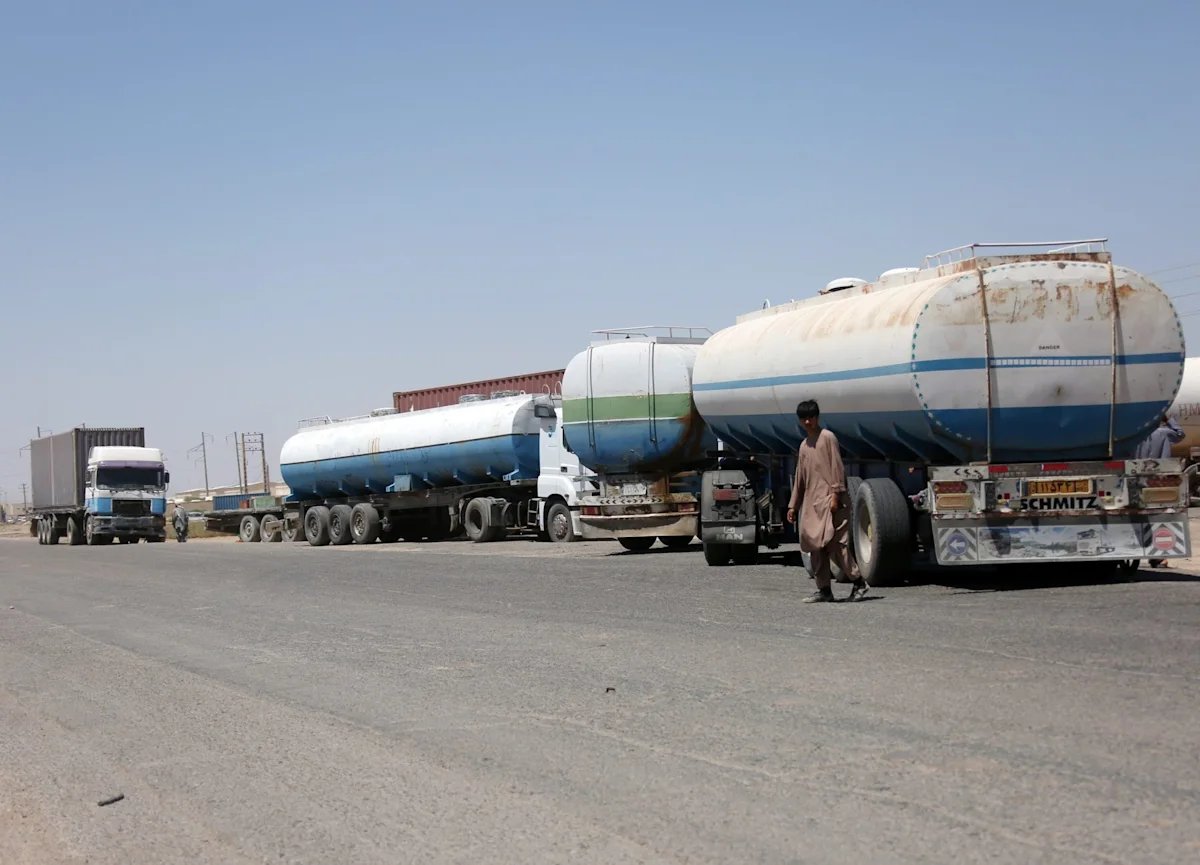
The U.S. naval blockade on Iran is already crushing its economy, and efforts to divert shipments over land are not providing much relief.
Before the war, more than 80% of Iran’s trade tonnage transited by sea via southern ports, but that’s been closed off. U.S. Central Command said Sunday, it has redirected 109 commercial vessels to ensure compliance with the blockade.
As a result, convoys of trucks have flooded land routes along Iran’s borders with Turkey, Pakistan, Afghanistan, Iraq, and Turkmenistan. Iran’s trade with Turkey, for example, jumped 19% to $3.2 billion during the first half of the year.
But bureaucratic hurdles, such as long customs checks, and infrastructure that wasn’t designed to handle so much volume have produced massive traffic jams. At one crossing with Turkey, 3,700 trucks were stranded on the Iranian side.
Lines of trucks stretch for miles, and drivers sometimes wait more than three weeks to finally bring their cargoes across a border. During that time, perishable foods go bad, and delays for other essentials add to costs, with inflation now at 90%.
A Turkish truck driver hauling used cars into Iran told the Financial Times that wait times at the border on the return trip can reach 24 days. And an Iranian trucker said he spent 23 days waiting at a crossing along the Afghanistan border in mid-June.
At the border with Turkmenistan, lack of warehouses and proper registration processes have limited the ability to transport more goods by rail, according to the Wall Street Journal.
While bilateral trade with Iran’s neighbors is up, overall trade is still down. In the five months ending Aug. 22, Iranian customs show that non-oil exports fell 28% from a year ago to $15 billion, and imports dropped by 26% to $17 billion.
The collapse in trade has hit fuel supplies, much of which must be imported as Iran lacks sufficient capacity to refine the oil it produces. That’s led to gasoline shortages, forcing Tehran to curb demand with price hikes.
Given the all the problems associated with using land routes, Iranian industry admitted the Strait of Hormuz has to reopen.
“Under these circumstances, there is little alternative but to find a way to restore and maintain the southern trade corridors” through the Gulf, a member of Iran’s Chamber of Commerce told the FT.
President Donald Trump is counting on economic warfare to bring an end to the conflict, and even Supreme Leader Ayatollah Mojtaba Khamenei has expressed anxiety about the economy.
But experts have cautioned that Iran’s repressive regime is unlikely to be swayed by the suffering of ordinary citizens and is prepared to wait out economic hardship longer than the U.S. public can endure high gas prices.