dailynewsnblog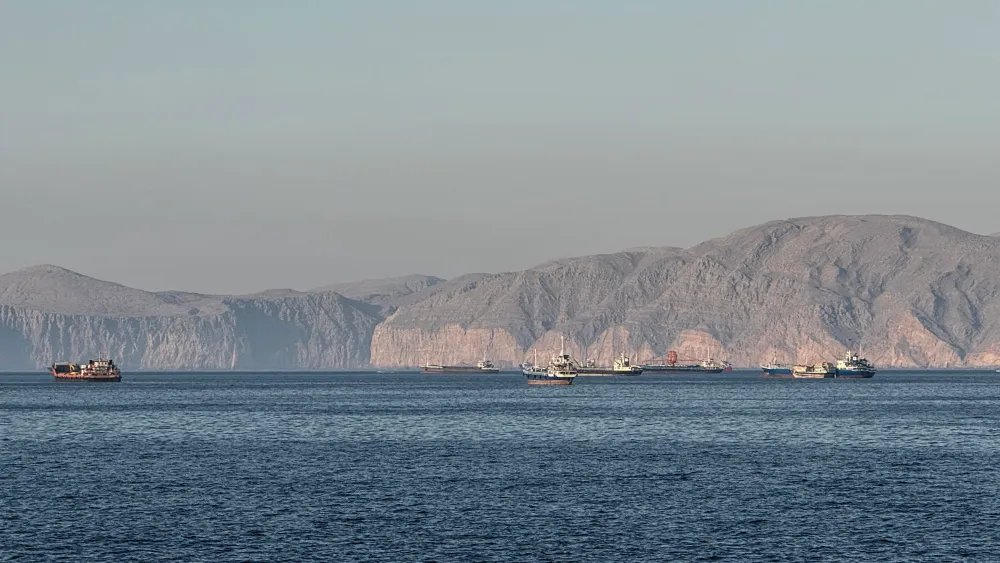
Ahead of Monday’s updated peace proposal for a deal to end the war in Iran, a top Iranian official said the country is closer to revealing full details of a new mechanism to regulate maritime traffic through the Strait of Hormuz, including officially incorporating fees for vessels to pass the waterway.
The strait has been effectively shut off to shipping traffic since the start of the war in Iran in late February, with Iran’s military threats constricting the passage of roughly 20 percent of the world’s daily oil supply and leaving hundreds of ships stranded in the Persian Gulf.
In a post on X Saturday, Ebrahim Azizi, chairman of the Iranian parliament’s National Security and Foreign Policy Committee, said only commercial vessels and parties cooperating with Iran will be able to use the system.
Azizi said the Hormuz will remain closed to the operators of “Project Freedom,” in a reference to the short-lived U.S. military operation to escort ships through the conflict-ridden canal. Israeli-linked vessels are banned as well.
On Monday morning, the self-described official account of the Persian Gulf Strait Authority (PGSA) said in its own social media post that navigation within the “introduced boundaries” of the Strait of Hormuz is contingent upon full coordination with Iran’s armed forces and authorities.
“Passage without permission will be considered illegal,” the post read. Earlier that morning, the account said the authority will provide real-time updates regarding Strait of Hormuz operations and developments.
The PGSA was launched earlier this month as a regulatory body for Iranian officials to govern ship transits through the channel. Under the system, vessel operators must submit a “vessel information declaration” covering ownership, insurance, crew manifests, cargo and intended routing, according to maritime risk management company Windward. A transit permit is issued only after the PGSA accepts the submission and a fee is paid.
While Iranian officials have never published an official transit fee, reports have indicated that they have charged as much as $2 million for vessels to pass.
Iran could generate $70 billion to $90 billion in annual revenue if allowed to charge a toll in the Strait of Hormuz, according to J.P. Morgan’s annual energy paper published last month.
On Monday, another report from Iran’s semi-official Fars News Agency reported that the Islamic republic is starting a Bitcoin-backed insurance service for shipping companies that want to transit the waterway.
That initiative, reportedly known as “Hormuz Safe,” could generate more than $10 billion in revenue, Fars reported. There is no known breakdown of how the service would work.
The U.S. Office of Foreign Assets Control advised companies earlier this month that both American and foreign entities that make payments may face sanctions.
Windward advised shipping firms to treat any payment to Iranian-linked entities as a sanctions-screening trigger, including indirect payments through brokers, agents, or charterers.
The maritime risk intelligence firm also said these companies should map third-party counterparty exposure to PGSA transit decisions, noting that a counterparty that pays the toll may transmit secondary-sanctions risk upstream and downstream.
Both the U.S. and China have publicly indicated that no country can be allowed to exact shipping tolls in the Strait of Hormuz. And under international law, levies cannot be charged on ships sailing through international straits or territorial seas, according to the United Nations Convention on the Law of the Sea.
In the wake of his meeting with President Xi Jinping, President Donald Trump said the Chinese leader offered to help reopen the strait. Chinese authorities have not responded to or confirmed Trump’s claims.
Although the U.S. announced that it would provide insurance to ships seeking to transit the Hormuz strait back in March, the program has never gotten off the ground, according to a Saturday report from the Financial Times.
The U.S. Development Finance Corporation’s maritime reinsurance program announced by President Trump was supposed to provide $40 billion in coverage to help restore maritime trade through the conduit, but no ships have been financially covered to pass.
Insurance companies including Chubb, AIG, Berkshire Hathaway, Travelers, Liberty Mutual and Starr backed the plan. According to Chubb, the program’s purpose is to insure ships traveling under naval escort. But since there has been no escort since Project Freedom concluded, the program did not fulfill the requirements needed to cover ships transiting through the strait.
At least 38 ships have been attacked or struck since the Iran war began and 11 seafarers have been killed, according to the International Maritime Organization.