dailynewsnblog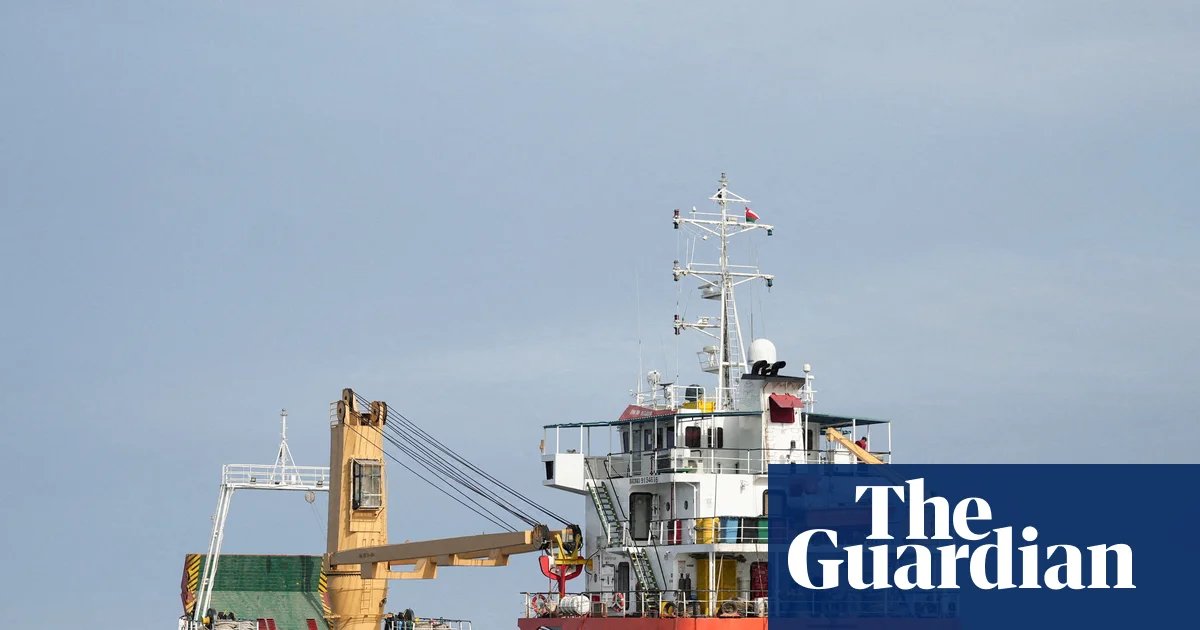
Iran’s foreign minister has said that the strait of Hormuz is now fully open to commercial vessels, reinforcing hopes for an eventual end to the war in the Middle East and sending oil prices tumbling despite analysts’ warnings that there will be no immediate widespread resumption of passage through the vital waterway.
In a barrage of social media posts, Donald Trump claimed on Friday that Iran had agreed never to close the strategic waterway again, hailing “A GREAT AND BRILLIANT DAY FOR THE WORLD!”
However, Abbas Araghchi’s pledge was given only qualified support by the Islamic Revolutionary Guard Corps, which has reinforced its already powerful authority in Tehran during the war.
Trump also said that Iran had agreed to indefinitely suspend its nuclear programme, and would not receive any frozen funds from the US. In an interview with Bloomberg, he said that talks over a deal to end the war would “probably” be held this weekend.
Separately, the US president told Reuters that Washington would work with Iran to recover its enriched uranium, which he referred to as “nuclear dust” and which he said would be retrieved at “a nice leisurely pace” and moved to the US. Iranian authorities made no immediate comment on the claim, but Tehran has long asserted that its right to enrich Uranium inside the country is sacrosanct.
Aragchi’s statement that the strait was “declared completely open” came as a new 10-day truce in Lebanon entered its first full day, partly pausing fighting between Israel and the Iran-backed Hezbollah Islamist militant movement and offering a fragile relief in parts of the country after weeks of relentless Israeli airstrikes which have killed hundreds of civilians.
Trump said that Israel would cease attacks on Lebanon, claiming: “They are PROHIBITED from doing so by the U.S.A.”
Minutes before that post, Israel’s prime minister Benjamin Netanyah uploaded a video to his official YouTube page declaring that Israel was not done yet with Hezbollah. “We have not yet finished the job. There are things we plan to do to address the remaining rocket threat and the drone threat,” Netanyahu said
Soon after, reports emerged that an Israeli drone strike had killed one person in southern Lebanon. Israel’s defence minister insisted that the IDF was not withdrawing from the country and that military action could resume.
Iranian state television quoted a senior military official saying commercial vessels would be allowed travel through the strait of Hormuz but only along a determined route and with the permission of the IRGC navy.
The US blockade of Iranian ports and shipping will remain in place for the moment, Trump said, and few vessels are likely to risk passage through the strait in such uncertain circumstances, meaning any return to normality is still distant.
“The naval blockade will remain in full force and effect as it pertains to Iran, only, until such time as our transaction with Iran is 100% complete,” the US president posted on his Truth Social network, adding that “this process should go very quickly”.
In Paris, representatives of about 40 countries met at a conference chaired jointly by France and the UK for discussions on an international plan to secure the strait, which carried around a fifth of the world’s oil and gas supplies before the conflict.
The strait’s closure by Iran shortly after the conflict began has spiked the price of oil, fuelled inflation and threatens a deep economic crisis that could trigger recessions around the world.
French president Emmanuel Macron said Aragchi’s statement was welcome, and urged the “full, unconditional reopening by all the parties”. Keir Starmer, the UK’s prime minister, said any proposal to reopen the strait needed to be “lasting and workable”.
Trump, however, said that he had rebuffed an offer from Nato to help and told them to stay away unless they want to load up ships with oil.
“They were useless when needed, a Paper Tiger!” he posted on social media, before thanking Saudi Arabia, the United Arab Emirates, Pakistan and Qatar.
Shipping industry associations said they were reviewing the situation.
“We are currently verifying the recent announcement related to the reopening of the strait of Hormuz, in terms of its compliance with freedom of navigation for all merchant vessels and secure passage,” Arsenio Dominguez, secretary-general of UN shipping agency the International Maritime Organization (IMO), said.
Regional diplomats have engaged in a frantic push in recent days to prevent a return to violence between Iran, Israel and the US.
The current ceasefire with Iran declared by Donald Trump earlier this month is set to expire on Tuesday. Field Marshal Asim Munir, the army chief of Pakistan, which has emerged as a key mediator, is in Tehran to carry forward negotiations for a more durable peace.
Tahir Andrabi, Pakistan’s foreign ministry spokesperson, said at a news briefing on Thursday that “peace in Lebanon and cessation of armed attacks in Lebanon are essential for peace talks”.
In Lebanon, there were widespread celebrations at the fragile ceasefire. In Beirut, cars with mattresses stacked on their roofs passed cheering crowds which congratulated the displaced people of the south on their return home. Cars blasted pro-Hezbollah music and waved the yellow flags of the group, claiming victory.
The mass return to the south came despite continued occupation of a swath of Lebanese territory by the Israeli army and warnings from the Israeli military spokesperson not to head south of the Litani river. Hezbollah, the Lebanese army, and the speaker of Lebanon’s parliament, Nabih Berri, all put out statements urging residents of south Lebanon to wait before going home.
Few appeared to heed the advice, with vast queues forming in front of ruined bridges over the Litani. Israel had bombed the only remaining intact bridge – the Qasmiyeh bridge, which leads into the southern Lebanese city of Tyre – just hours before the ceasefire.
The war in Iran spilled over into Lebanon when Hezbollah launched missile attacks on 2 March against Israel in solidarity with Tehran, triggering a ferocious Israeli response, including a ground invasion into southern Lebanon. It came 15 months after the last major conflict between the two sides.
The terms of the ceasefire return Lebanon to a status quo very similar to the period after the previous November 2024 ceasefire. Like that deal, it allows Israel the “right to take all necessary measures in self-defence, at any time” in Lebanon, despite the supposed end to hostilities.
Mairav Zonszein, senior Israel analyst at the International Crisis Group, said the ceasefire had left residents of northern Israel “seething”.
“Netanyahu grasping for a workable narrative, as the majority of Israelis support continuing the war. This, despite the fact that the Israeli military has cast doubt on its ability to disarm Hizbollah through military force alone,” Zonszein said.
An end to Israel’s war with Hezbollah was a key demand of Iranian negotiators, who previously accused Israel of breaking the current ceasefire deal with strikes on Lebanon. Israel said that deal did not cover Lebanon.
The fighting has killed at least 3,000 people in Iran, more than 2,100 in Lebanon, 23 in Israel and more than a dozen in Gulf Arab states. Thirteen US service members have also been killed.