dailynewsnblog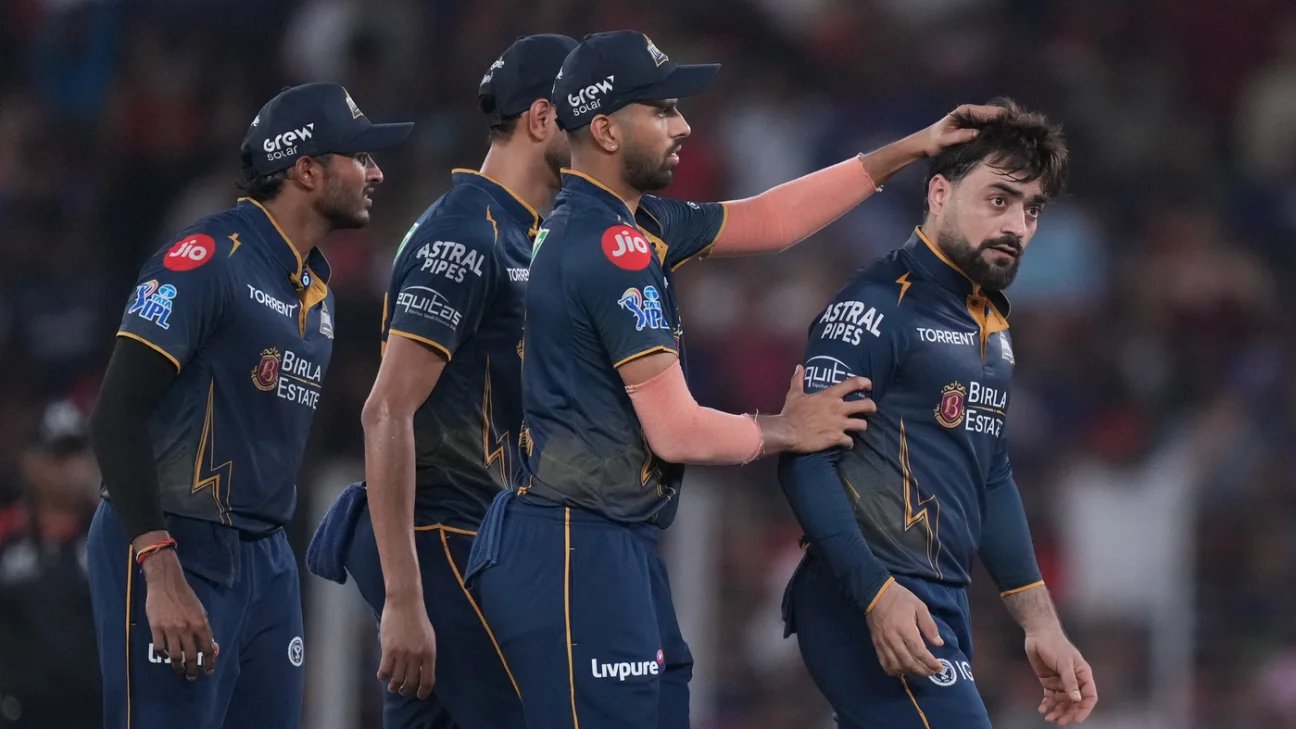
“I’ll begin by congratulating RCB. They’ve had an outstanding campaign,” Solanki said. “They finished at the top of the table in the league stage and then went on to beat us twice, so we must take that on board. As far as our campaign is concerned, we’re immensely proud as a group of what we’ve achieved. There’s no question that we would have liked to have gone one step further, but there are a lot of other teams that would have gladly taken our place as well.”
GT’s route to the final was made tougher by their loss to RCB in Qualifier 1 in Dharamsala. It meant they had to travel and play three games in five days if they made the final. They only arrived in Ahmedabad late on Saturday night, and had less than 20 hours to take the field.
Solanki, though, didn’t want to use fatigue as an excuse for their loss.
“The number of games in a short period of time is challenging,” he said. “Of course it is at the end of a campaign, but I’m not going to lean on that at all. The fact is that RCB have beaten us today, and we must be strong enough to hold our heads high and be proud of the campaign that we’ve put together, yet also be gracious enough to congratulate RCB.
“So, I don’t want to take away from the fact that RCB have won by simply saying, ‘oh, we’ve had this number of games in such a short space of time and we’re fatigued’. That’s not really what we’re about.
“Unfortunately, I can’t control the weather. If the weather means we have to land late, then there’s nothing we can do about it. We had an opportunity to challenge RCB. In parts, we did, but they were the better side today and I think it’s as simple as that.”
“The number of times I’ve had to answer that question… quite seriously, we’ve just played a final. This notion of [over-reliance on] the top two or top three… we’ve played a final. I think you should accept the fact that we’ve had a reasonable campaign, and the details of that are there for everyone to see – the number of runs scored and so on.”
GT’s lack of a middle order meant they often had to rotate between their somewhat soft Indian core. Among them was young Nishant Sindhu, who was thrusted into the role in the final ahead of Buttler when GT lost both openers inside four overs. This is a move that didn’t pay off, but it wasn’t one that was predetermined, according to Solanki.
“That was a bit of a judgment call,” he said. “Ashish [Nehra, the head coach] made that call to send him in at No. 3 at that time. We didn’t really discuss it, but Ashish makes those calls now and again, if the captain is around, in conjunction with the captain.”
“We probably just made a slight miscalculation of what score was appropriate on that pitch,” he said. “I don’t think it was a 200-plus pitch of any sort. I think if we had got somewhere around the 180-mark, that would have been a challenging total for them to chase.”
Already irked by now, Solanki couldn’t help but offer a wry smile when asked if it was a pleasure sometimes to watch a player of Virat Kohli’s calibre take centre stage in a chase, with the crowd dancing to his tunes.
“We’re all privileged to see good players play, and Virat is an exceptional player,” he offered. “He played a great knock for his team. I’m probably not celebrating that knock right now. Virat played very well to almost anchor that chase and guide it the way he did.”
Shashank Kishore is a senior correspondent at ESPNcricinfo