dailynewsnblog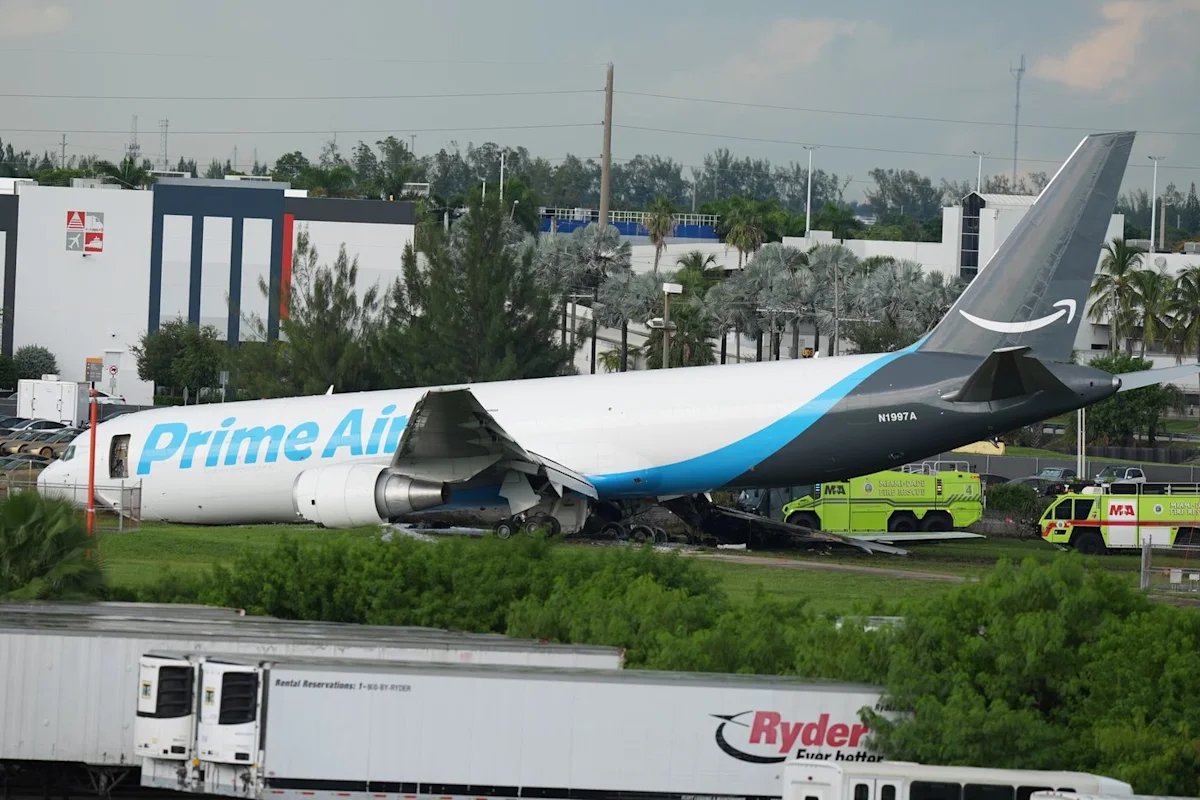
MIAMI (AP) — Federal investigators on Monday are detailing their plans for determining what caused an Amazon cargo jet to barrel off a runway at Miami International Airport, killing at least five people and injuring five others as it struck vehicles and was engulfed in flames.
The aircraft overran the runway around 2 p.m. Sunday after arriving from San Juan, Puerto Rico, and plowed across a road used by warehouse workers and other businesses that surround the airport. Five people were killed, three critically injured and two others hospitalized with less severe injuries, officials said.
It wasn’t immediately clear if the pilots survived or those killed were all in vehicles when the plane struck.
The crash, which sent thick black smoke billowing into the sky, trapped the pilot and copilot in the cockpit and some occupants in cars, said Miami-Dade Rescue Fire Chief Ray Jadallah. The agency said crews also had to extricate a person who was trapped under a vehicle.
The National Transportation Safety Board said Chairwoman Jennifer Homendy would hold a news conference Monday.
Among the factors investigators are likely to consider is whether the plane flew too far before touching down, experts said. Typically, the landing zone is within the first 3,000 feet (914 meters) of a runway.
Aviation safety expert Steve Arroyo said if it was beyond that area, the plane should have aborted the landing and gone around for another attempt.
Mary Schiavo, who is a pilot and former Inspector General of the Transportation Department, said video posted online shows the Amazon plane floating above the runway for an extended period without flaring the nose upward to force the main landing gear onto the ground.
It wasn’t raining at the time, but dark storm clouds loomed and strong winds were reported. Schiavo said that if the plane had a tail wind, that could have contributed to it floating further down the runway.
“A tail wind would certainly add to your troubles if you’ve already given up a good chunk of the runway by not touching down and landing right away,” Schiavo said.
The Miami airport is not equipped with arresting systems that the FAA says have been installed at more than 120 airports nationwide to safely stop planes that do go past the end of a runway. Those beds of lightweight, crushable material at the end of a runway have been credited by the FAA with helping save at least 497 lives aboard planes that overran runways.
The crash halted flights at the busy travel hub for much of the afternoon. Some 200 emergency personnel responded, finding the plane with heavy flames and smoke from a complex engine compartment fire, the department said. Firefighters used foam from specialized airport firefighting units to extinguish the fire, and crews were still dealing with a fuel leak on the plane hours later.