

 dailynewsnblog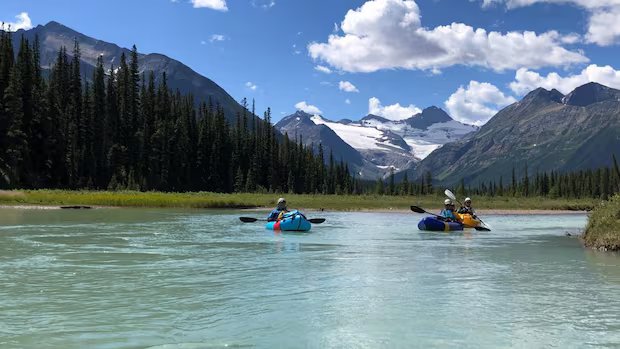
The threat of aquatic invasive species (AIS) is closing many lakes and rivers to watercraft in mountain national parks in Alberta, prompting some paddlers to push for a more collaborative approach to dealing with the issue.
Starting this spring, lakes and rivers in Jasper National Park — as well as in Banff, Yoho, Kootenay and Waterton Lakes — will be split into three zones, each with different rules for water activities. While some popular lakes and rivers remain open to paddlers, the restrictions largely affect the backcountry.
Andrew Loughlin, a Jasper-based whitewater veteran for more than 20 years, called the new restrictions “soul-crushing” in a letter he sent to Parks Canada.
“Some of the most special places that I’ve been in the park, I’ve got to in a boat,” he told CBC News. “And a lot of those places you can’t get to any other way.”
Loughlin said he estimates over 75 per cent of the navigable waterways in Jasper are now off-limits.
Whirling disease in Lake Louise
The decision comes after the news emerged earlier this month that whirling disease has been confirmed in Lake Louise, which Parks Canada said is “almost certainly” the result of human activity on the lake.
The disease, also present in Banff and Yoho, causes skeletal deformities in young fish like salmon, whitefish and trout. It can kill up to 90 per cent of young fish populations.
“This disease is now on our doorstep, and it’s important that we act now to reduce the risk of it spreading further,” Dave Argument, a resource conservation manager with Parks Canada, said at Jasper National Park’s annual forum earlier this month.
Once invasive species and diseases are introduced, he said, they are often impossible to remove and can spread downstream.
Parks Canada states on its website that AIS are often spread through watercraft and fishing gear moved between lakes and rivers.
Argument said Parks Canada did not make the decisions to impose restrictions lightly.
“Each watershed was carefully assessed to determine the most effective way to protect aquatic ecosystems while continuing to support recreation where it can occur safely,” he said.
What’s open and what’s closed?
While the main stem of the Athabasca River remains open for recreation, the “veins” that feed it — the more advanced backcountry routes with Class 4 and Class 5 rapids — are largely closed to watercraft, fishing waders and windsports.

Some rivers will remain open to paddlers because they are downstream of features such as waterfalls, which Parks Canada says act as natural barriers to AIS travelling upstream.
In the water recreation zone, Parks Canada says scuba diving is permitted, but only licensed commercial operators.
Parts of the Athabasca River, Chaba River and Sunwapta River are part of the “special tactics zone,” meaning that only fishing with waders is prohibited.
Even in the restricted zones, swimming, beach toys, snorkelling and fishing without waders or wading boots are still permitted.
The full list of what is open or closed can be viewed on the Parks Canada website.
Parks Canada continues to ask people to clean, drain and dry all watercraft and equipment before entering bodies of water in parks in order to help prevent the spread of AIS.
Paddlers speak out
Loughlin argues the current policy will be “very difficult” for paddlers to comply with because he believes the map provided by Parks Canada lacks details to identify where the closure points are.
Instead of rivers being completely banned, he said he believes an approach with stricter and more expensive permits, mandatory gear inspections or quarantines could have reduced the risk of spreading invasive species, which is something he said in his letter to Parks Canada.
Although “heartbroken” by the new policy, Loughlin noted that the new restrictions in Jasper National Park appear to be less limiting for paddlers than in Banff.
The head of a packrafting organization said he believes the restrictions will hit the emerging sport particularly hard. These ultra-light, inflatable boats allow users to hike deep into the wilderness and paddle out — trips that Matthew Bruce, president of Packraft Canada, says create a bond with the land.
“When people are able to recreate in these beautiful places, they have a sense of attachment,” he said. “That’s what’s going to create advocacy and preservation more so, I think, than an absolute ban.”
Bruce emphasized the importance of “biosecurity” and said he hopes user groups like his can be part of the conversation with Parks Canada about bans moving forward.
He said he is conducting an online survey for people who packraft, and hopes the information gathered can be used for future decision-making.
“I don’t know anyone who would put in the effort that we do to get to these places … that wouldn’t take one extra step to make sure these places are preserved,” said Bruce.
He urged paddlers to comply with the new Parks Canada restrictions, but also to speak out and share their experiences.
Bruce said he wants packrafters and others who spend time on bodies of water in national parks to demonstrate they can be part of a strategy to help prevent the spread of AIS.


