dailynewsnblog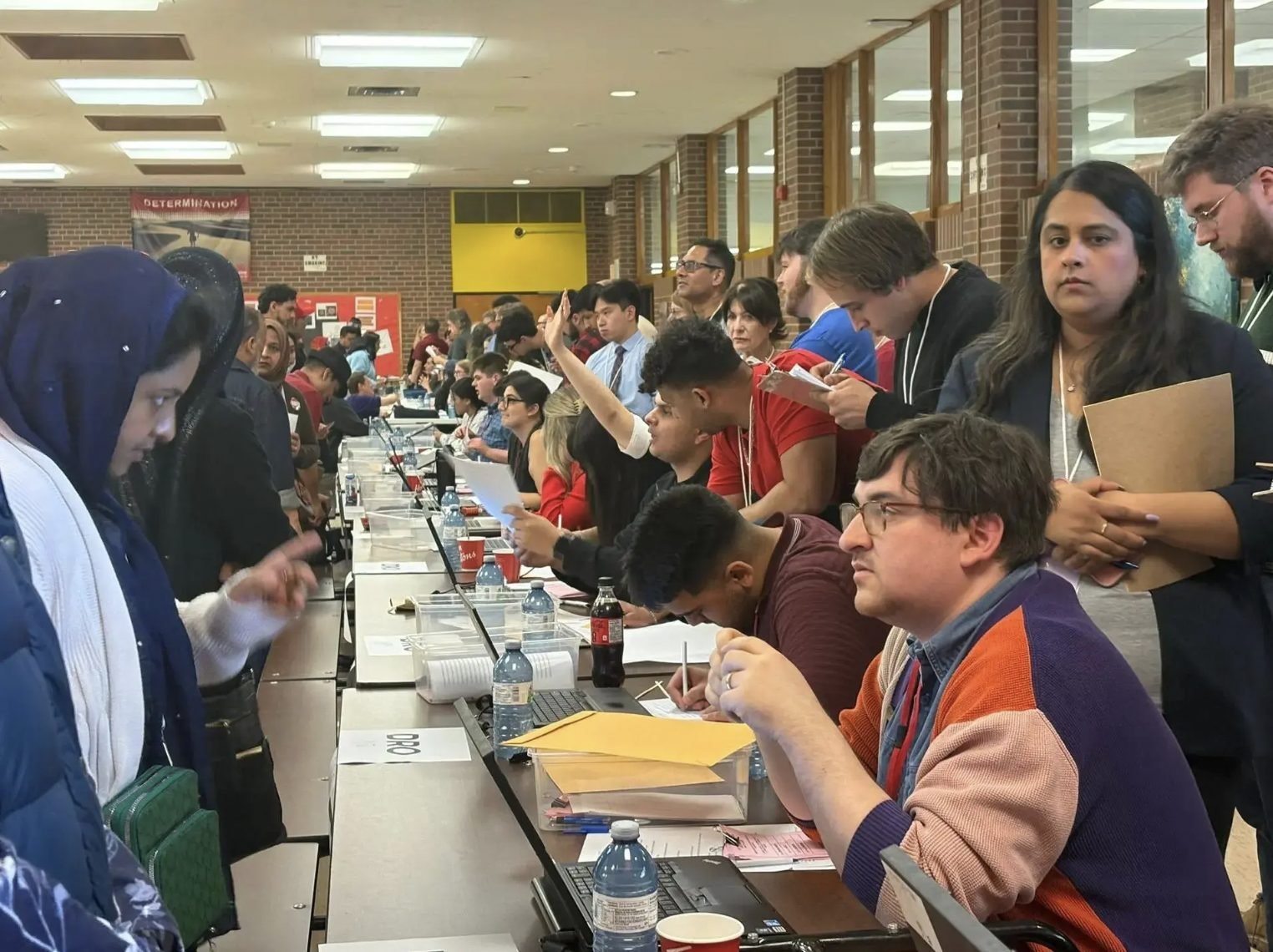
The race, won by candidate Ahsanul Hafiz over soon-to-be ex-federal Liberal MP Nathaniel Erskine-Smith by just 19 votes, has triggered a broader debate inside Ontario politics about how parties choose candidates, who should be allowed to vote in those contests, and whether private political organizations can continue policing themselves.
For decades, party insiders have described Ontario nomination meetings the same way: the “Wild West.”
After the chaotic Scarborough Southwest Ontario Liberal nomination contest earlier this month, many are now openly asking whether that system still works.
The race, won by candidate Ahsanul Hafiz over soon-to-be ex-federal Liberal MP Nathaniel Erskine-Smith by just 19 votes, has triggered a broader debate inside Ontario politics about how parties choose candidates, who should be allowed to vote in those contests, and whether private political organizations can continue policing themselves.
At the centre of the controversy are allegations raised by Erskine-Smith’s campaign following the May 9 nomination meeting. His team alleged ballot discrepancies, weak enforcement of identification rules, voters photographing ballots, confusion around credential checks, and widespread procedural breakdowns during the vote.
READ MORE: “This is a madhouse”: Erskine-Smith’s chief scrutinizer describes breakdown inside Scarborough Southwest Liberal vote
Hafiz’s campaign has forcefully disputed the claims.
An internal analysis obtained by QP Briefing argued the contest was “free, fair, and competitive,” saying many of the concerns stemmed from clerical errors and misunderstandings of the reconciliation process rather than evidence of fraud.
READ MORE: The Ontario Liberals arbitration hearing on Scarborough Southwest is set to May 20: A document is pushing back on Erskine-Smith allegations
Still, the fight has exposed uncomfortable questions about the largely unregulated world of party nominations, questions many veteran political organizers say have existed for years.
“I remember one person saying to me, ‘It’s a bit like the Wild West,’” former Ontario Liberal cabinet minister John Milloy told QP Briefing in an interview.
“And everyone says that. That’s what’s striking.”
Milloy said the Scarborough Southwest dispute is hardly unique. Across parties and across decades, nomination meetings have frequently been marked by aggressive membership drives, last-minute signups, organized blocs of voters, weak oversight and allegations of procedural manipulation.
“We’ve all witnessed nominations where people are being bussed in,” he said. “People are explaining to voters how to fill out a ballot, which names to put down. Sometimes people are just showing up because they’ve been told to show up.”
He recalled past contests where campaigns allegedly corralled supporters in separate rooms, where candidate speeches were ignored entirely, and where organizers later struggled to locate members whose names appeared on party lists.
“There are shenanigans that go on with every party,” he said.
The controversy has emerged at a politically sensitive moment for Ontario Liberals already grappling with questions about internal governance ahead of a looming byelection and a soon-to-be-formally-started leadership race.
It also intersects with a wider national conversation about foreign interference and vulnerabilities inside political parties.
Earlier this month, a newly formed advocacy group calling itself the “Section 31 Liberals” launched a campaign to amend the Ontario Liberal constitution to bar temporary residents from becoming party members. The proposal would also prevent non-citizens from voting in leadership races and nomination contests.
READ MORE: Group of Ontario Liberals want to align membership rules with federal Party changes
The group argues the changes are necessary to align the party with recommendations from the federal foreign interference inquiry led by Commissioner Marie-Josée Hogue, in which she warned that party nomination contests are particularly vulnerable to outside influence because they often involve relatively small numbers of voters and far less scrutiny than general elections.
Under current Ontario Liberal rules, membership is open to Ontario residents aged 14 and older regardless of citizenship or immigration status. The Ontario PC party and the Ontario NDP both have the same permissions in their constitutions.
But should parties better organize themselves internally, or should independent bodies such as Elections Ontario get involved?
Critics argue that flexibility creates opportunities for abuse.
Supporters counter that party memberships have always included non-citizens, temporary residents and young volunteers who spend years organizing for political campaigns despite lacking the ability to vote in public elections.
Milloy said both sides of the argument carry legitimate concerns.
“You can argue the other way,” he said. “These are the people who support the party, who do the work between elections, who volunteer. They deserve a voice in who they’re going to work hard for.”
But he also questioned whether modern nomination races still serve their original democratic purpose.
“Why do we have nomination meetings?” he asked. “In theory, it’s supposed to be the local community coming together to choose the person who represents them.”
Instead, Milloy said many modern contests have become exercises in organizational muscle rather than tests of a candidate’s ability to connect with voters.
“I used to tell people, ‘If you can’t win a nomination, you can’t win an election,’” he said. “But I don’t think that’s true anymore in some cases because of the way the decks can be stacked.”
That is the concern that has led some longtime Liberals to raise a once-unthinkable possibility: removing nominations from the hands of parties entirely.
Milloy said he would favour moving toward a more formalized primary-style system overseen by an independent electoral body such as Elections Ontario.
“In my mind, a nomination should simply be a dry run for the election,” he said.
Under such a model, independent officials would oversee voter eligibility, ballot handling and procedural enforcement much like a standard provincial election.
“It would become a mini-election,” Milloy said. “You’d actually be engaging with the community instead of just trying to organize voting blocs.”
For now, however, few believe Ontario’s major parties are eager to surrender control over their internal affairs.
Political parties in Canada are private organizations, not public institutions, and nomination meetings have historically been treated as internal matters. Bringing in Elections Ontario oversight would likely require major legal, financial and constitutional changes.
More realistic, Milloy suggested, may be incremental reforms inside parties themselves: tightening membership verification rules, strengthening ID requirements, standardizing procedures and increasing transparency around how contests are administered.
Still, critics argue parties have had decades to clean up the system and largely failed to do so.
Canadian political parties dramatically reformed their leadership selection systems after a series of controversies in the 1970s and 1980s involving delegate conventions and “highly manipulable” local meetings.
At the time, federal leadership races were often decided through delegated conventions, where local riding associations would hold small delegate-selection meetings to choose who would attend a national leadership convention and vote on behalf of members.
Those delegate meetings became notorious for organizational tactics that sound very similar to the nomination controversies we are seeing today.
Milloy pointed to the 1983 federal Progressive Conservative leadership race between Brian Mulroney and Joe Clark as an example: during that contest, allegations emerged that campaigns signed up homeless people in Montreal shelters to attend delegate-selection meetings and vote for particular candidates.
News reports at the time described people being transported to meetings with little understanding of the process itself.
Milloy said that it showed how easy it was to overwhelm small internal meetings with organized blocs of supporters, so then, parties eventually recognized that those systems had become vulnerable to manipulation, and gradually replaced them with broader, more standardized voting systems.
Over the following decades, most major Canadian parties moved away from delegated conventions toward “one member, one vote” leadership systems or weighted membership ballots conducted across entire provinces or the country.
Nomination contests today resemble the old delegate-selection system leadership races used to have, Milloy says.
“We cleaned up leadership races,” Milloy said, recalling controversies surrounding federal leadership contests in the 1980s. “So why not clean up nomination races too?”
The stakes extend beyond individual ridings.
Nomination contests are often the gateway to elected office in safe seats, meaning the internal processes used to choose candidates can effectively determine who will eventually sit in legislatures and Parliament.
For voters already skeptical about democratic institutions, repeated stories of procedural chaos risk deepening public cynicism.
“If there’s a weak link in the chain of our democratic process, you saw it,” Andreas Katsouris, Erskine-Smith’s chief scrutinizer during the Scarborough Southwest contest, told QP Briefing earlier this month.
Ontario Liberals are now awaiting the outcome of an arbitration hearing chaired by former Liberal cabinet minister David Zimmer, who will determine whether the Scarborough Southwest result should stand.
But regardless of that ruling, the controversy has already forced a broader conversation many insiders say political parties have avoided for far too long.
“We all know this is a problem,” Milloy said. “The question is: why do we keep doing it this way?”
Welcome back to Adjournment Proceedings, our weekly long read series. We publish a new edition every Friday.
Missed a week? Take a look through our archives here.