dailynewsnblog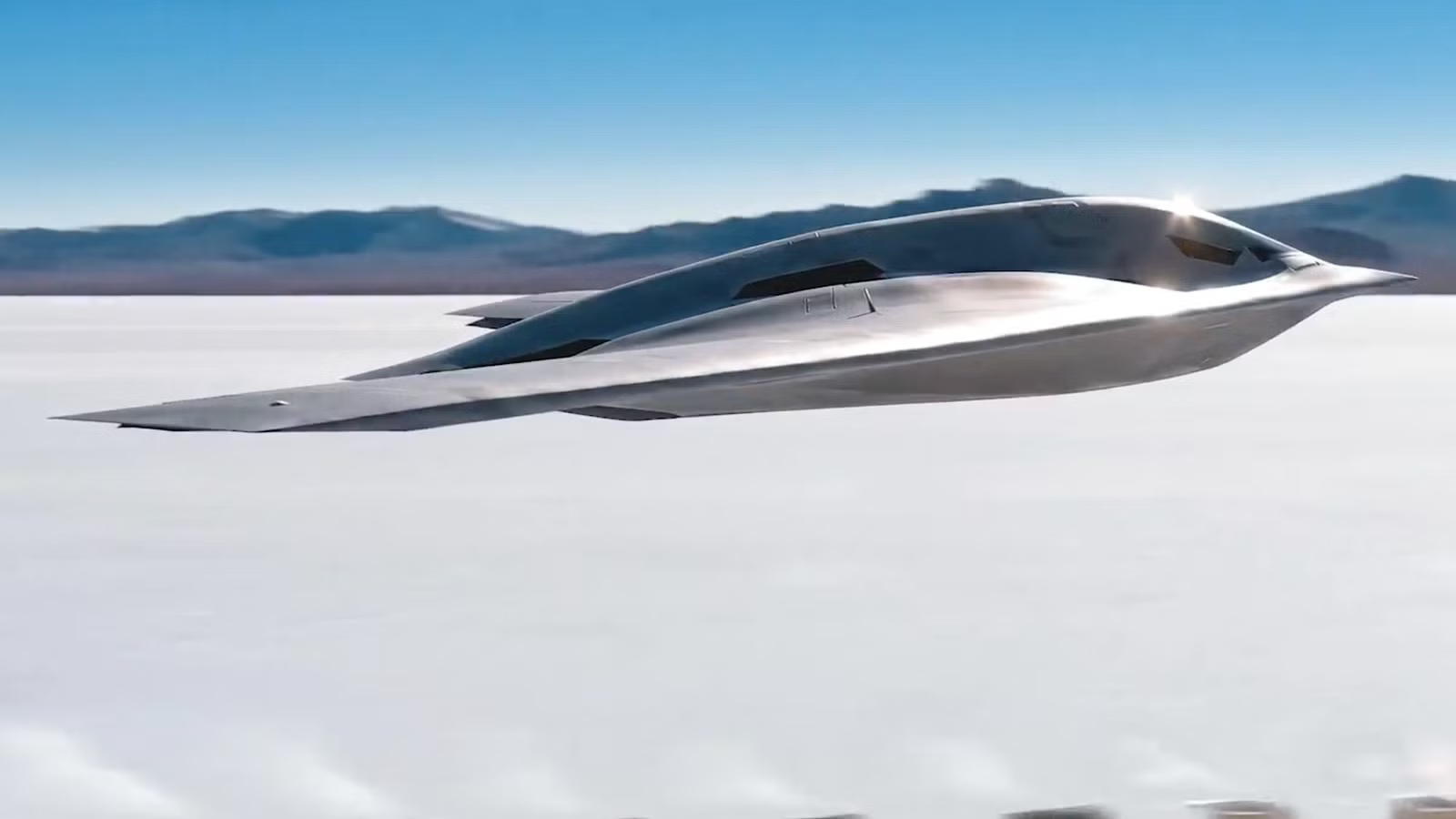
The Northrop Grumman B-21 Raider strategic stealth bomber is a highly classified program, and its exact production rates and planned production rates are not publicly known. As an illustration of how classified the program is, there appears to have been a coordinated effort to remove previously public information about the Raider from the internet after a US Air Force article was taken down, along with others from publications like The War Zone. That said, some information has been disclosed, and it is possible to estimate current and future production rates.
A reasonable educated guess is that the B-21 program was planned to reach a delivery rate of around eight per year by 2028 or 2029, and is now set to increase to around ten a year by 2029 or 2030. This article will discuss plausible B-21 production rates, although no rates have been publicly stated, and this is fundamentally extrapolation and educated guesswork.
Decision To Boost B-21 Production Capacity

In early January 2025, then Air Force Secretary Frank Kendall said it would make sense to accelerate the production of the B-21 bomber if there was money to fund it. Kendall was quoted by Air and Space Forces Magazine as saying, “There’s only so much we can do about it [the production rate] in the near term, and the near term, for me, is the five-year plan.” He added, “I have talked to industry about the possibility of higher rates than we currently have planned.”
Kendall left his post soon afterwards, but an impressive $4.5 billion in supplementary funding was passed through Congress for the B-21 to accelerate B-21 production by 25%. At the time, industry analysts estimated that the production rate of the Raider would be fewer than seven examples annually after the aircraft were to reach its peak a few years from now.
The Air Force has repeatedly said the type remains on track to enter operational service in 2027 and that it will purchase at least 100 of the aircraft. Recent reporting suggests the Air Force is considering purchasing 145 aircraft or more. However, the Fiscal 2026 funding was to ramp up production, not expand the planned procurement numbers, at least at this point.
Current Low-Rate Production Rates

The first B-21 flew in 2023, and the first low-rate initial production contracts were awarded to Northrop in 2024. The Air Force said it had received its second test article in September 2024, and in an earnings call, Northrop said in early 2026 that it was selling a test article to the Air Force. As of the time of writing (September 2026), it is unclear how many aircraft the Air Force has in its inventory.
Just because no new deliveries have been announced doesn’t mean none have been delivered. But all that can be said with certainty is that the Air Force has at least two testbeds in service. It should be noted that these testbed aircraft are not just testbeds and prototypes; they are considered very close to the operational combat variant and are expected to be upgraded and placed into active combat service at a later date.
It is reasonable that, as a floor, it will be at least one aircraft annually, but there could be two or so produced in 2024, 2025, or 2026, including ground test aircraft. The LRIP average is believed to have an average of four aircraft per lot, with five lots covering around 21 aircraft.
Status of B-21 Production In 2026

The program is in low-rate initial production. Trump has spoken of ordering a “pile of them“, although he also called them “slightly updated B-2s.” It is estimated that at least five lots encompassing 21+ aircraft have been ordered, with budget documents showing that the Air Force is making advance payments on long-lead items. Six test aircraft are reported to have been ordered and built at Air Force Plant 42 in Palmdale, California.
In April 2025, some media picked up on Northrop Grumman CEO Kathy Warden’s comments that the company was “through the first two production batches.” Some analysts extrapolated this to mean around 21 aircraft from LRIP and around 19 aircraft from Lot 2, for around 40 airframes to be in production. This seems like a significant overcount and misinterpretation of the available data.
It is currently safer to say there are at least two examples flying, several used for ground testing, and more in various assembly phases, plus some long-lead components for later lots. This could cover somewhere between ten and more than 20 aircraft in total. It is unclear how many aircraft are currently being produced under low-rate production.
First 100 To Be Delivered Mid-To-Late 2030s

The pre-2026 capacity increase full-rate production estimate was around seven to as many as nine per year. With the extra funding, this is expected to increase to nine and up to as many as 11 to be delivered annually once production matures. This will allow the Air Force to reach its “absolute minimum” procurement target of 100 from around 2035 to 2037. Should the Air Force increase the target to 145, then production may run beyond 2040.
Assuming that the 25% ramp-up in production adds two more aircraft delivered to the Air Force per year, then this would add another 16 aircraft between 2028 and 2035. The date of 2028 is chosen because it will take time for the expanded facilities to be built, along with needed specialized tooling, trained crews, and an expanded supply chain.
US Air Force strategic bomber fleet (per budget documents) | Estimated numbers in 2026 | Estimated numbers in 2030 |
|---|---|---|
B-1B Lancer | 44 (two fewer than mandated 46) | 44 (perhaps some retirements) |
B-2 Spirit | 19 | 19 |
B-52H Stratofortress | 75 (one crashed in 2026) | 76 (assuming boneyard reactivation) |
B-21 Raider | 2+ (confirmed by Air Force) | 25-35 (plausible) |
It remains unclear if the B-21’s main facilities at 42 Palmdale will be expanded or if a new facility somewhere else will be constructed. It is unclear when the program will reach full-rate production, but it’s plausible it could be reached late in the decade, perhaps by 2029 or a little later.
Retirement Of Other Bombers

Another proxy for how many B-21s may be in service is the retirements of legacy B-1B Lancers and B-2 Spirit bombers. The B-52 is not relevant, as the Superfortress is to be upgraded to the B-52J (in service by around 2033) and complement the B-21 into the 2040s and 2050s. Fiscal 2025 budget documents showed the Air Force planning to retire nine B-1Bs in Fiscal 2028 and another ten in Fiscal 2029, the last year represented.
This suggested all 44 remaining aircraft would exit by around 2032. However, this has been pushed back significantly in Fiscal 2027 budget documents. A Fiscal 2027 House budget document notes, “We are extending the service of our B-1 and B-2 fleets to mitigate operational gaps and facilitate the modernization of our core bomber force. Accordingly, we have programmed the B-2 to be retained through the Future Years Defense Program (FYDP).”
It adds funding to sustain and modernize the remaining 44 B-1s into the 2034 timeframe and the B-2 aircraft fleet into the late 2030s timeframe. Another possibility is for a portion of the B-1 fleet to be retired early. In 2021, Congress allowed the Air Force to retire 17 of its most worn out then-62 strong B-1B fleet. One budget document says of B-1B funding that “this request provides the necessary funding to modernize the platform, ensuring its lethality and relevance through 2037.“
Plans To Grow Fleet, Not Just One-For-One Swap

With other aircraft programs, it is common to see a largely like-for-like retirement of old aircraft as replacements arrive. However, it appears this will be different for the B-1B and B-2 Spirit Bomber phase-out and the B-21 phase-in. Air Force reporting suggests that the first B-21s will be in service in 2027 and that double-digit numbers could be in service by the end of the decade. At the same time, the Air Force has now reversed its earlier plans to begin retiring the B-1 before the end of the decade.
In many cases, this would point to a delay in the new program, necessitating the old programs to remain in service for longer. But it could be different for the Raiders. Instead of pointing to a delay, it could point to increased Sino-US rivalry and a requirement to increase its bomber capability. After all, the Air Force currently has around 44 B-1Bs remaining, 19 B-2s, and 76 B-52s for a total of 139 bombers.
With a plan to purchase at least 100 B-21s and retain its 76 B-52s, the Air Force eventually wants a fleet of 176+ bombers. If the program is increased to 145 B-21s, then this could rise further to 221 bombers. Another motivation to keep the older bombers in service for longer is that it will likely take time to mature the B-21. Even if there are ten B-21 airframes available to replace ten B-1Bs, that doesn’t mean they will be operationally ready; they may still be working through the developmental issues associated with a cleansheet new, complex aircraft.