dailynewsnblog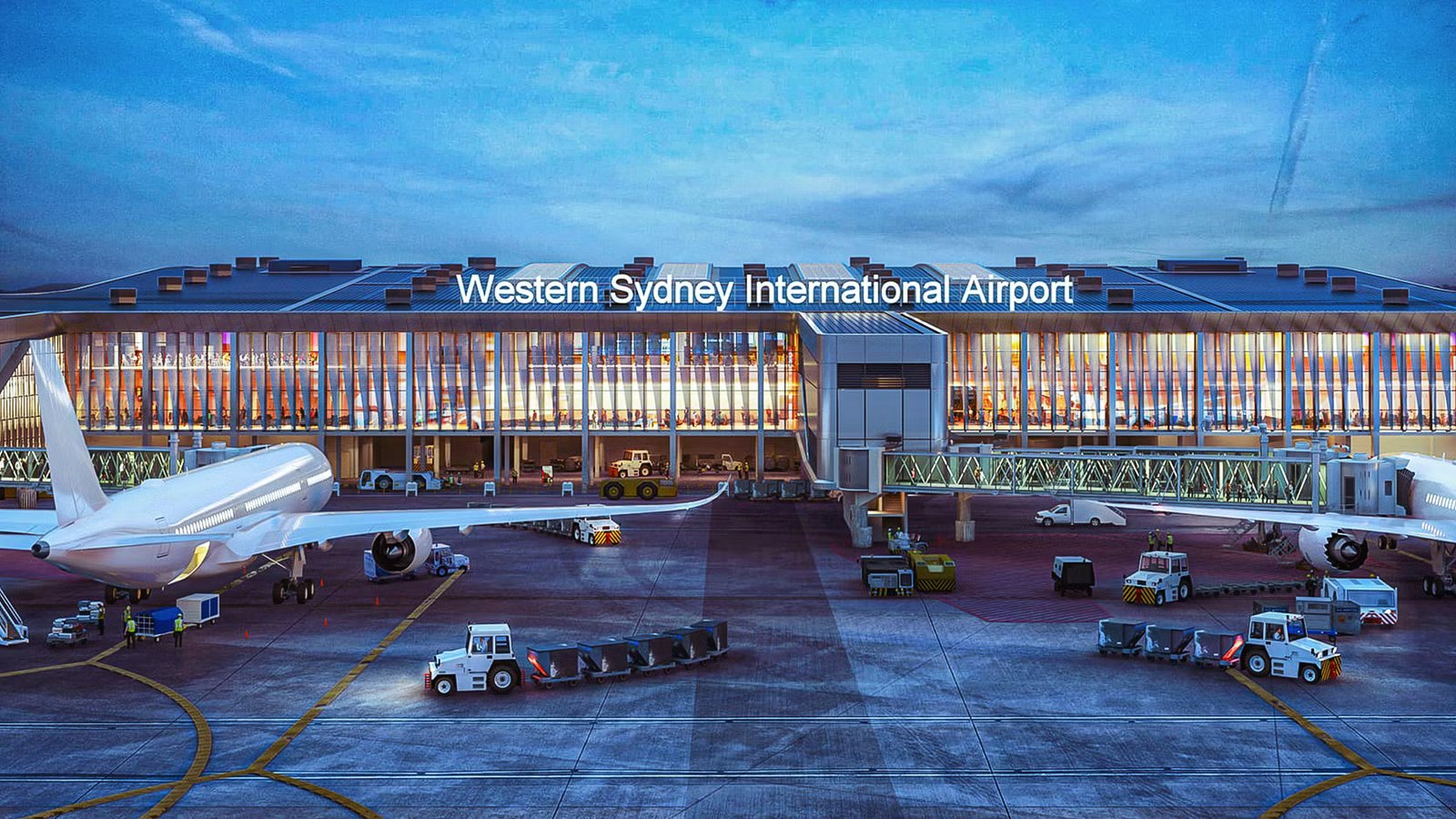
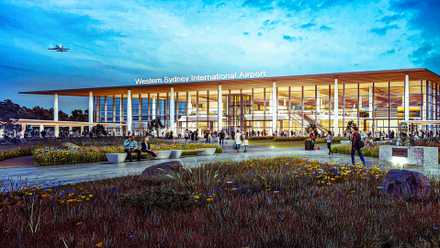
Western Sydney International Airport is a project you may have already heard about. It represents a new era for Australian aviation, adding a new gateway to the Sydney area, but the real revolution is what is missing from the skyline. This is the first major greenfield international airport built from scratch around digital air traffic control, and it could make the traditional control tower obsolete for every new airport of the 2030s. Forgoing the physical concrete monolith that typically houses air traffic controllers, the facility is betting on a decentralized future where technology bridges the gap between the tarmac and the team managing it. This guide explores why WSI is opting for a digital-first approach and what it means for the efficiency of the next generation of global hubs.
Besides the aesthetic choice to leave the horizon clear, the decision to implement a Digital Aerodrome Service (DAS) responds to the logistical complexities of modern airspace management. Traditional towers are constrained by the physical limits of human eyesight and the height of the structure itself. In contrast, Western Sydney is leveraging a high-tech center located roughly 12.4 miles (20 km) away in Eastern Creek, where controllers will manage the 3.7 km (2.3 mile) runway without ever looking through a window.
No More Sitting In A Tower

The implementation of the Digital Aerodrome Service (DAS) marks Australia’s first purpose-built digital air traffic control system for a major international airport. Instead of looking out of a window at the top of a tower, controllers sit in a specialized operations room in Eastern Creek, monitoring the airfield through a seamless 360-degree digital representation. The remote hub allows for a more ergonomic, integrated environment where air traffic data and live video feeds merge into a single, actionable interface.
Remote tower technology provides controllers with a level of situational awareness not available in a more traditional tower setup. Using digital sensors and cameras, the system can provide a panoramic view unaffected by environmental limitations of a physical tower, such as glare or structural blind spots. The Eastern Creek facility serves as a nerve center where 70 new jobs have been created to manage the intricate balance of air traffic, maintenance, and firefighting services.
Transitioning to a digital tower also offers significant long-term infrastructure flexibility. As the airport grows from its initial capacity to its future target goals, the digital system can be scaled with software updates and additional camera modules rather than costly physical expansions of a concrete tower. Having this kind of agility is essential for WSI as it prepares to open for cargo flights in July 2026, followed by passenger operations in October 2026.
Seeing The Unseen

Visual data for the DAS is provided by a sophisticated network of 25 high-resolution cameras that act as the primary eyes on the airfield. These cameras are part of an intelligent ecosystem that provides capabilities far beyond human vision, including object tracking and image enhancement. The network is designed to ensure that every 6.6 feet (2 meters) of the runway’s 2.3-mile (3.7 km) length is under constant, clear surveillance.
Equipping the airport with infrared cameras allows for superior night vision and the ability to see through difficult weather conditions like heavy fog or driving rain. The system automatically spots and tags aircraft on high-definition screens, removing the need for controllers to manually search the horizon with binoculars. Automated tagging is enhanced by augmented reality overlays that display critical flight data, such as altitude and speed, directly on the video feed of the moving aircraft.
|
Feature |
Traditional Tower |
WSI Digital Tower (DAS) |
|
Visual Range |
Human eye/Binoculars |
25 High-Res/Infrared cameras |
|
Location |
Onsite structure |
Eastern Creek (Off-site) |
|
Night/Fog Vision |
Extremely limited |
Infrared/Image enhancement |
|
Data Integration |
Manual identification |
Auto-tagging + AR overlays |
|
Infrastructure |
Concrete tower |
Digital Aerodrome Service Center |
With the digital architecture comes a significant safety benefit, reducing the cognitive load on air traffic controllers. Having flight numbers and transponder data overlaid on the visual representation of the plane, the risk of misidentification is significantly lowered. This technology mirrors the advancements seen in military glass cockpit displays, bringing a fighter-jet level of data integration to the commercial aviation environment of Western Sydney.
Here’s Why Australia’s New 24/7 Airport Is Reshaping Airline Schedules Before It Even Opens
The airport will encourage more dynamic flight operations.
All Day And All Night

Sydney’s skies are being redrawn as WSI prepares to be the city’s first major airport to operate 24/7 without a curfew.  Sydney Kingsford Smith Airport is restricted by tight operational windows to manage noise, whereas the Nancy-Bird Walton facility has been designed from the ground up to support around-the-clock arrivals and departures. Such status is particularly vital for the July 2026 launch of cargo flights, allowing logistics carriers to optimize their schedules across global time zones.
Operating 24 hours a day necessitates a surveillance system that never tires and is not hindered by the lack of natural light. The digital tower system thrives in this 24/7 environment, using its infrared sensors to maintain the same level of safety and clarity at 3:00 AM as it does at noon. For international travelers and freight operators, this means WSI becomes a primary gateway for red-eye flights and urgent cargo that cannot wait until other metropolitan hubs reopen in the morning.
WSI offers a clean slate for international airlines, which is something that is sure to entice many that are looking to operate in Australia. Removing the physical tower and the curfew, WSI is positioning itself as a more flexible, technology-driven competitor to established hubs in the South Pacific and East Asia.
The Greenfield Advantage

Structural integrity is a core component of the WSI project, exemplified by the massive 2.3 mile (3.7 km) runway designed to support the world’s largest commercial aircraft. Adding on from this, the runway was built with a 6.6-foot (2-meter) deep foundation to ensure durability under the extreme weight of fully-loaded cargo jets. Remarkably, this foundation utilized recycled sandstone, showcasing a commitment to sustainability that is often difficult to achieve in large-scale industrial projects.
Moving from airside to landside, the terminal is being constructed to handle ten million passengers annually at launch, with a design that emphasizes seamless movement and rapid processing. Using a greenfield site, land that has never been built upon before, allowed planners to optimize the layout for digital ATC from day one. There was no need to work around existing structures or legacy cabling, and the entire 25-camera network was integrated into the airfield’s nervous system during the initial build.
Using recycled materials in the foundation not only reduced the environmental impact of the construction but also set a standard for circular economy practices in aviation infrastructure. The sandstone was sourced from tunnel projects across Sydney, turning the city’s excavation waste into the bedrock of its newest global gateway. A real technical foresight ensures that while the airport is incredibly modern on the surface, its foundation is built on proven, sustainable engineering principles.

These Are Sydney’s Top Boeing 787 Airlines This Winter
The Dreamliner soars southward as winter’s chill sets in, but which airlines reign supreme in Sydney’s skies?
Easily Scalable For Mega Operations

Initial operations at Western Sydney International are just the first step in a multi-decade expansion plan. The terminal starts with a capacity of ten million passengers, and then the comprehensive plan envisions a future in which WSI handles 80 million passengers annually, rivaling the world’s largest hubs. The digital air traffic control system is a critical enabler of this growth, as it can be expanded far more easily than a physical tower system.
Looking at the biggest hubs in the world currently, tower spaces are often limited by the physical footprint of their legacy control infrastructure. WSI circumvents this by keeping its components off-site, allowing the airfield space to be dedicated entirely to runways, gates, and taxiways. The decoupling of control and location is a major trend in aviation, but WSI is the first to prove it can be done at this massive international scale. Airports like London City have already shown the benefits, but now, over in Australia, such an idea can really be stress-tested.
|
Phase |
Estimated Year |
Target Passenger Capacity |
|
Launch Phase |
2026 |
10 million |
|
Expansion Phase |
2035 |
25-30 million |
|
Ultimate Capacity |
2060+ |
80 million |
Scaling to 80 million passengers will eventually require a second runway and additional terminal wings. The digital tower system in Eastern Creek is software-defined, so adding a second runway’s worth of cameras is a relatively straightforward integration task, ensuring that WSI will remain at the cutting edge of aviation technology for decades and avoid the technological obsolescence that often plagues major airports within their first 20 years of operation.
A Digital Aviation Future

Cybersecurity and reliability are paramount for a system that relies on digital feeds rather than direct visual sight. To protect the 25-camera network and the Eastern Creek hub, WSI has implemented three lines of defense against cyber threats, ensuring the integrity of the data stream. Additionally, each camera is individually cabled and has redundant power sources to prevent a single point of failure from blinding the controllers.
Maintenance and safety roles have been reimagined for this digital environment, creating important new jobs that blend traditional aviation expertise with high-level IT skills. The Aviation Rescue Fire Fighting (ARFF) crews will also rely on the digital feeds to get a bird’s-eye view of incidents on the ground, allowing for faster, more precise responses. It is a synergy between the digital tower and ground services, keeping the human element central to the airport’s safety culture, even if they aren’t standing in a tower.
Transitioning to a remote tower model may seem like a major change, one that has inherent downsides, but for controllers, it empowers them with better tools. The experience gained at WSI will likely influence aviation authorities globally to accelerate their own digital ATC trials. When October 2026 comes around, when the first passenger jets touch down on the new runway, the absence of a control tower will not be seen as a missing piece, but as the clearest sign yet that the future of aviation is digital.