dailynewsnblog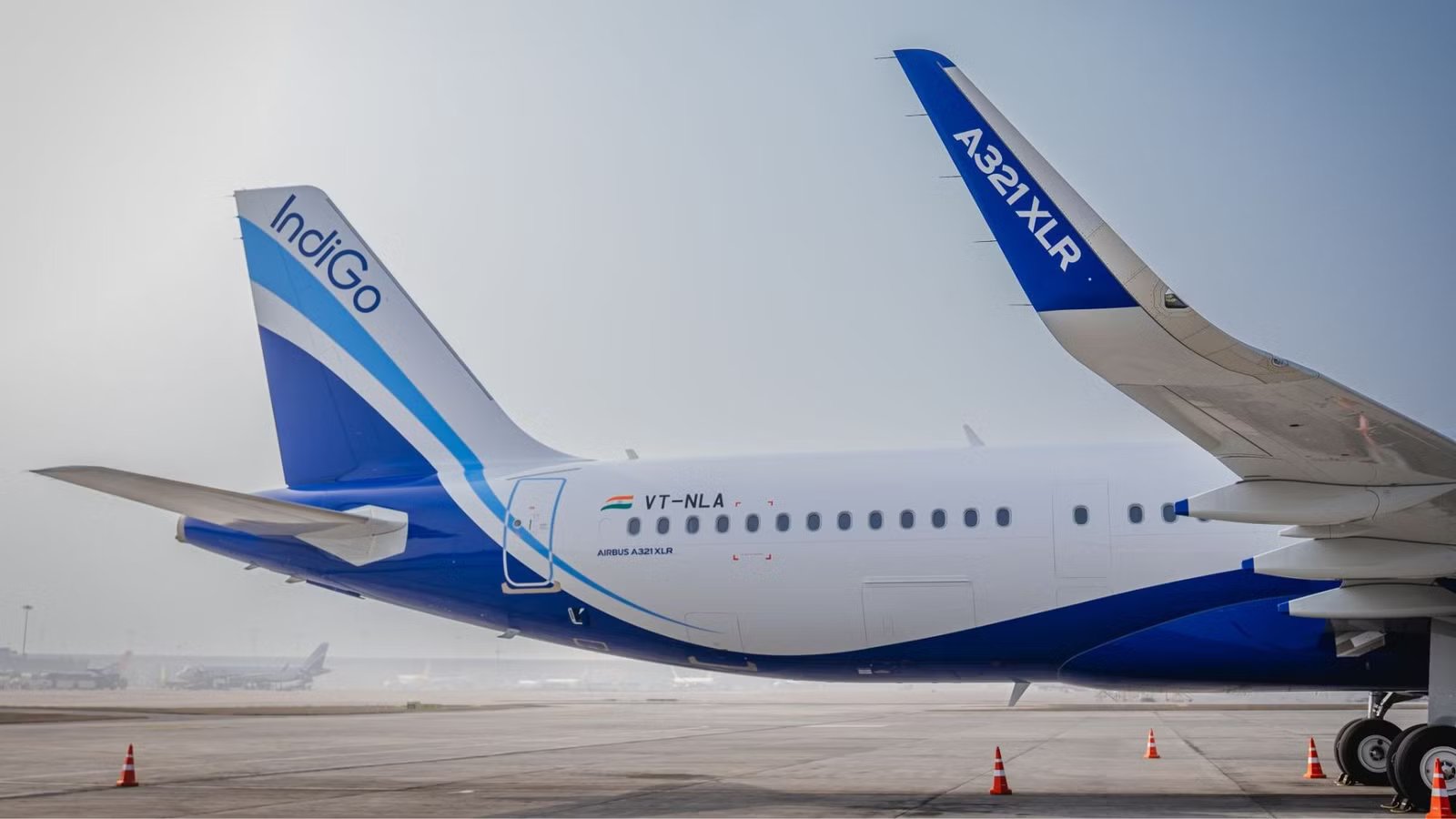
Earlier this year,  IndiGo revealed that it will end its partnership with Norse Atlantic, which takes effect soon. This deal involves leasing Boeing 787-9s so that India’s largest operator could fly to Europe. It was a short-term stop-gap until IndiGo’s Airbus A350-900s start to arrive in 2027.
One consequence is that IndiGo will temporarily not have widebody aircraft. It will, therefore, end various routes to Europe, including both of its links to London Heathrow. Elsewhere, it will fly the Airbus A321XLR from Mumbai’s  Chhatrapati Shivaji Maharaj International Airport (BOM) to
  Amsterdam Schiphol Airport (AMS), with a substantial block time of up to 11 hours.
IndiGo’s A321XLRs From Mumbai To Amsterdam
India’s largest carrier first flew from BOM to AMS, which is heavily slot-restricted, in July 2025. It must, of course, use the slots at least 80% of the time or lose them. It does not want to lose them, which is why the route will temporarily shift from the 787-9 to the A321XLR. It is a slot-sitting exercise. AMS is likely to be among the first long-haul destinations to which the A350-900s will fly. Given IndiGo’s business model, its XLRs have 195 seats.
There are 12 Stretch seats (with 44″ pitch, which do not become lie-flat beds) and 183 economy seats (with 31″ pitch). Seat-back entertainment is unavailable, but passengers can stream entertainment to their own devices. While not like-for-like comparisons, the capacity is far more than is available with most other XLR users, which have a higher-premium offering, such as Aer Lingus (184), Air Canada (182), Iberia (182), American Airlines (155), and United Airlines (150).
Loading map…
Drag to explore
Amsterdam A321XLR Flights Are Slashed This Winter

IndiGo had planned to fly the XLR daily to AMS in the upcoming winter. However, it has now been confirmed that the frequency will be reduced to three weekly services, which means that only one airframe will be needed.
The schedule, which is outlined below, remains the same, which includes the 11-hour block time to Europe and the one-hour turnaround time in AMS. The considerable block time means that BOM-AMS will be the world’s longest XLR-operated scheduled service.
Days | BOM To AMS; Local Times | AMS To BOM; Local Times |
|---|---|---|
Wednesdays, Fridays, Sundays | 6E21: 6:30 AM-1:00 PM (11 hours and 00 minutes) | 6E22: 2:00 PM-4:10 AM+1 (9 hours and 40 minutes) |
IndiGo’s very long operation is influenced by detouring to avoid Russian, Iranian, and Ukrainian airspace. This means that flights will probably fly over Saudi Arabia to Egypt and up through Europe, as shown earlier for the 787-9. As such, it is estimated that the likely flight path will cover approximately 4,200 nautical miles (7,779 km). This would be beyond the real-world range of the XLR. Iberia said that its maximum range, with its lighter 182-seat aircraft, is about 3,900 nautical miles (7,223 km).
IndiGo’s very high block time is also influenced by winter headwinds, which will slow down the aircraft, and that the XLR cruises slower than the 787-9. Earlier this year, when the 787 was scheduled to fly to the Netherlands during the winter, IndiGo’s schedule submission to OAG showed that the widebody was to have a block time of nine hours and 50 minutes.
Lots Of Amsterdam Seats Won’t Be Available To Book

Given the BOM-AMS route would cover a greater distance than the XLR’s real-world range, IndiGo had three choices. First, to scrap the route entirely. Secondly, to refuel en route. Third, to have a payload restriction and to agree to carry fewer passengers than would ordinarily be the case. Unsurprisingly, IndiGo chose the latter.
Simple Flying has been informed that “just under” 140 seats will be available to book between BOM and AMS, against the maximum capacity of 195 seats. In other words, it has chosen to temporarily not sell up to 28% of the XLR’s capacity. The flights would probably not have been completely and consistently full anyway.
With fewer passengers and bags, the aircraft will be much lighter, which means that the fuel will go further. As such, IndiGo anticipates flying nonstop to AMS. This will, of course, come at a considerable cost, although perhaps less than leasing 787-9s. Regardless, it is a cost that IndiGo seems happy to pay to retain AMS slots until the airline’s A350-900s arrive.