dailynewsnblog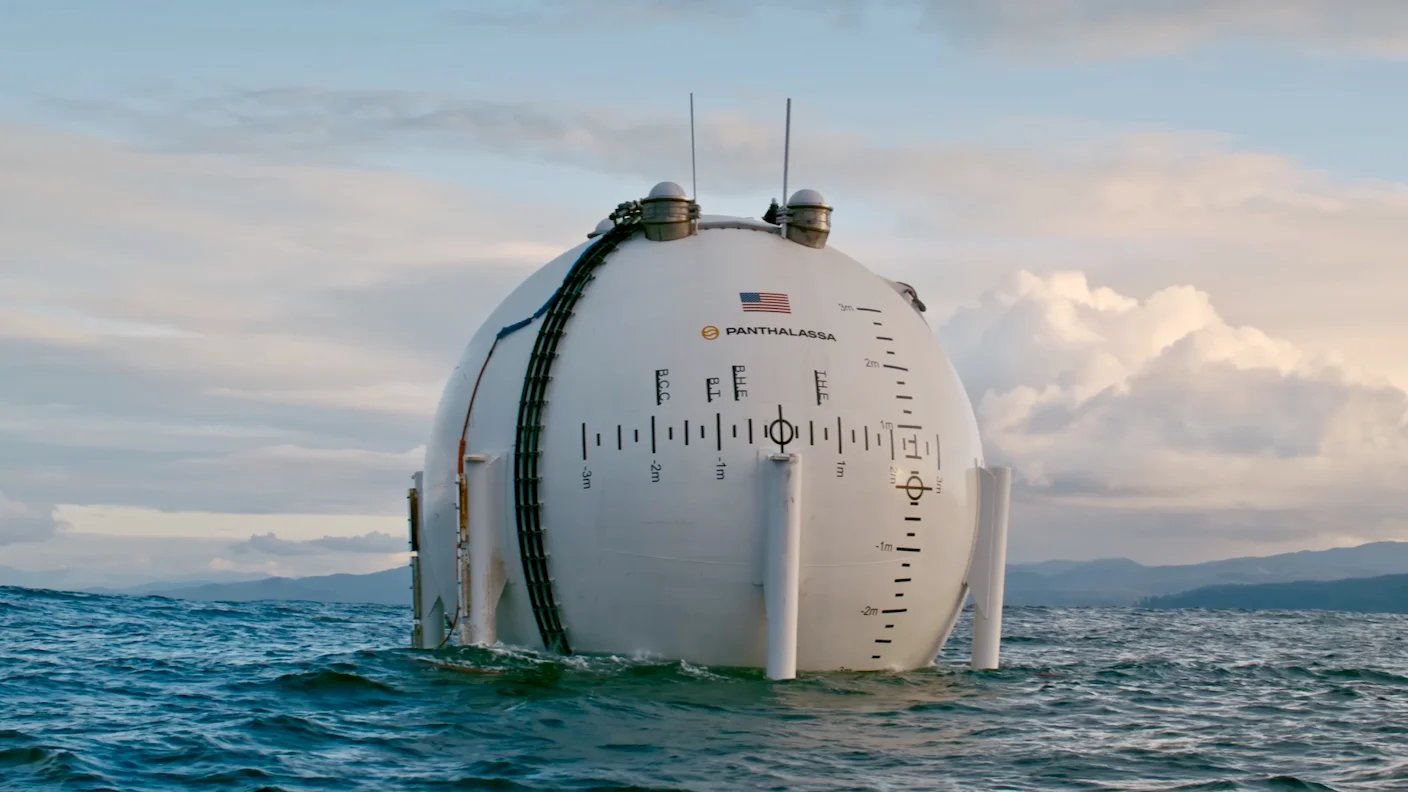
As AI demand for computing power surges, companies are searching for new ways to fuel data centers. One startup is now proposing floating data centers powered by ocean waves, and they just raised $140 million to bring the idea to fruition.
Tech companies are planning to spend roughly $750 billion on data centers this year. But the elephant in the room is figuring out how to power these facilities. They’re already straining electrical grids across the world, and the pace of the buildout is far surpassing our ability to bring new power online.
This energy shortfall is leading tech companies to invest in a series of increasingly outlandish fixes from restarting shuttered nuclear reactors to developing novel geothermal energy technology and even launching data centers into space.
Now, several leading Silicon Valley figures, including Palantir’s Peter Thiel and Salesforce’s Marc Benioff are backing Oregon-based startup Panthalassa. The startup is developing floating data centers that generate their own electricity from waves. These investors recently joined a $140 million series B round that will allow the company to complete a pilot manufacturing facility near Portland and begin deploying the latest generation of its devices, or “nodes.”
“There are three sources of energy on the planet with tens of terawatts of new capacity potential: solar, nuclear, and the open ocean,” CEO Garth Sheldon-Coulson said in a press release. “We’ve built a technology platform that operates in the planet’s most energy-dense wave regions, far from shore, and turns that resource into reliable clean power.”
The company’s nodes are nearly 300 feet long. A bulbous sphere at the top floats on the ocean’s surface, and a lengthy tube-like housing beneath holds computer servers. As the node bobs up and down on the waves, the movement forces water up through a tube into a pressurized reservoir where it drives a turbine to generate electricity for the chips.
Besides powering the data center with renewable energy, the nodes also use the surrounding seawater to cool the chips—a much more sustainable solution compared to land-based facilities, which use significant amounts of water and electricity to manage heat.
The data centers transfer information via SpaceX’s Starlink satellite network. This does away with the need for cabling, either for power transmission or networking, and allows the nodes to operate autonomously from anywhere in the ocean. They’re also self-propelling, can navigate to their deployment location, and can stay in position without external help.
The company designed the hardware with minimal moving parts, so it can operate for extended periods without maintenance—a crucial factor for operating far from shore. Panthalassa validated the concept with a three-week trial of their second-generation node Ocean-2 off the coast of Washington state in early 2024.
This isn’t the first attempt to harness the power of waves to generate renewable energy. The company’s main innovation is that it skips the complexities of getting power back to shore. “One of the key insights we had…was that it’s very important to use the electricity in place,” Sheldon-Coulson told the Financial Times. “We will never be transmitting electricity back to shore. That makes us very different from all other ocean energy that’s been tried in the past.”
The latest funding will be used to complete a pilot manufacturing facility near Portland and deploy Panthalassa’s next-generation Ocean-3 nodes, which are scheduled for testing in the northern Pacific later this year. The company says it’s targeting commercial deployment in 2027.
The approach does face some major hurdles though, Benjamin Lee, a computer architect at the University of Pennsylvania, told Ars Technica. While relying on satellite communication does away with power transmission headaches, these links have significantly lower bandwidth compared to the optical fiber normally used to network data centers. Combined with the potential for signal delays, this could limit how useful they are for the heavy AI workloads they’re meant to handle.
However, the approach has clear parallels with another idea that’s seized Silicon Valley—orbital data centers. Rather than using wave energy and ocean water for cooling, these facilities would rely on abundant solar energy and the frigid deep-space vacuum to chill their chips. But going orbital would be far costlier and more complex, suggesting Panthalassa’s approach may be a more viable alternative.
The sea is a cruel mistress though, and deploying and maintaining a fleet of ocean-going data centers won’t be simple. Nonetheless, if they can pull it off, the idea may ease the AI energy crunch.