dailynewsnblog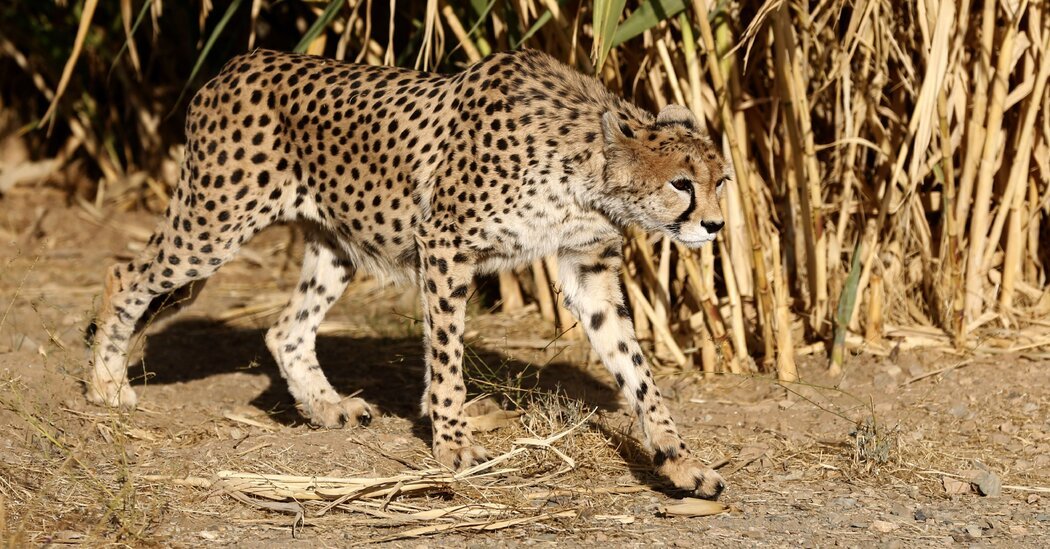
Amid destruction and devastation in the wake of war, Iranians have found a rare glimmer of hope among one of the nation’s most endangered species.
Iran has recorded a jump this year in its official number of Asiatic cheetahs, a subspecies, now found only in Iran, that has been on the brink of extinction for years.
Last year, the Iranian authorities were aware of just 17 wild cats. But in 2026, Bagher Nezami, the project manager for the Conservation of the Asiatic Cheetah Project, told Iranian state media that conservationists had recorded 21 new adult cheetahs and six cubs.
The Asiatic cheetah is one of the world’s fastest land animals. It has a smaller head, shorter legs and a stronger neck than the African cheetah. The Asiatic cheetahs used to roam the Arabian Peninsula, the lands around the Caspian Sea, and South Asia. Now, a species once favored by kings prowls only Iran’s eastern desert and is under the constant threat of hunters, speeding highway drivers and wild dogs.
Still, the cheetah’s survival in Iran is a source of national pride. The national soccer team’s jerseys are emblazoned with the spots of the wild cat, while the country’s Meraj Airlines has sought to raise awareness of the critically endangered species by painting cheetahs across its jets.
“The Asiatic cheetah is really a symbol in Iran,” Iman Ebrahimi, an Iranian conservationist, said in an interview. “I think a big part of that is because people feel a connection to it. It has a place in our culture and history.”
Ancient Persia’s kings used the agile cats to hunt down gazelles. But in recent decades, the cheetah has become a victim of poaching, captivity and neglect, and its population rapidly dwindled to just a few dozen registered cats.
More recently, the cheetah has been embraced by some backers of Iran’s political opposition as a symbol of innocence and resistance. During the country’s widespread “Women, Life, Freedom” demonstrations of 2022, the protest anthem “Bayareh” paid homage to Pirouz, a beloved cheetah cub born in captivity who later died.
Iranian environmentalists caution against too much optimism over the increased population count. Increased identifications of a rare, wild species can reflect changes in environmental conditions or monitoring efforts over a given year, Mr. Ebrahimi said, rather than population recovery. Young cheetahs also typically have a low survival rate.
War, environmentalists say, typically undermines conservation efforts, and the ever-worsening economic crisis in Iran is expected to deepen cuts to initiatives to save endangered animals.
“In war, wild animals are, for the most part, forgotten and neglected,” said Morad Tahbaz, co-founder of the Persian Wildlife Heritage Foundation.
Poachers also often take advantage during the chaos of wartime to hunt endangered species, he said.
Iran’s environmentalists face the added problem of having long been objects of suspicion among the country’s intelligence apparatus.
Security services have been wary of the conservationists’ close work with Western environmental and activist groups. They have also asserted, without providing evidence, that the camera equipment conservationists use in remote areas to monitor wild species are actually being used to conduct espionage for American and Israeli intelligence services.
In 2018, the intelligence arm of the Islamic Revolutionary Guards Corps arrested nine members of the Persian Wildlife Heritage Foundation, including Mr. Tahbaz, and charged them with espionage. Several of those arrested said they had been tortured, and one died in detention. All were released after spending years in prison.
Just last week, as news of the rebounding cheetah numbers spread, environmental activists said the authorities had arrested the conservationist Iman Memarian, a wildlife veterinarian, without disclosing the charges.
Such hostilities pose a problem for environmentalists seeking to seize on the potential rebound in the cheetah population to intensify conservation efforts.
Many of the specialists who tranquilize and put radio monitoring collars on the cheetahs to observe them left the country after the previous arrests. Others have been barred from doing their research in the field, said Mr. Tahbaz.
“Obviously, this will have a detrimental effect in being able to monitor the newly observed cheetah family,” he said. “Only by continual observation will it be possible to provide some level of protection to the cheetahs.”
Environmentalists are, nonetheless, finding new ways to conduct grass-roots conservation work, said Mr. Ebrahimi, the conservationist.
Tanya Rosen, a big-cat conservationist based in Central Asia, said such local efforts to protect the cheetahs were “essential.”
“In times of crisis like this,” she said, “nature and the survival of the Asiatic cheetah against all odds stand as a rare, powerful and deeply needed source of hope for the country.”