dailynewsnblog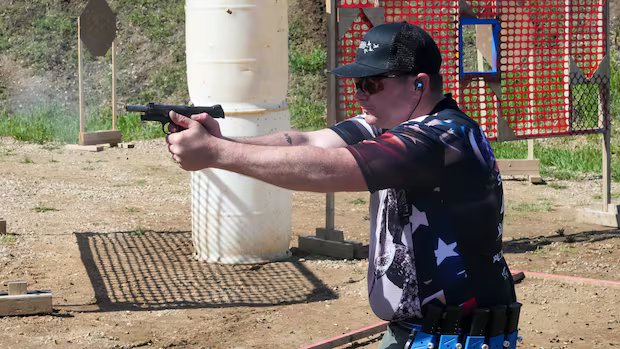

Listen to this article
Estimated 4 minutes
The audio version of this article is generated by AI-based technology. Mispronunciations can occur. We are working with our partners to continually review and improve the results.
In less than a second of an electronic beep going off, Glen Miller draws his handgun from a holster and becomes an exercise in explosive precision.
With the cadence of a jackhammer, metal targets ping from bullet impacts as Miller moves quickly through a maze of wooden posts and orange plastic netting.
Miller is one of more than 50 people taking part in a competition at a gun range south of Fort McMurray, Alta., on May 30. Competitors shoot their way through obstacles that test their speed, accuracy and discipline.
It’s overseen by the International Practical Shooting Confederation (IPSC), which has about 6,000 Canadian members — but a 2023 federal ban on selling and transferring handguns has prompted them to say their sport’s days are numbered.
“The writing does seem to be on the wall. I hate to say if nothing changes, then this sport will absolutely die out,” Miller told CBC News.
“It’s tough to stomach something that I’ve invested many thousands of dollars in and many hundreds of hours in … for that just to go away from the stroke of a pen.”
Selling, transferring and importing handguns for personal use was outlawed by the federal government in 2023. Legal handgun owners are allowed to keep their firearms, but there is no way to replace a handgun that is lost, stolen or broken.

“Handgun shooting sports is dead. We are just waiting for the corpse to cool,” said John Evers, a board member with the Canadian Shooting Sports Association, in an interview with CBC News.
“There’s no newcomers coming into the sport so … it’s gonna be atrophy, death over the next 10 years.”
Handgun legislation
When former prime minister Justin Trudeau announced the freeze on handguns, he said the legislation will make communities safer and tackle crime.
“Gun violence is a complex problem but at the end of the day, the math is really quite simple: the fewer the guns in our communities, the safer everyone will be,” Trudeau said at the time.
According to the most recent data from Statistics Canada, handguns were used in 49 per cent of violent crimes involving firearms in 2024. About 80 per cent of people charged with using a firearm in a homicide did not have proper licensing.
More than half of illegal handguns seized by police were smuggled from the United States, according to a 2023 report from the Criminal Intelligence Service of Canada.

There are exemptions to the handgun ban for athletes competing in events recognized by the Olympic and Paralympic committees. Those sports use less powerful and smaller bullets compared to the handguns used in International Practical Shooting Confederation events.
The confederation’s members unsuccessfully lobbied for the same athletic exemption when they appeared before the Standing Senate Committee on Public Safety and National Security in 2022. A common argument raised by gun control advocates was that someone wanting a handgun could lie about their interest in IPSC.
“There’s no need in Canada for civilians to be involved in such activities, and they are very much at odds with Canadian values and culture,” Wendy Cukier, president of the Coalition for Gun Control, told the committee at the time.
Sean Hansen, IPSC’s regional director for Canada, told CBC News that countries with strict handgun laws and bans allow exemptions for handgun sports. Australia, for instance, has a staged licensing system for IPSC athletes.
“It’s not really a pretty picture with the abolition of new people being able to get handguns. We are who we are now and we can’t really grow the sport,” Hansen said.
For now, IPSC is promoting competitions that don’t involve handguns or any of the firearms impacted by a planned federal gun buyback program.
Marina Campbell, who is treasurer of the Fort McMurray Fish and Game Association, hopes people will be interested in those events.
“With luck, we can get a bunch of these competitors over to different divisions, but we’re also leery about purchasing new firearms,” said Campbell.
“At a stroke of a pen or an email, they could become banned or prohibited as well.”