dailynewsnblog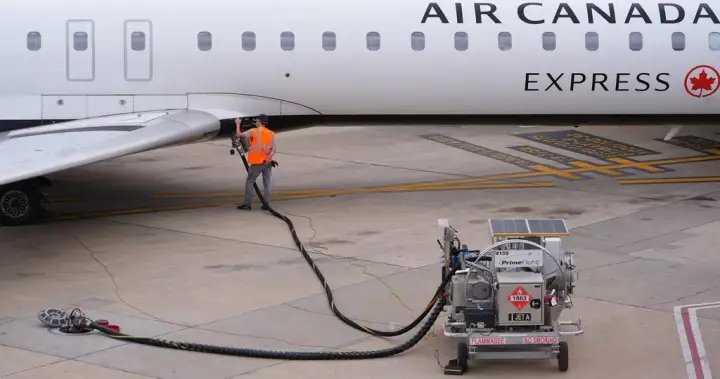
Alberta-based Imperial Oil Ltd. is capitalizing on strong pricing for diesel and jet fuel by boosting how much of those products its refineries churn out.

“Certainly in this time period, we’ve been maximizing our production of diesel and jet molecules over gasoline,” Scott Maloney, vice-president of Imperial’s downstream business, told analysts on a conference call Friday to discuss the company’s latest results.
Output from Imperial’s refineries — two in southwestern Ontario and one in Edmonton — mainly goes to the Canadian market, but Maloney said “we do opportunistically look at exporting additional production on top of that.”
The war in the Middle East has all but halted oil shipments out of the Persian Gulf, making fuel products derived from crude more expensive and, in some parts of the world, scarce.
Natural Resources Canada said the average weekly price for diesel sits at almost $2.21 a litre, about one-third than it was in late February.
The higher costs are being felt by long-haul truckers, railways and the businesses they serve via fuel surcharges.

Meanwhile, airlines are dealing with soaring jet fuel prices, with Air Canada on Thursday suspending its guidance for the year amid the volatility.

Get weekly money news
Get expert insights, Q&A on markets, housing, inflation, and personal finance information delivered to you every Saturday.
Airlines across the globe have trimmed their flight schedules as ballooning fuel costs render some routes unprofitable.
Imperial, majority-owned by U.S. energy major ExxonMobil Corp., sold 169,000 barrels per day of heating, diesel and jet fuels during the first quarter, a period that included one month of the Middle East conflict. A year earlier, sales of those products were 175,000 boepd.
Throughput at Imperial’s refineries during the first three months of the year averaged 384,000 barrels per day, down from 397,000 a year earlier, as it dealt with unplanned downtime and a disruption in supplies from an oilsands processing plant at the Syncrude mine.
Refineries ran 88 per cent full for the first three months of 2026, down from 91 per cent a year earlier.

Upstream production averaged 419,000 gross oil-equivalent barrels per day, up from 418,000 in the first three months of 2025.
Imperial’s Kearl oilsands mine north of Fort McMurray managed to increase output slightly to 259,000 barrels of bitumen per day despite a third-party natural gas supply outage during the quarter.
Also Friday, Imperial reported a first-quarter profit of $940 million, down from $1.29 billion a year earlier.
The drop was “primarily driven by higher incentive compensation charges as a result of our higher share price,” said Daniel Lyons, senior vice-president of finance and administration. The charge amounted to $143 million after tax, he said.
Imperial’s profit amounted to $1.94 per diluted share for the quarter, down from $2.52 per diluted share in the first quarter of 2025. The average analyst estimate had been for earnings of $2.39 per share during the first quarter, according to LSEG Data & Analytics.
Quarterly revenue totalled $12.45 billion, down from $12.52 billion a year earlier.
© 2026 The Canadian Press