dailynewsnblog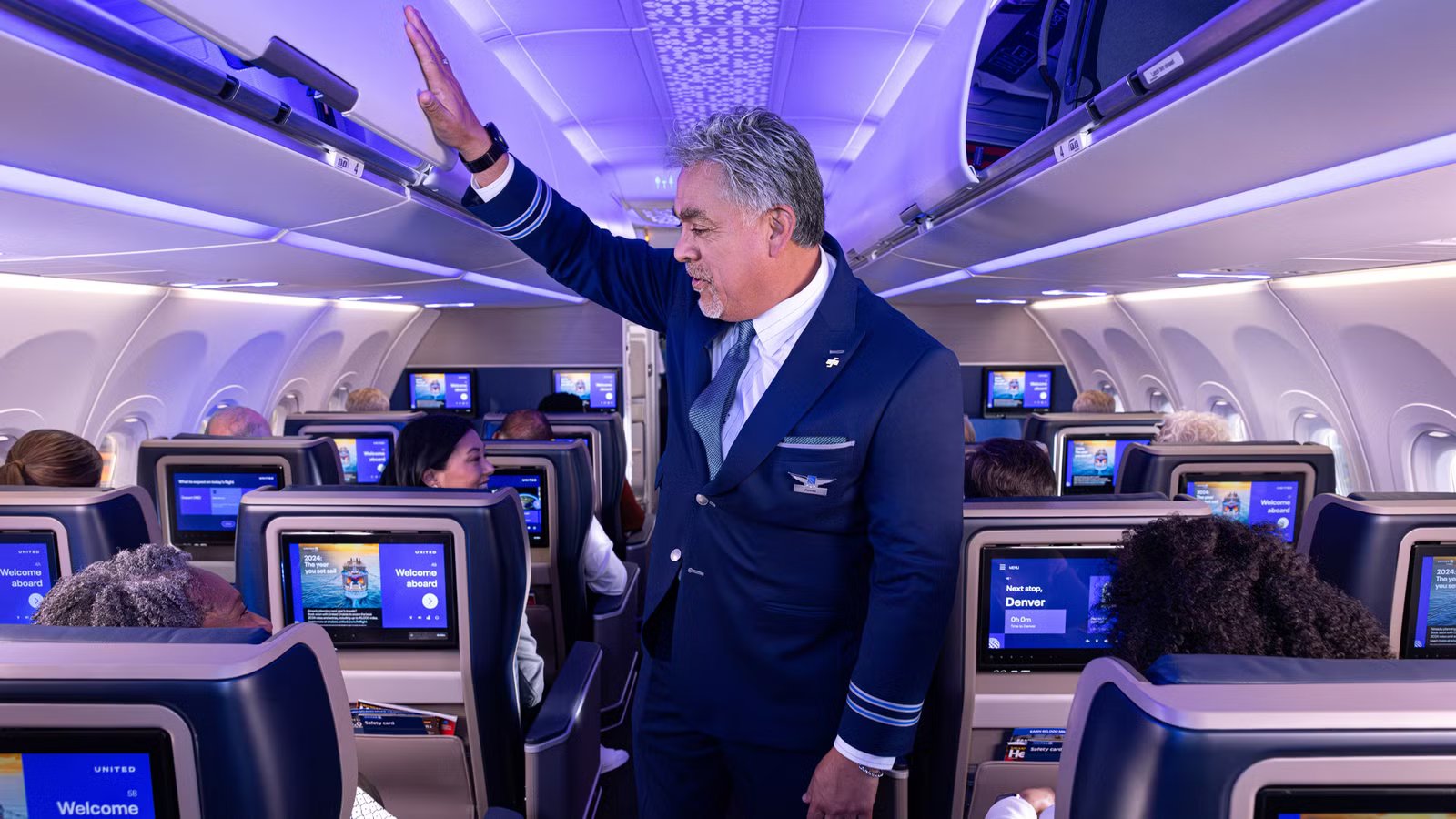
The primary role of the flight attendants is to look after the passengers’ safety at all times, including during turbulence. It can be unpleasant at times, but is nothing to be concerned about as long as you are strapped in by your seatbelt. Turbulence is perfectly normal and as we fly so much, we are very used to dealing with it. Passengers are often nervous about it, but as long as you keep your seatbelt securely fastened and follow the seatbelt sign, it’s nothing to worry about.
According to the BBC, there are over 5,000 incidents of severe turbulence a year, over a total of 35 million flights worldwide. In this guide, we’ll find out more about what turbulence is, why it happens, and what procedures are in place to keep everyone safe. Severe turbulence is quite rare, but as an added precaution, it is better to keep your seatbelt fastened at all times when seated. This will ensure that you or others around you are not injured should sudden severe turbulence occur.
What Is Turbulence?

In short, turbulence is an irregular motion of air resulting from obstructions to the airflow or vertical currents, and it has three primary causes. There is convective turbulence, which is vertical currents of air caused by warm air that rises and cool air that sinks. This often happens near thunderstorms over land on a sunny afternoon. On a flight, it may feel bumpy during the climb and descent. Mechanical turbulence happens when the airflow is obstructed by mountains, terrain, or buildings. It is common near airports and can be felt at its strongest on windy days at low altitude.
Clear air turbulence, or CAT, occurs when skies are clear but near jet streams and happens due to rapid changes in the wind speed and direction. It can happen at high altitude with no visible clouds; it comes out of nowhere and is very hard to detect in advance. There is also wake turbulence (which is also considered mechanical turbulence), and it is a hazardous, invisible phenomenon caused by counter-rotating, high-energy vortices trailing from an aircraft’s wingtips when producing lift.
This can happen when a smaller aircraft takes off or lands behind a larger heavy aircraft, and can cause the smaller aircraft to roll. This type is managed by air traffic control using strict separation rules between aircraft on takeoff and landing. There is also a mountain wave, where the wind over a mountainous area oscillates and causes smooth updrafts followed by strong downdrafts.
Turbulence can be classified by intensity into light, moderate, severe, and extreme categories. It can affect any size of aircraft but differs in intensity; larger aircraft types in general are less likely to be affected. Turbulence can happen at any time and is invisible to the eye. When it happens, anything that is not secure in the cabin, including passengers and crew, and any loose items, can move unexpectedly, and it may cause injuries.
The Facts And Figures

Globally, every year, around 100 people are injured during turbulence, although over half are flight attendants. This is because they are continuing their duties in the cabin, and once the seatbelt sign is switched on, they need to secure the cabin. Common injuries to flight attendants include injuries to the head, neck, shoulder, and ankle, and these may need first aid during the flight and medical attention on the ground. More aircraft are flying than ever before, so more turbulence is reported; skies have become bumpier as a byproduct of climate change.
According to data from the Federal Aviation Administration (FAA) and the National Transportation Safety Board (NTSB), which concluded that between 2009 and 2024, just in the US, there were 207 serious injuries from turbulence and one fatality. Of those injured, 40 were passengers, and 166 were flight attendants. According to an International Civil Aviation Organization (ICAO) safety report, The State of Global Aviation Safety, turbulence is the leading cause of serious injuries in commercial aviation, accounting for nearly three-quarters of all such incidents. Over two billion passengers fly every year on average.
Last year,  Southwest Airlines decided to change their procedures so that cabin service would end at 18,000 feet (5,486 m) instead of 10,000 feet (3,048 m). In applying this, they cut turbulence-related injuries by 20%. Airbus reported that there were 240 cases of severe turbulence between 2014 and 2018; of these, 30% were on long-haul flights and 12% on short-haul flights. They also stated that approximately 20 cases of severe turbulence are reported to them every year.

Turbulence 101: What Pilots Wish Passengers Knew
This article serves as reassurance that turbulence rarely poses a danger to passengers and requires little effort from pilots to navigate.
The Pilot Perspective

Passengers may be fearful of turbulence, but may be surprised to know that aircraft are built to withstand severe turbulence. An aircraft just does not fall out of the sky due to turbulence. Pilots and flight attendants fly through it on a regular basis, and it’s just a normal part of any working day. The flight crew will check the weather before the flight and see if any turbulence is expected, and will inform the cabin crew during the pre-flight briefing. During the flight, they take cues from radar returns, weather charts, and reports from other aircraft. The airline’s operations team will keep the flight crew updated on weather conditions and help them navigate around areas of turbulence.
If there is turbulence, the flight crew slows the aircraft to a designated turbulence penetration speed, which ensures high-speed buffet protection and prevents damage to the airframe, according to askthepilot.com. The flight crew can request a higher or lower altitude or a revised routing. Other pilots in the area will also warn each other of any turbulent conditions. If approved by air traffic control, the flight can proceed and change altitude in search of smoother conditions. This is in the interest of comfort and not safety.

An aircraft’s autopilot can handle turbulence by making small, precise corrections to the flight controls. On larger aircraft, the turbulence mode desensitizes the system. The flight crew can also avoid some turbulence just by looking out of the window and avoiding cumulus clouds that occur with thunderstorms. Most turbulence is light or moderate, and severe turbulence is quite rare, but incidents are slowly increasing. Any aircraft that experiences severe or extreme turbulence will be checked when on the ground by engineers after the flight.
Flight Attendant Procedures

During the pre-flight briefing, the flight crew will inform the flight attendants of any expected turbulence en route, although, of course, it can be completely unpredictable. Should turbulence occur, the flight crew will switch on the seatbelt signs, and the lead flight attendant will make an announcement to confirm that passengers should remain seated with their seatbelts on. In light or moderate turbulence, the cabin service may continue as normal, as flight attendants are generally used to adjusting their footing and securing themselves using the cart and seats for support.
Once the seatbelt sign is switched on, the flight attendants will start to secure the cabin and galleys. They will make sure that all passengers have their seatbelts on and all loose items are stowed away. The cabin secure check is reported to the lead flight attendant, who reports the check to the flight crew. If it is unexpected or severe, or if in doubt, the seatbelt sign will be switched on immediately, and the flight crew will make an announcement and tell the crew to be seated. On hearing this, the flight crew will immediately return to their galleys and stow their carts, if serving in the cabin. Once the cabin and galley secure check is done, the flight attendants go to their jumpseats and strap in. From then, they must wait until the flight crew says they can release their seatbelts.
If severe turbulence is encountered and the crew has been released from their seats, the flight attendants will check if any passengers or crew have injuries and perform first aid as necessary. They will then report any injuries or damage in the cabin to the flight crew. If severe turbulence is predicted, the flight attendants will pour away any hot liquids, remove any glass bottles from the galley and secure the galley, making sure everything is latched in place. The lavatories are locked, and the cabin secure check is completed. If the turbulence is out of the blue and extreme, a flight attendant may not be able to get to their jumpseat and may sit on any empty seat and strap in.

How Airline Seatbelts Are Tested To Keep You Safe During Turbulence & Accidents
Airline seatbelts are more than just a formality to satisfy safety regulations — they are a lifeline in high-risk situations.
Severe Turbulence Examples

On July 30, 2025,  Delta Air Lines Flight 56 experienced severe turbulence over Wyoming, on a flight from Salt Lake City to Amsterdam. The Airbus A330 had severe turbulence for two and a half minutes, and two people were seriously injured, and a further 18 were sent to the hospital. The cabin had some minor damage inside. The aircraft had deviated from the original route due to thunderstorms and strong convective activity.
 Singapore Airlines flight SQ321 on May 21, 2024, departed from London’s Heathrow bound for Singapore. The Boeing 777-300ER experienced extreme turbulence at 37,000 feet above Myanmar. Vertical accelerations of 1.5G were reported as the aircraft passed by thunderstorm clouds. The flight crew performed a controlled descent to 36,000 feet (10,973 m) and diverted to Bangkok. One passenger suffered a heart attack and died, and 104 passengers and crew were injured.
On December 4, 2023,  Emirates flight EK421 and Airbus A380 experienced severe turbulence whilst cruising over the Maldives en route from Perth to Dubai. This was thought to be due to near-cloud turbulence propagated from the neighboring thunderstorm cloud formations. Five people were seriously injured, and a further 23 people had minor injuries. There was some damage to the cabin interior. The flight continued on to Dubai.
The Truth About Turbulence

Turbulence for flight attendants and flight crew is a regular occurrence, and it is not dangerous or a threat to the aircraft’s safety. Aircraft are designed to withstand very severe and extreme turbulence. Although passengers are often anxious about it, it is common, and as long as you are strapped in whilst seated, a passenger is unlikely to be injured. Flight attendants are more prone to being injured, as they are often working in the cabin when it happens, and also have to make sure that the cabin is secure during turbulence. Injuries mostly happen when passengers are not wearing seatbelts, unsecured items move, or when crew are working in the cabin.
Flight crew deal with turbulence all the time and will often change altitude for passenger comfort, not because it’s a danger to the aircraft. Flight attendants are not concerned with turbulence and get used to changing their footing and securing themselves in the cabin when it is light to moderate. However, if it’s extreme or unexpected, they will secure everything and then strap into their jumpseats and await instructions from the flight crew. They also perform hundreds of flights every year, so they are well-used to it and not scared by it.
It is possible that there are more incidents of turbulence due to climate change and the fact that there are more flights than ever before. Of course, with social media, many of these incidents are filmed and put online, which can fuel more fear. The media does not help with stories with lines such as ‘the pilots wrestled with the controls’ and ‘the airplane plummeted thousands of feet’ and a passenger saying ‘I thought I would die’, when these could not be further from the truth. It all looks dramatic on social media, but extreme turbulence is quite rare. As long as passengers stay strapped in whilst seated and follow the crew’s instructions, they will have less chance of injury.

![easyJet Announces 18 New Routes Including Longest Flight Ever [Full List]](https://dailynewsnblog.com/wp-content/uploads/2026/04/easyjet-airbus-a320neo-taxiing-custom-thumbnail.jpg)