dailynewsnblog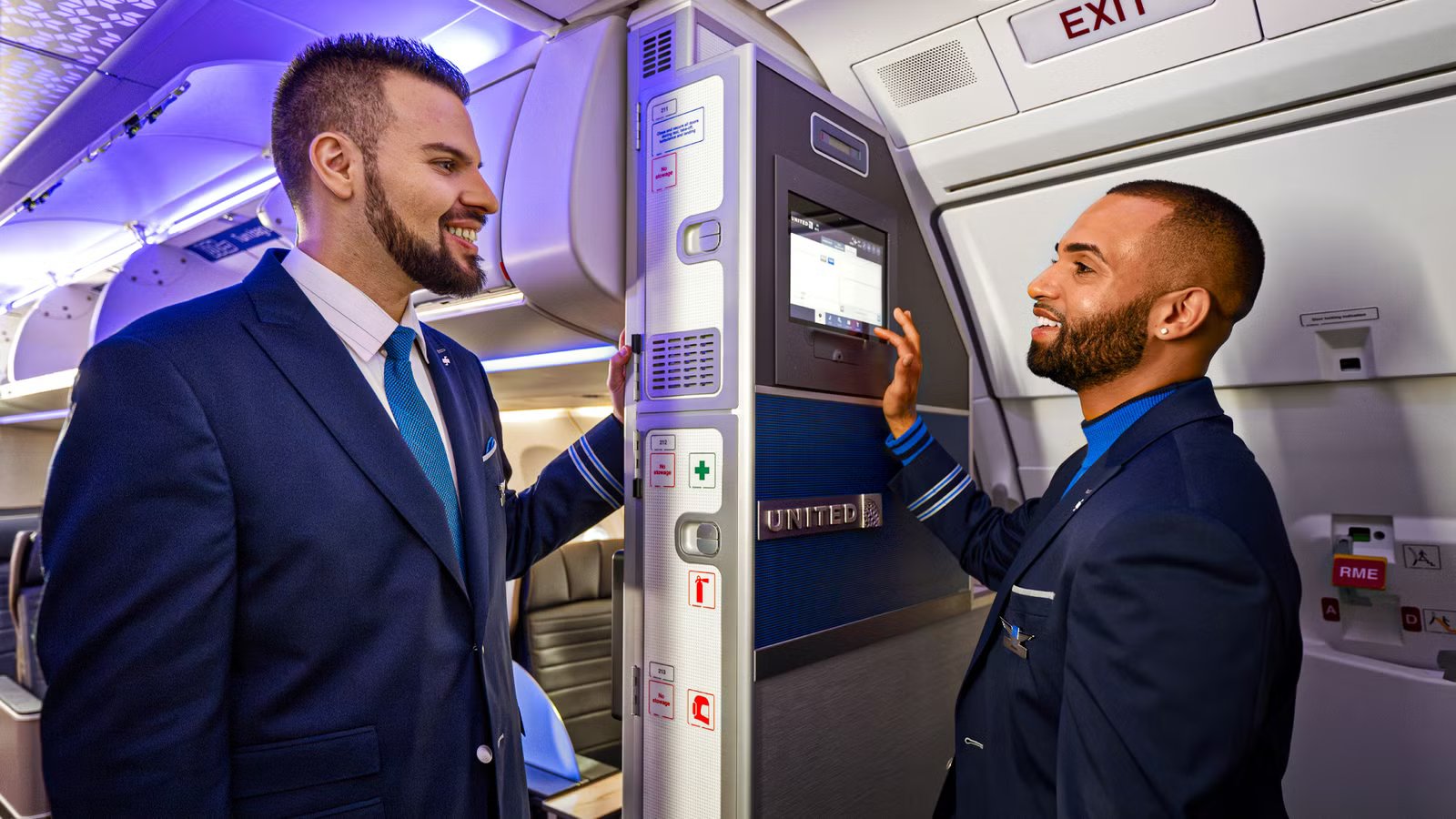
Passengers should always follow the crew’s instructions for their own safety as well as the safety of others. Rules are there for a reason, and each one should be strictly followed. Unfortunately, this does not always happen as much as we would like, and some passengers simply do not want to follow rules, which makes no sense. Why risk injury or even fatality, instead of following a simple rule? Why does this happen? This guide looks at what can cause someone to be disruptive or not follow safety rules, and the consequences.
Ignoring safety rules can have serious consequences, including being removed from the aircraft, an airline ban, fines, and even imprisonment. Refusal to fasten the seatbelt or not remaining seated whilst the seatbelt sign is on can result in being detained by the local authorities on landing. If a passenger does not follow instructions and the aircraft is still on the ground, they will likely be asked to leave the aircraft and will be met by security. During a flight, if a passenger becomes disruptive, the passenger can be restrained, the flight can be diverted, and the passenger will be liable for all costs incurred of between $10,000 and $80,0000.
Examples Of Non-Compliance

Flight attendants monitor passengers during boarding, looking for any suspicious behavior or those who are aggressive or who are intoxicated. This is so they can stop potential disruptive passengers before the flight takes off. A passenger may become disruptive during a flight and become a threat to the safety of the passengers, the crew, or the aircraft. This can be due to medication or alcohol, problems with anger management, or passenger disputes.
Passengers tampering with aircraft safety equipment is a serious offense that can lead to severe penalties, according to the Civil Aviation Authority of Singapore (CAAS). There have also previously been cases of passengers tampering with a lavatory smoke detector in order to smoke. Attempting to open emergency exit doors or handles during flight, or before the aircraft is parked, is a major threat to safety. Passengers have been known to remove seatbelts or yellow life vests from under their seats to keep as souvenirs. Taking such items is a dangerous action and compromises cabin safety.
The cabin secure checks before takeoff and landing ensure that passengers are kept safe during critical phases of flight and that they have the best chance of survival in an evacuation. Yet, some passengers do not follow the crew’s instructions. Wearing a seatbelt lessens the chance of injury should unexpected turbulence occur or the aircraft has to stop suddenly. All loose items should be stowed away to avoid injury. Window blinds should be open to ensure that the crew can see the conditions outside, should it be necessary to evacuate. Seatbacks should be upright, and tray tables stowed to make sure passengers are not blocked in their seats during an evacuation.
Why Is This A Safety Hazard?

In short, passengers who do not follow safety rules can cause injury or even death. For example, taking baggage during an evacuation delays the evacuation process. All commercial aircraft are certified to be evacuated within 90 seconds, with half the emergency exits being unusable. Taking baggage wastes precious seconds and can be the difference between life and death. In so many recent videos of evacuations, most passengers are taking their baggage with them and stopping to take videos or selfies, instead of looking at their own survival. The safety demonstration clearly states ‘leave all baggage behind’.
The safety demonstration is a case in point. Passengers rarely watch it and will talk, use their phones, or wear headphones, anything but watch vital safety information. They may know where their life jacket is, but do they know why they should not inflate it inside the cabin? Ethiopian Airlines flight 961 ditched into the sea after a hijacking, and passengers inflated their life jackets inside the aircraft, trapping them in the cabin.  Southwest Airlines flight 1380 suffered a decompression, and one passenger died. A video surfaced online, taken by passengers, showed that most of the passengers were wearing their oxygen masks incorrectly.
Passengers don’t want to think about an emergency, so safety instructions become irrelevant. They only see the flight attendants serving food and drinks; they don’t see the emergency training that they have rehearsed time and time again, in order to save lives. So sometimes they think that they are just servers, so why would they follow their instructions? Not wearing a seatbelt and sudden turbulence could mean a passenger hitting the ceiling. Reclining your seat during takeoff and landing after the cabin secure check blocks the person seated behind you if there was an evacuation.

The Safest Seats On A Plane To Survive A Deadly Crash
Experts have analyzed whether seats such as the exit row, the aisle, the middle, and the window have higher survivability rates.
Examples In Real Terms

In 2013, Asiana Airlines flight 214 crashed on the final approach at San Francisco International Airport. Despite there being a fire onboard, passengers still insisted on taking their luggage with them. Due to the fast actions and courage of the flight attendants, 305 of the 307 passengers onboard survived the accident. They evacuated the aircraft successfully, and some were seen carrying passengers on their backs from the aircraft.
In 2015,  British Airways flight 2276 was due to take off from Las Vegas bound for London Gatwick. The aircraft was evacuated after an uncontrolled engine failure and a fire in the left engine, leading to an aborted takeoff. Passengers took off their luggage, delaying the evacuation and risking puncturing the slides. Luckily, all 170 passengers and crew onboard survived but 20 were injured. The National Transportation Safety Board (NTSB) said in the final accident report that the passengers’ behavior significantly magnified their safety risk.
In 2019,  Aeroflot 1492 was struck by lightning at Moscow-Sheremetyevo and made an emergency landing, whereupon the landing gear collapsed and the aircraft caught fire. The fire engulfed the rear of the aircraft. Passengers blocked the aisles, retrieving bags and delayed the evacuation. This resulted in 41 fatalities out of 78 on board, including one flight attendant.
Why Passengers Break The Rules

Why do passengers defy safety rules when their own lives could depend on it? In an emergency situation, people tend to do one of four things: fight, flight, freeze, or ‘fiddle’ according to Eurocontrol’s Hindsight Magazine. When faced with an emergency onboard an aircraft, by collecting their own personal items and baggage, they retain some sense of ‘normal’ in a chaotic, unknown situation. They retain a sense of control and avoid the possibility of an emergency happening. Personal items are seen as a coping mechanism. One solution to stop baggage being taken off during an evacuation is to lock the overhead lockers. However, some would argue that this could delay an evacuation because passengers would still try to take their baggage.
Although alarms may be going off and there are flashing lights and commands being shouted, and smoke fills the cabin, passengers act as ‘normal’ as if they are just disembarking. There is no sense of urgency or following of the rules. Some may think that people take their belongings because of monetary value, like gadgets, phones, and laptops, and things of life value, such as passports, money or keys. In recent years, this has become more important than life itself. The best solution would be to take a zip-lock bag with passport, money and phone and carry on the person in a pocket.
Passengers may have a lack of awareness of safety or may feel overwhelmed by so many instructions. Safety may be considered as overplayed, and accidents are rare, so there is no need and the crew will take care of it. Some passengers are anxious about flying and don’t want to think about it. The frustrations and fatigue of air travel can lead to passengers ignoring instructions and is a reflection of annoyance, resulting in hostility towards the crew.

You Could Soon Be Fined For Standing Up Before The Seatbelt Sign Goes Off
In an effort to increase safety and respect exit priority, Turkey begins fining passengers who get up too soon.
How Can We Encourage Compliance?

The role of the flight attendant should be made clear and not misinterpreted. Safety is their first and foremost concern, with comfort and service being secondary. Perhaps surprisingly, in a study by the Australian Transport Safety Bureau (ATSB), 92% of passengers think cabin crew assure pax safety. The study found that while most passengers recognize the importance of cabin safety, actual attention levels to briefings and safety cards are generally low. It highlighted a gap between passengers’ perception of safety importance and their actual safety-related behavior.
There have been many attempts to make safety demonstrations more engaging to passengers, but with little success. Safety cards should feature more infographics, have simple messaging, and bold warnings to clarify the basics of safety. Maybe future safety demonstrations should feature real-life scenarios and survivor testimonials, or there should be a pre-flight interactive safety task at the airport. The ATSB survey findings suggested that additional factual safety information and resources about air travel and cabin safety be made available to passengers at airports by airlines and safety authorities.
One would expect that a passenger would report anything unusual, for example, ice on the wing of Air Ontario 1363 at Dryden, Canada, and the wrong engine of British Midland 092 at Kegworth, UK. In an evacuation, we would expect passengers to help out. However, with passengers defying rules, are passengers now becoming an obstacle to safety instead of part of safety? Passengers who violate rules and threaten safety should be fined at the same level as disruptive passengers now are. Since the Federal Aviation Administration (FAA) brought in hefty fines for disruptive passengers, the number of cases has dropped considerably.
In Conclusion

Those passengers who violate the rules or become disruptive will receive a warning from the crew. If they do not comply, they can be restrained, and the aircraft can be diverted, which is very inconvenient for all on board. The passenger will be met by security on the ground and can be arrested and detained. They will often be subject to an airline ban, be liable for all costs of the diversion, and be heavily fined.
Interfering with any flight crew or flight attendant’s duties is a serious offense and can result in criminal prosecution. Passengers should be reminded of penalties for non-compliance. Airlines should take legal action against those who ignore the rules. The conditions of carriage of airlines enable passengers to be denied boarding on the ground. Maybe airlines should introduce a waiver as part of this to ensure compliance with safety procedures. Compliance should always be collaborative wherever possible, but there are still barriers to overcome.
Thankfully, aircraft accidents are very rare, but passengers should be aware that every rule is for a safety reason. These rules and procedures have come from previous accidents and the lessons learned to enhance safety on all flights. One exception to the rule that should be noted is the evacuation of Japan Airlines flight 516 in 2024, after a runway collision with a Japan Coast Guard DHC-8. All 367 passengers and 12 crew evacuated through three of the eight exits. It was noted that no one exited with hand luggage, a factor that facilitated a smoother evacuation.