dailynewsnblog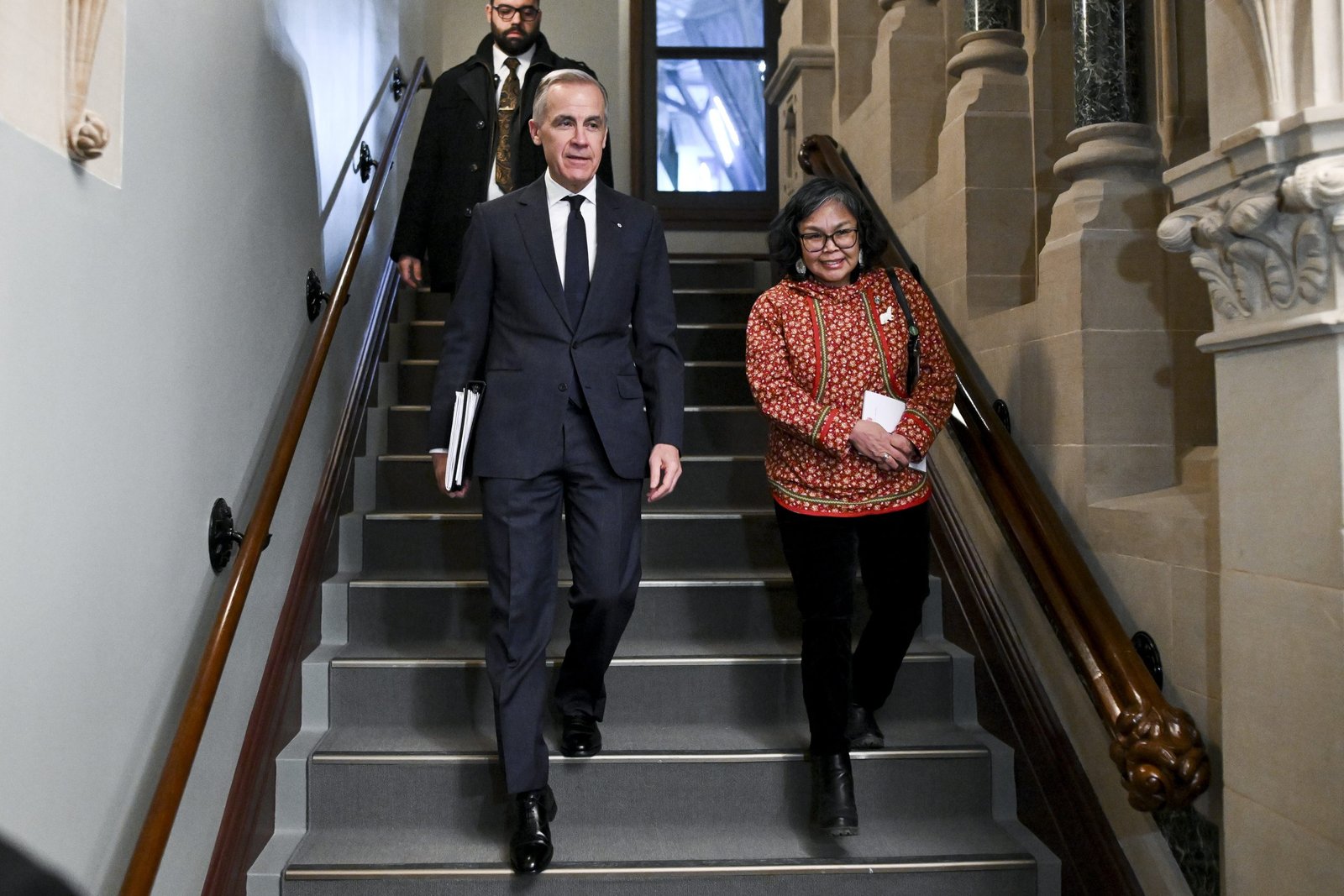
“They had a very specific reason to table it the way that they did, to make sure that they can meet the obligations given to them by the Nicholas,” she said of S-2, referring to the court ruling that prompted the legislation.
New Liberal MP Lori Idlout says she’s “moving towards” supporting the government’s position on Bill S-2 despite backing Senate amendments to the legislation when she was a member of the NDP.
She made the comments to iPolitics after the Liberal caucus meeting on Wednesday, saying she’s that since crossing the aisle, she’s “definitely learned a lot more” about the government’s position and has received assurances from Indigenous Services Minister Mandy Gull-Masty that the second-generation cutoff will be addressed in separate legislation.
“They had a very specific reason to table it the way that they did, to make sure that they can meet the obligations given to them by the Nicholas,” she said of S-2, referring to the court ruling that prompted the legislation.
Idlout left the NDP caucus to join the Liberals in March.
READ MORE: Government secures brief extension of court-imposed deadline to make changes to the Indian Act
As originally tabled, Bill S-2 was a direct response to a B.C. court ruling that gave Ottawa until the end of April 2026 to make changes to restore status to the descendants of enfranchised First Nations peoples.
Enfranchisement is a defunct practice whereby First Nations people who wanted to own land, vote or enjoy other rights had to give up their Indian status.
Amendments to the Indian Act made in 1985 ended the practice of enfranchisement, but it didn’t allow people whose ancestors were enfranchised to obtain status or pass it down to their descendants.
The Liberals introduced legislation in 2022 to repeal this rule but it died on the order paper when Parliament was prorogued in early 2025.
Then last summer, the B.C. Supreme Court struck down the existing rules for violating the Charter and ordered the government to restore status to descendants of those had been enfranchised.
The Liberals responded by introducing legislation to do just that in the Senate last year. Bill S-2 was virtually identical to the previous legislation brought in by the Trudeau government — at least at first.
But senators amended the bill to end the second-generation cutoff, and allow status to be passed on to a child if at least one of their parents were recognized as having status.
That revamped version of S-2 has crawled through the House since it was passed by the Senate in December.
It was only moved to second reading in February, despite the looming court-imposed deadline, and only recently started study at committee.
The Liberal government has made it clear that it would prefer to defer any reforms to the second-generation cutoff until after conducting consultations with First Nations. Those consultations are expected to start later this year.
Gull-Masty told reporters in March that she’s reflecting on plans for promised stand-alone legislation on the second-generation cutoff, but wouldn’t provide a timeline for when to expect the bill.
Idlout said she was also waiting for the new bill as consultations have already started on what that would look like.
READ MORE: Gull-Masty says she will outline plans for future of second-generation cutoff ‘very shortly’
Critics have accused the Liberals of deliberately delaying movement on the bill to create a time crunch for Parliamentarians, hoping the Senate would blink and accept the government removing their changes to the second-generation cutoff to comply with the Nicholas ruling.
But with the Liberals now holding a majority in the House and on committee, the government can proceed with removing the Senate changes from the bill without relying on the support from other parties.
The Conservatives, Bloc Quebecois and NDP have all voiced support for keeping S-2 as it stands.
As iPolitics first reported, Ottawa applied in April for a six-month extension to give Parliament more time to pass Bill S-2.
The court deferred a ruling but granted — on consent of both parties — a brief one-month extension.
Ryan Beaton, a partner at Juristes Power Law, told iPolitics that it’s unclear how the court will rule on the six-month extension, but said the government didn’t offer a convincing argument that they would be able to pass S-2 by the end of October.
Gull-Masty’s office told iPolitics in a statement that Ottawa is requesting the extension because the court ruling would apply unequally without a legislative fix. The ruling would only have effect in B.C.
“The government applied for a court extension to ensure that there is not an unequal application of the Indian Act across the country while S-2 advances though the parliamentary process,” the statement read.
“Regardless of the court’s decision, the government will remain committed to addressing the harms caused by enfranchisement.”
Beaton countered that since the government already conceded the rules are unconstitutional, the Indian Act registrar wouldn’t comply with laws that are not compliant with the Charter.
He said he’s talking with the government about issuing an order that would allow the ruling to apply across Canada. There’s already precedent for such a court declaration to ensure uniform application, he said, pointing to the ruling in P.H. v. Canada on record suspensions.
A meeting with the government on securing a declaration is expected later this month, Beaton added.
More to come…