dailynewsnblog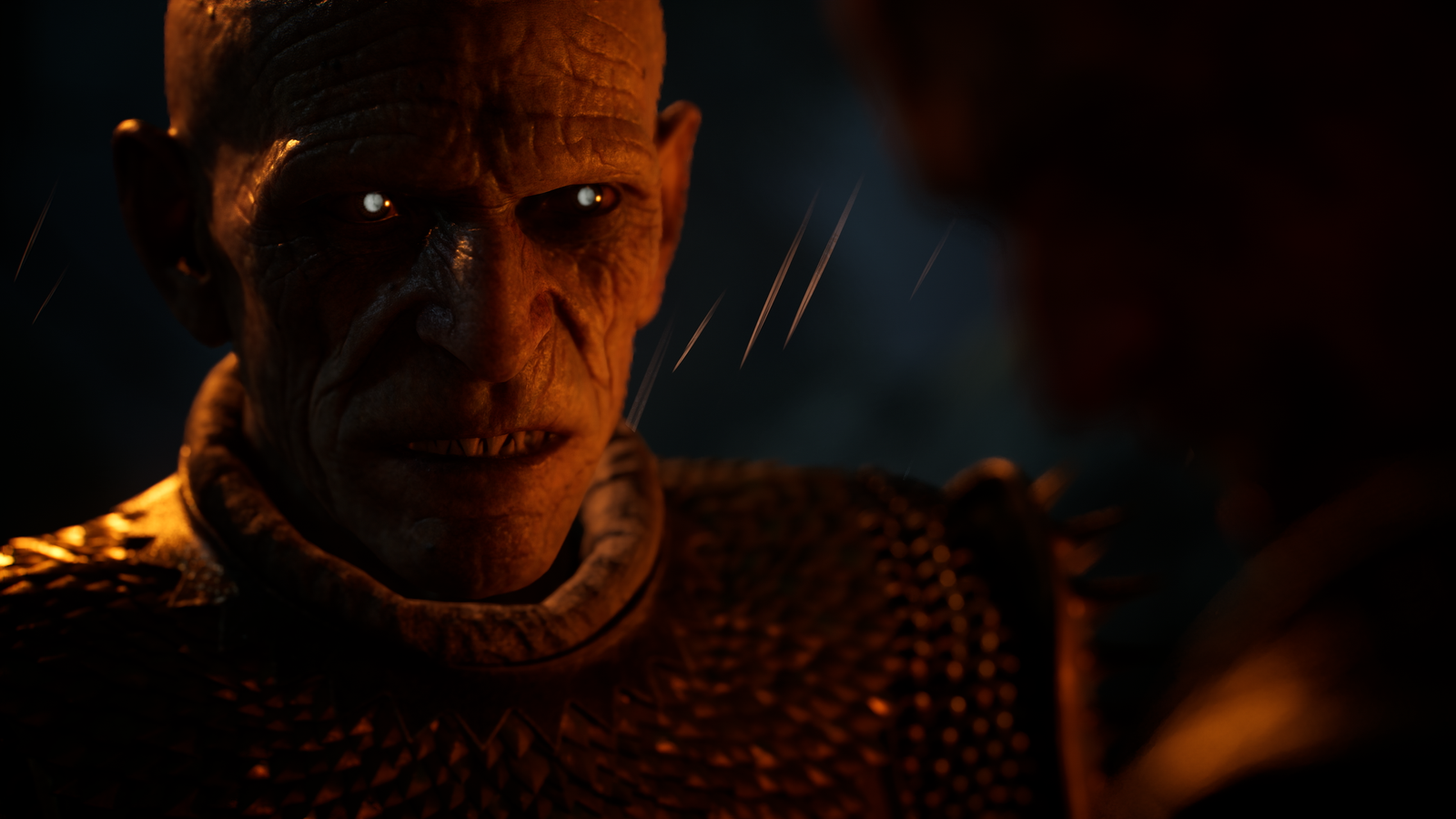
Polish studio Rebel Wolves hasn’t been shy about The Witcher 3’s influence on its open world vampire RPG The Blood of Dawnwalker. Based on the four hours I’ve spent with it, I think the resemblance is unmistakable, but tasteful. It’s far better than a clone, and this new studio has a kit bag of ideas of its own. I came away feeling like The Blood of Dawnwalker is better than a studio’s first blockbuster RPG has any right to be.
The three-hour prologue sets the game’s lockjaw tone. Protagonist Coen, before he becomes a Vrakhiri—basically a vampire—lives in a small village with his family. The village is ruled over by Brencis, a deteriorating husk of a being who nevertheless, compared to his tyrannical predecessors, is a fairly liberal fellow. The community need not worry about “taxes, tithes or chores” under his rule, which is exceedingly rare in this medieval approximation of eastern Europe.
But there is one significant rub: the gaunt, wraith-like Brencis requires every citizen to bleed out a pint of their blood every full moon. Which, I mean, you’d prefer not to. It may be slightly easier than a life of meaningless toil, I guess, but many understandably consider it objectionable. We meet Coen one morning as he tries to spoon feed his mother Esme her breakfast: she’s been rendered mute and nil by mouth by the panic of having to give her blood that evening.


Funeral in Carpathia
Like The Witcher 3, the prologue of Dawnwalker works as a microcosm of the ensuing 40-odd hour experience: it sets me loose on a small open map with a sample of choice-based conundrums. The most urgent order of the day is to retrieve some natural medicine for my mother from local herbalist Anca, all the better to keep her alive, but there are very many other stories unfolding in this village.
This is where Dawnwalker’s promising time system comes into play. Every day is split into eight segments, and most quests or activities I do “spend” one or more of these segments. I have a full day to spend in Coen’s hometown before the bloodletting ceremony, but since every quest spends a segment I can’t hope to do everything.

It’s an oft-performed trick in the gritty RPG playbook: you go to do the right, or seemingly logical thing, only to discover that, well actually, that’s bad too.
Think of it like Persona’s calendar system, except more substantial: my time spent in Coen’s hometown felt like a featureful day and not just an interminable runthrough of sidequests. I’m also compelled to prioritise based on my interests and temperament, rather than just do everything because I don’t want to miss out. It feels more substantial, yes, but I can’t tell yet how consequential my choices will be.
So keeping in mind the time system and my mother’s ailment, of course I’m drawn into a fishing expedition with my siblings. Alas, it turns into a confrontation with one of Brencis’ oafish denizens. The dialogue options permit me to give this standover lout a whole lot of impertinence, which I do, but thankfully I still manage to talk my way out of a fight.
The morning irrevocably wasted, I mosey back to town and meet Gremla, who advises of the mysterious disappearance of a banner she’s been instructed by the vrakhir to display (“The vrakhir will rip me to shreds when he finds out!” she implores). Via the careful interaction with things that glow orange when using investigate mode, I gradually discover who the culprit is.

Time passes. By the afternoon I’ve met Vasil, a flat-jawed prat who’s been following me around, cussing out my mother. I catch the little turd and go to beat him before his father turns up. Rather than intervene, this father—bloodshot eyes, coarse throat, sallow, pitted expression—encourages me to give Vasil a beating. Via dialogue options I’m given at least two opportunities to back out of beating Vasil, but for morbid curiosity I insist. When, at his father’s demand, Vasil removes his shirt for a flogging across the back, the skin is deeply scarred by many previous flayings. My harasser has evidently lived a miserable life.
Just a regular day in the life of a 16th century Romanian peasant under vampiric rule!

It’s an oft-performed trick in the gritty RPG playbook: you go to do the right, or seemingly logical thing, only to discover that, well actually, that’s bad too! The misery of pre-enlightenment is peddled to an almost fetishistic degree in Blood of the Dawnwalker, which invites me to ponder whether subservience to a suss but mostly accommodating power is preferable to the bloodletting of resistance. As Coen’s father succinctly puts it: “It’s knights who yield. Peasants like us just die”.
Bloodlust
This is a dark game, but it can be arch. Later I finally get to herbalist Anca, with whom Coen has some unmistakable chemistry. It starts to rain, so she invites me to stick around and pass the time via the learning of Latin, which I think is historically what Romanian peasants did in their medieval downtime. She insists on Petronius, but—thanks to the option to do so, and then to persist—I insist on Catallus. A little knowledge of your Roman tomes can make the difference between a dry or fraught lesson.

I can see The Blood of Dawnwalker being a very spicy horror-tinged fantasy RPG, but like The Witcher 3, I think the combat is boring. By dint of being a Dawnwalker, Coen can fight as either human or vampire. As a human the combat is reminiscent of Kingdom Come Deliverance: I have to issue longsword strikes and blocks in the right direction, in a simulation of real swordplay. It’s easier than Deliverance, albeit neither revelatory or especially engaging. When fighting packs, my enemies tend to take gentlemanly turns swiping at me.
There’s blocking of course, and perfect blocking, and unblockable attacks. You’ll manage stamina, gradually unlock abilities from three major skill trees (Witchcraft, Swordmastery and Vampirism) and circle strafe around many a locked-on enemy. I don’t think it’s fair to expect a new studio to reinvent action RPG combat, but scrapping was the aspect I liked least about The Blood of Dawnwalker.

I enjoyed Coen’s vampire beatdowns a whole lot more, mostly because it’s where Rebel Wolves let their freak flag fly a bit. Coen’s survival and effectiveness as a vampire naturally rests on his blood consumption, which can also be used to pull off some neat tricks: I can dash a good five metres ahead of me in the blink of an eye, and I can warp to the rear of an enemy all the better to suck the life out of ’em. Aside from these neat tricks, moment-to-moment hand-to-hand combat still works mostly the same.
Outside of combat, as a vampire, Coen can planeshift onto walls and traverse them vertically, or claw ride down surfaces to descend treacherous drops. Of course, being a vampire means craving blood, and if I failed to feed for long out in the open world I’d run the risk of perishing. Amusingly—though I didn’t see this in action—if you enter dialogue as a hungry vampire you run the risk of draining the person you’re talking to, even if you’re buddies.
I can tell Rebel Wolves has spent the majority of its creative labour applying painterly detail to this ancient and sordid realm. The open world is gorgeously gothic with its grey silhouetted ruins, its mulch green bogs, lonely fir forests, and distant snowy peaks. I already feel invested in its grimy, unflinching narrative. Failing disaster or technical wobbles—it ran perfectly on Namco Bandai’s extremely well-endowed PCs—I reckon it could be the RPG of 2026, so long as I’m allowed to talk my way out of at least some of the combat.