dailynewsnblog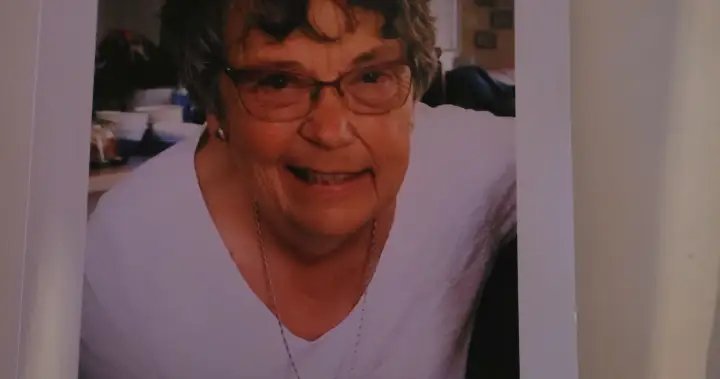
A 14-year-old boy who admitted to brutally killing a Pickering, Ont., senior in May 2025 in a random and senseless attack stood up in an Oshawa courtroom Tuesday and apologized for his actions.

Wearing a navy pin-striped three-piece suit and black glasses, with handcuffs around his wrists and leg shackles around his ankles, the boy, now 15, was given a chance to speak at the conclusion of his sentencing hearing. He unfolded a piece of white-lined paper and awkwardly read a statement he had written as family and friends of the victim, Eleanor Doney, listened intently.
“After months of reflection, my perspective of the matter has been deduced. I’ve come to comprehend, to recognize the seriousness of my actions and see how my actions have caused a great deal of pain,” said the boy, who can only be identified as A.S., as his identity is protected by a publication ban under the Youth Criminal Justice Act (YCJA).
“Sincerely, I’m deeply sorry for all of the horrible deeds I have committed, first of all, and I had no right to commit that wretched act,” A.S. said.
“What I can do is learn from this and acknowledge my wrongdoings and work on restructuring. Moving forward, I will do better and learn from this. I will try and pray to God for a chance at being a righteous man despite my flaws.”
A.S. pleaded guilty to first-degree murder in April, admitting that on May 29, 2025, around 3 p.m., he approached the 83-year-old, who was raking leaves on the front lawn of her Lynn Heights Drive home, before engaging her in conversation. He then stabbed her and chased her as she tried to flee, before stabbing her again.
According to an agreed statement of facts read out at the guilty plea, the retired kindergarten teacher had eight stab wounds to her lower back, hands, arm, face and neck. The fatal injury was a stab wound through her neck, which severed Doney’s carotid artery.
Court heard that A.S., who has been in custody since his arrest on May 29, 2025, continues to demonstrate a consistent preoccupation with themes of violence, harm to others and an ongoing fascination with serial killers.
The Crown and defence told Superior Court Justice Lisa Wannamaker they jointly submit that the maximum youth sentence for first-degree murder is appropriate for A.S., who pleaded guilty in April to the first-degree murder of Eleanor Doney.
The two parties disagree on whether credit should be given for presentence custody. Under the YCJA, the maximum sentence is six years in custody followed by four years to be served in the community under supervision. It is at the discretion of the judge to decide whether to give credit for time served in presentence custody.

Get daily National news
Get daily Canada news delivered to your inbox so you’ll never miss the day’s top stories.
Assistant Crown attorney Tammy D’Eri initially indicated the Crown would be filing a notice to seek an adult sentence for A.S. due to the seriousness of the case. D’Eri told Wannamaker that A.S. no longer meets the criteria for an adult sentence due to a recent decision from the Supreme Court of Canada regarding a youth known as I.M.
The Supreme Court of Canada ruled that in a YCJA case, in order to impose an adult sentence, there are two wrongs the Crown must prove beyond a reasonable doubt. The first is that the young person had the maturity and capacity for moral judgment of an adult at the time of the offence. D’Eri said after receiving the psychological and psychiatric reports for A.S., the Crown realized it could not satisfy that prong of the test.
Doney was a beloved mother, grandmother and retired kindergarten teacher who had been married for 63 years and was the primary caregiver to her husband at the time of her murder.
The Crown said that while A.S. meets the criteria for the IRCS program (Intensive Rehabilitation Custody and Supervision), reserved for youth with serious mental health issues, the seriousness of the offence is high and the facts of this case fall on the most serious end of the spectrum.
“You have the discretion to give no credit for presentence custody,” D’Eri said. The Crown said a doctor’s report indicated that it appears A.S. has little insight into his actions or understanding of why he committed the offence. “The IRCS report suggests a significant and lengthy intervention is needed for A.S.,” D’Eri explained.
She also told Wannamaker that the teen continues to demonstrate a consistent preoccupation with themes of violence, harm to others and an ongoing fascination with serial killers in writings and inappropriate discussions with peers and staff.
“There have been several behavioural reports in the last few months. A.S. was involved in a peer-on-peer altercation. He was not the aggressor. Staff had to intervene. He told staff he hasn’t felt this alive since the incident before the court,” said D’Eri. Audible gasps could be heard from Doney’s family and friends seated in the courtroom.
“He has a limited ability to recognize the harm caused to others. Those observations are highly concerning. The risk to reoffend is ongoing. A lengthy sentence is necessary in an attempt to address the underlying issues,” D’Eri added, pointing out that A.S. appears to blame others and shows a lack of personal responsibility.
The Crown also pointed out that there were many other concerning incidents occurring around the time of the murder.
“Bringing a knife to school, making an utterance to a girl at school in chat messages. It’s not an isolated incident. It appears to be an ongoing pattern of events,” said D’Eri, telling court that one doctor who assessed A.S. found his thinking persistent. “That is of great concern,” D’Eri concluded.
Defence lawyers Erin Dann and Dean Embry argued that while A.S. has been in custody for 13½ months, he should be given credit for one year, leaving a five-year custodial sentence followed by four years to be served under supervision in the community.
“By committing this inexplicably horrific offence, he brutally killed an elderly woman for no reason whatsoever while she was in front of her home,” said Dann.
Dann pointed out that A.S. has already been accessing programs since being in custody and said there are good prospects for rehabilitation.
She pointed to a psychiatric report in which he scored in the low- to moderate-risk range for criminal reoffending and which showed his overall risk for future violence is low if his mental health is properly attended to and monitored.
Dann pointed out a doctor found that one of his risk factors, such as his criminal alignment with the serial killer character, is likely influenced by mental health issues. She noted that deficits in remorse are also related to his mental health symptomatology.
Dann said one doctor noted significant non-verbal learning deficits that met the criteria for autism spectrum disorder (ASD) and a specific learning disorder, including what she described as severe deficits in non-verbal reasoning. “These were undiagnosed at the time of the offence,” said Dann, who also noted the doctor found A.S. has challenges with executive reasoning and social relationships.
Dann said that A.S. also had a difficult upbringing. “His father does not live permanently or consistently with the family. There are language barriers with his mother and grandmother. His caregiver has significant mental health issues. I also note his age. He had just turned 14 two months earlier,” she said, adding that A.S. also pleaded guilty.
“In many ways, as identified in those reports, he operates in a manner where his developmental age may well be lower than his chronological age. He has an unsophisticated view of the world. We are told he expressed a desire to become an accountant because he wanted to wear a suit and count money,” Dann said. She also pointed out that when A.S. completed some psychological testing, he celebrated by kicking his feet together when he completed an assignment.
One doctor, Dann said, found that A.S. “likely meets the criteria for a major depressive disorder with psychotic features in the months leading up to and at the time of the offence. There was strong evidence of delusional thought processes and disorganization in the weeks directly leading up to the offence,” which the doctor at the time of her report found concerning.
Dann said that A.S. appears to be amenable to treatment. One doctor has recommended psychiatric and clinical intervention, which is part of the IRCS plan. “A.S. will be followed by a forensic psychiatrist in order to monitor any of those issues and to intervene and prescribe medication if necessary,” Dann said.
Dann told court these factors attenuate A.S.’s degree of responsibility. “Clear decompensation in his mental health obviously did not excuse the conduct in any way, but these factors do offer some context,” Dann concluded.
Justice Wannamaker will deliver her sentence on Wednesday.