dailynewsnblog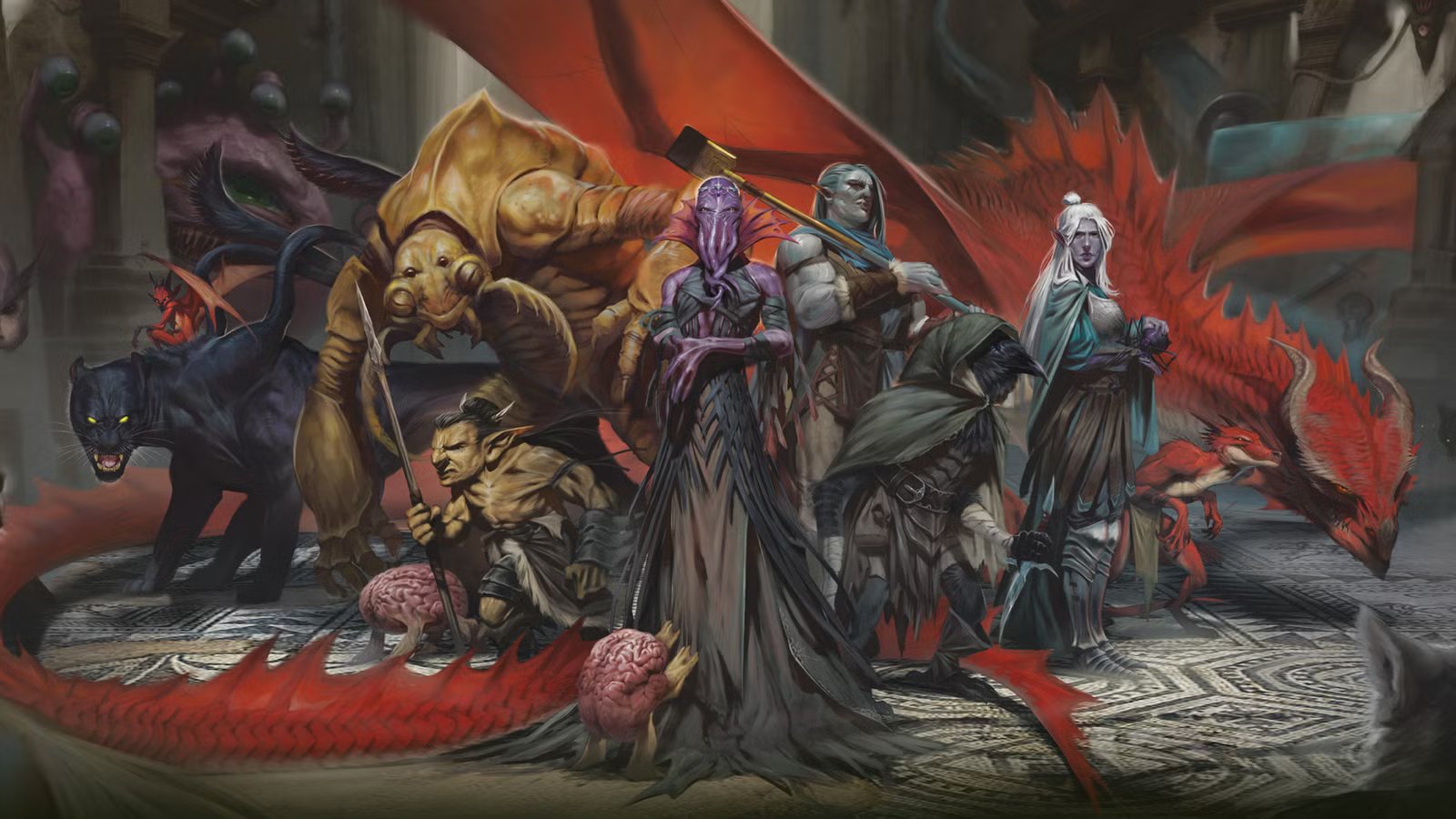
Being a Dungeon Master (DM) for Dungeons & Dragons can be an incredibly rewarding experience, but it comes with its challenges. Crafting a compelling story, creating an immersive world, preparing for a session, and keeping track of things are all skills that a good DM has to develop, but running monsters in a way that makes for compelling combat experiences remains a challenge for even the best among us.
Preparing a combat encounter that challenges the party without being too easy or turning into a slog is a hard thing to do. Unfortunately, the guidelines in recent editions of the official D&D books don’t help much. Luckily, indie game designers and experts like ENnie Award-winning Keith Ammann have been helping DMs figure out the perfect foul beast to throw at their players for maximum fun and reasonable carnage.
Ammann’s essential book The Monsters Know What They’re Doing has helped countless DMs prepare combat encounters more effectively by helping DMs understand their monster’s approach to combat and develop battle plans before the session begins. An expanded and revised edition, Remonstered!, is coming out on Oct. 6.
Ammann’s previous book, Making Enemies, is an excellent guide for every DM who wants to design their own monsters. Ammann’s step-by-step process is detailed and insightful. It teaches how to think about a monster’s role in your world and how to use these foes not just to challenge your players, but also to make their characters shine. Drawing inspiration from that, to celebrate Remonstered!’s publication, I challenged Ammann’s monster-crafting skills by asking him to design a new D&D monster exclusively for Polygon. The result was horrifyingly fun.
Keith Ammann designed a D&D monster for Polygon

I asked Ammann to design a monster that could pose a moderate challenge to the group of player characters (PCs) in the D&D campaign I’m currently running, which is set in a homebrew world. The characters just hit level 5, a notorious threshold in the game’s 5th edition and its current 5.5 update. All classes become stronger, and it gets harder for DMs to prepare balanced encounters based on the Challenge Rating (CR) charts provided in the Dungeon Master’s Guide.
The party is made up of a Path of the World Tree Barbarian, a Battlemaster Fighter, a custom subclass Bard focusing on support, and a Way of Shadow Monk. This party excels at close-range combat but lacks in terms of spellcasting and ranged options. I wanted this monster to feel “native” to the setting, so I gave Ammann a few details. It’s a world where the sun and moon are locked in a constant state of full solar eclipse. This phenomenon has both natural and supernatural consequences: light and warmth are scarce, and nature is constantly shifting, usually in dangerous ways. Intelligent species are locked in a constant struggle against the wilderness and its creatures. Monsters in this world are usually mutations with unsettling, horrific traits.
Here is what Ammann came up with and the thought process behind the design.

The setting’s details made Ammann choose Monstrosity as the creature type, with Fey and Aberration as two back-up options. Choosing a plains biome as the habitat, Ammann landed on a flying creature with keen eyesight as something that could exploit the party’s weaknesses. “This isn’t a group that’s going to be subscribing to the New Yorker,” Ammann joked. He correctly assumed that most or all of these player characters chose Intelligence as their dump stat. Illusions are therefore highly effective against such a party (hence why it can cast Mirror Image and Phantasmal Force). The monster also needs a high Armor Class to survive longer. The ability to innately cast Bane also helps cause trouble for everyone except the Bard by subtracting 1d4 from attack rolls.
The creature began to take shape as a cross between a bird of prey and a monster called the Cloaker, which can create illusory duplicates of itself. The color would be either an inky black or a semi-transparent dark gray to blend in against the sky. Ammann also landed on a name for his new creation: Mooncrow.

The next question to answer was whether this creature would be a solo monster or something that hunts in flocks. Rather than one big creature that the party would have to fight directly, Ammann opted for something smaller that can attack individual player sin flocks of two or three at a time. A Challenge Rating of 1 or 2 is about right for level 5 characters. That’s 200 or 450 XP per monster, and a combat encounter of Moderate Difficulty for four level 5 PCs allows for a total of between 2,000 and 3,000 XP (per the 2024 Dungeon Master’s Guide), which works out to five or six CR 2 creatures or between 10 and 15 CR 1 creatures. Having respect for the sanity of a DM who has run an encounter with 15 monsters, luckily, Ammann chose to make this creature CR 2.
When it came time to build out the stat block, Ammann mentioned the Monster Statistics by Challenge Rating table in The Lazy DM’s Forge of Foes by Teos Abadía, Scott Fitzgerald Gray, and Mike Shea as a great resource to consult. As a fan of the Lazy DM series, I couldn’t agree more. Normally, a CR 2 monster should have an Armor Class (AC) of 13. Ammann bumped that AC up to 15 with the “Ecliptic Veil” feature, but compensated by reducing its Hit Points to something in the CR 1 range. Making monsters harder to hit can frustrate players, so making them a bit weaker in this way balances things out.
In terms of offensive abilities, the monster makes two attacks per round, and each hit deals around 8 or 9 damage. Part of that damage is Cold damage, as the monster absorbs the target’s heat to warm itself. Ammann mentioned a trip to the Indiana Dunes to watch a solar eclipse and the chilly sensation when the sun was occluded, so he wanted to work that element into the monster’s design. Also, the barbarian’s Rage won’t reduce the Cold damage.

Finally, the spellcasting. A CR 2 monster is on par with a level five PC, so this creature shouldn’t be able to cast a spell any higher than 3rd level. Bane is 1st level, and Mirror Image is 2nd level and doesn’t require concentration. These two spells are solid on their own, but for some extra nastiness (DMs can’t be nice all the time!) Ammann also added Phantasmal Force, which targets Intelligence directly. With five or six enemies in the encounter, one monster per PC can cast this spell, one can cast Bane, and one is left over. They can fly in after casting Mirror Image as soon as they see the PCs, which is exactly what happened when I ran the encounter for my players.
The Monsters Know What They’re Doing is an essential resource for Dungeon Masters

The results were excellent. The Mooncrow flock apparently multiplied after they spotted the party, by virtue of Mirror Image, giving the impression that 20 monsters were swooping in. I usually don’t like illusion spells because they force a disconnect between the player (who quickly figures out what’s going on) and the character (who has to pretend to act oblivious if they fail the saving throw), but it worked well in this fight. It created some chaos at the beginning, and then the spell kept doing damage to the Barbarian (the only one who didn’t think to move away from the illusion). Mirror Image was absolutely fantastic: It’s a great way to make monsters harder to kill without bumping up their AC, which frustrates players, or their HP, which turns combat into an endless slog.
During the fight, the Barbarian and the Bard were downed several times, while the Fighter resisted due to its high AC and the Monk thanks to its mobility and use of the Darkness spell. By the end of the encounter, the party had exhausted most of its resources, including healing potions and spells. They now faced a choice: camp in the wilderness to attempt a Long Rest, or make do with a Short Rest and push forward, potentially turning the next encounter into a deadly one. More importantly, the players all had fun and kept talking about that encounter after the session. A DM couldn’t hope for a better outcome.
Building good combat encounters remains a challenging experience for DMs. The rules presented by D&D 5e and 5.5e are not enough on their own to cover all aspects of this complex but fundamental element of the game. Luckily, Keith Ammann knows how to help, so whether you’re an experienced DM or not, you should check out Remonstered! The Monsters Know What They’re Doing on Oct. 6.