dailynewsnblog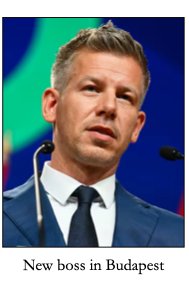

What’s not to celebrate about the Hungarian election? Prime Minister Viktor Orban, good friend of Vladimir Putin and Donald Trump, was booted out of office in a landslide win by Peter Magyar and his Tisza party.
Magyar’s win is not only important for Hungary, it is important as a defeat for right-wing populism, a political affliction that has achieved pandemic proportions in recent years. It is particularly important as not only a defeat for Victor Orban but as a defeat also for his biggest fan, Donald Trump.
Trump loudly supported Orban’s re-election, even dispatching his vice president, JD Vance, to stump for him in the closing week of the election. (Perhaps not a smart move in the midst of his hugely unpopular Iran war.)
Orban has been called the pre-Trump, Mussolini to Trump’s Hitler so to speak. He has long been an icon among American right-wingers, his vigorous opposition to immigration a particular favourite. He shamelessly sought to keep his country white and Christian. The president of the Christian nationalist Heritage Foundation, Kevin Roberts, said Hungary under Orban was “not just a model for conservative statecraft, but the model.”
Once in power, Orban anticipated Trump. He corrupted the instruments of government to his own uses, stacking the courts and regulatory agencies with his acolytes. He scapegoated gays and immigrants, building a barrier along Hungary’s southern border to bar migrants from Africa and Asia. He harassed independent media, undermined universities’ autonomy and tilted the political system in his favour. With his penchant for enriching his family and friends, Hungary has become the most corrupt country in the European Union.
The country has, as a result, declined steadily in global rankings for personal and economic liberty, corruption and press freedom. Social services, too, have frayed, and the county has faltered economically. Already one of the poorest countries in the EU, it now has one of the slowest growth rates.
Magyar emphasized the economy in his campaign, running on bread and butter issues, and is an economic progressive. His party’s platform included tax cuts for working-class families, expanded health care, increased pensions and larger child benefits. Programs will be paid for with a wealth tax on the very rich and EU transfer payments that were reduced because of. Orban’s anti-democratic policies.
On the other hand, Magyar is a social conservative. He is a flag-waver (his name means “Hungarian.”) He declined to attend the last Pride march in Budapest. He has called for even tighter restrictions on immigration than the Orban government. He will keep the border fence, repeal a guest-worker program and allow no guest workers from outside the European Union.
Nonetheless, perhaps of greatest importance, he has promised to rebuild Hungary’s ties with the European Union and NATO. He is, for example, expected to remove Hungary’s veto against a 90-billion-euro loan to Ukraine. He has promised to re-democratize his country, and his party has the parliamentary majority needed to make the necessary constitutional changes.
Hungarians have wisely chosen a new direction, to look to the West rather than the East. Their country, not long out of Soviet communism, is now back on the democratic path.