dailynewsnblog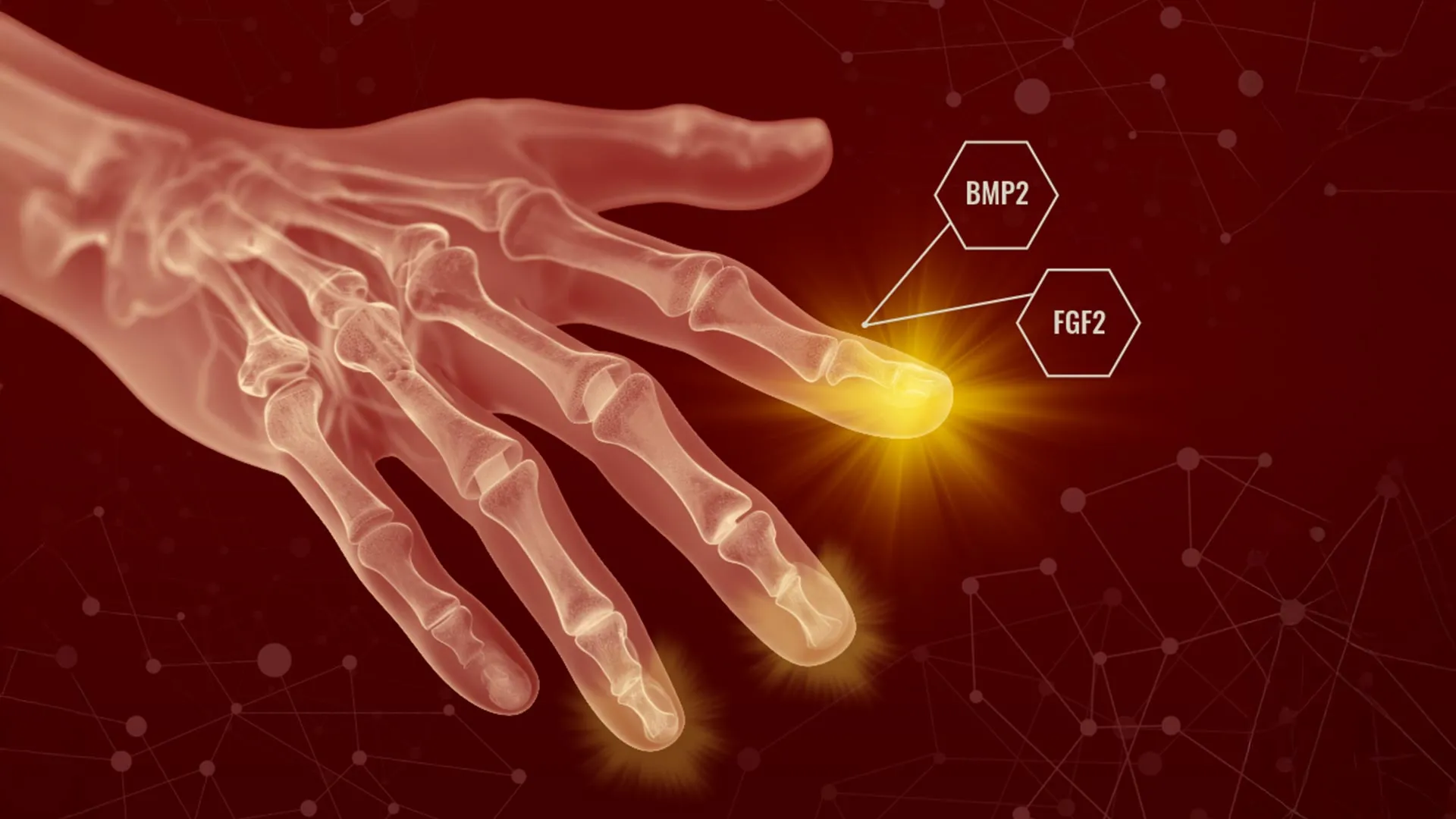
For generations, scientists have viewed the inability to regrow lost body parts as one of the fundamental limitations of humans and other mammals. While creatures such as salamanders can regenerate entire limbs, humans typically heal injuries by forming scar tissue.
New research from the Texas A&M College of Veterinary Medicine and Biomedical Sciences (VMBS), however, suggests that regenerative abilities may not be entirely absent in mammals. Instead, they could be hidden within the body’s normal healing machinery, waiting to be activated under the right conditions.
“Why some animals can regenerate and others, particularly humans, can’t is a big question that has been asked since Aristotle,” said Dr. Ken Muneoka, a professor in the VMBS’ Department of Veterinary Physiology & Pharmacology (VTPP). “I’ve spent my career trying to understand that.”
In a study published in Nature Communications, Muneoka and colleagues describe a new two-step treatment that enabled the regeneration of bone, joint structures, and ligaments. Although the regrown tissues were not perfect replicas of the originals, the researchers believe the approach could eventually help reduce scarring and improve tissue repair after amputations.
Redirecting Healing Away From Scar Formation
When mammals are injured, the body usually responds with fibrosis. During this process, fibroblast cells quickly close the wound and create scar tissue. While this response helps prevent infection and further damage, it also limits the body’s ability to rebuild what was lost.
Animals capable of regeneration follow a different path. In salamanders, for example, similar cells gather into a structure called a blastema, which serves as a foundation for new tissue growth.
“It’s as if these cells can move in two different directions,” Muneoka said. “They could either make a scar or make a blastema. Our research focused on redirecting the behavior of fibroblasts already present at the injury site.”
To explore whether mammalian healing could be pushed toward regeneration, the research team developed a treatment that uses two well-known growth factors in sequence.
The first step involved applying fibroblast growth factor 2 (FGF2) after the wound had already healed over. By waiting until the initial healing process was complete, the researchers allowed the body to respond normally before intervening.
According to Muneoka, the team then “changed what happens next.”
FGF2 encouraged the formation of a blastema-like structure, something that does not typically occur in mammals after this type of injury. Several days later, the researchers applied a second growth factor, bone morphogenetic protein 2 (BMP2), which prompted those cells to begin building new tissues.
“This is really a two-step process,” Muneoka said. “You first shift the cells away from scarring, and then you provide the signals that tell them what to build.”
Rethinking the Role of Stem Cells
One of the study’s most important findings is that regeneration may not require adding stem cells from outside the body, an approach commonly explored in regenerative medicine.
“You don’t have to actually get stem cells and put them back in,” Muneoka said. “They’re already there — you just need to learn how to get them to behave the way you want.”
Dr. Larry Suva, another VTPP professor involved in the study, said the results challenge long-standing assumptions about what mammalian cells are capable of doing.
“The cells that we thought to be unprogrammable, in fact are,” Suva said. “The capacity is not absent — it’s just obscured.”
The researchers also found evidence that cells can be redirected to create structures outside their usual location. This process, known as positional re-specification, is an important part of development.
In practical terms, cells that would normally help form one type of tissue can be instructed to rebuild a different structure following an injury.
Regrowing Bone, Tendons, Ligaments, and Joints
Although the regenerated tissues were not exact matches to the original anatomy, the researchers successfully restored all of the major structures that had been removed during amputation, including bone, tendon, ligament, and joint tissue.
The regenerated areas contained both skeletal components and connective tissues arranged in patterns resembling natural anatomy.
“We regenerated what you would expect to see at that level of injury,” Muneoka said. “The structures are there — just not in a perfect form.”
The findings also suggest that regeneration depends on multiple biological pathways working together. Rebuilding tissue appears to be far more complex than activating a single mechanism.
Potential Benefits for Wound Healing
While the research remains in its early stages, the scientists believe it could have practical applications long before complete regeneration becomes possible.
Rather than focusing solely on replacing missing structures, the approach may help improve healing outcomes by reducing scar formation and enhancing tissue repair.
“People should start thinking about using these signals during the healing process,” Muneoka said. “Even shifting the response slightly away from scarring could have real benefits.”
The path toward clinical testing may also be more straightforward than with many experimental therapies. BMP2 already has FDA approval for certain medical applications, and FGF2 is currently being evaluated in multiple clinical trials.
A New View of Mammalian Regeneration
The study adds to growing evidence that regeneration in mammals may not be a completely lost trait. Instead, it may be a dormant capability that normally remains inactive during healing.
“This changes the way we think about what’s possible,” Suva said. “Once you show that regeneration can be activated, it opens the door to asking entirely new questions.”
For Muneoka, those questions have driven decades of research and now have a promising new framework.
“Regenerative failure in mammals can be rescued,” he said. “Now we have a model to begin figuring out how.”