dailynewsnblog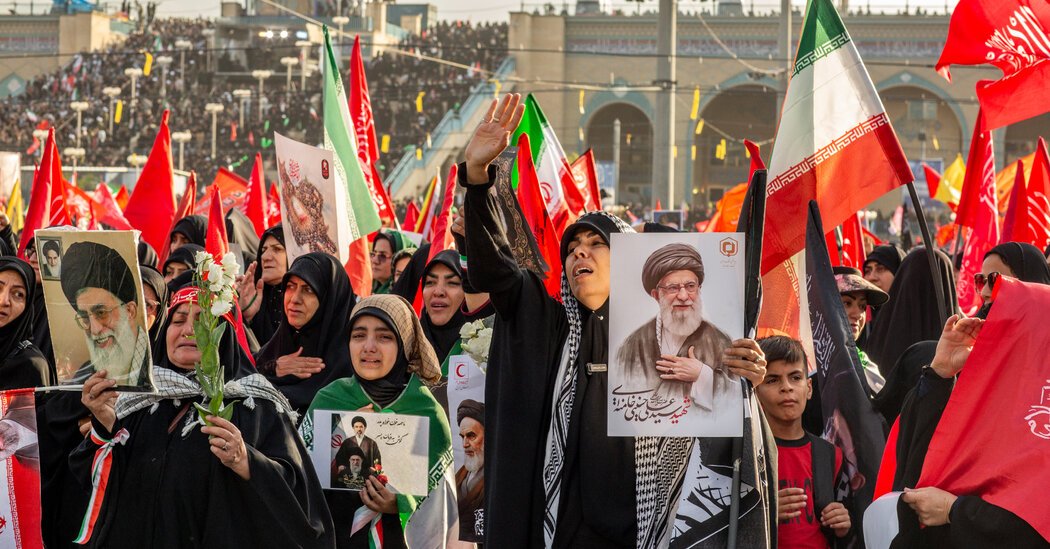
For more than three decades, Ayatollah Ali Khamenei crushed challenges at home while building Iran into a formidable regional power.
As Iran begins six days of funeral ceremonies for its longtime supreme leader on Saturday, his death months ago marks the end of a defining chapter in the country’s history. Though he often presented himself as above daily politics, he steadily concentrated power, presided over harsh crackdowns on dissidents and built a network of armed allies that projected Iranian influence across the Middle East.
Born in 1939 into a clerical family of modest means in the holy eastern city of Mashhad, Ayatollah Khamenei joined the religious opposition to Iran’s secular monarch, Shah Mohammed Reza Pahlavi. He was repeatedly arrested before the 1979 revolution, which overthrew the U.S.-backed monarch and installed an Islamic republic led by Shiite clerics.
He rose swiftly after the revolution, becoming president in 1981 and serving through most of the Iran-Iraq War, a devastating eight-year conflict that hardened his suspicion of the outside world.
When Ayatollah Ruhollah Khomeini, the first supreme leader of the Islamic Republic, died in 1989, Ayatollah Khamenei was named his successor even though he lacked the senior religious credentials associated with the position.
The office gave him near-absolute powers, placing every branch of government under his authority, making him commander in chief of the armed forces and granting him oversight of the judiciary.
Despite the immense power he accumulated, his public manner could be strikingly subdued. Jeffrey Feltman, a former senior American diplomat who attended a meeting with him while serving as a United Nations official in 2012, recalled Ayatollah Khamenei’s “utter lack of charisma” and his “singular, hostile focus on the United States.”
He appeared, Mr. Feltman wrote, “consumed with, and identified by, enmity toward Washington.”
That hostility became a defining feature of Iran’s strategy abroad. Ayatollah Khamenei made support for foreign armed groups a central instrument of Iranian power. Working largely through the powerful Islamic Revolutionary Guards Corps, he financed and armed Hezbollah in Lebanon, Palestinian groups including Hamas, Shiite militias in Iraq and the Houthis in Yemen.
The network — known as the “axis of resistance” — allowed Tehran to project power, confront Israel and challenge American influence, usually without engaging its rivals directly. But it also drew Iran into a widening confrontation that, by the end of his life, had reached Iran itself.
Ayatollah Khamenei could nevertheless be tactically flexible when he believed the system’s interests required it.
As nuclear negotiations with the United States and other powers gathered pace in 2013, he endorsed what he called “heroic flexibility,” likening diplomacy to the actions of a wrestler who bends without losing sight of his opponent or objective. The approach helped clear the way for the 2015 nuclear agreement with the Obama administration, a deal that was abandoned by President Trump during his first term.
At home, however, such flexibility had clear limits.
Throughout his rule, Ayatollah Khamenei repeatedly obstructed efforts to loosen clerical rule and constrained politicians who might have sought that path when they won elections. When popular movements challenged the government, he treated them as existential threats and backed forceful, often bloody crackdowns.
His government crushed the Green Movement after the disputed 2009 presidential election and violently suppressed later protests over economic hardship. In 2022, a sweeping uprising erupted after Mahsa Amini, a 22-year-old Kurdish woman, died in the custody of the morality police.
Faced with popular protests, Ayatollah Khamenei’s security forces killed demonstrators, jailed thousands and cut communications to contain the unrest.
On Feb. 28, he was killed as U.S.-Israeli strikes pummeled Iran, the start of a war that remains unresolved. His son Mojtaba was named his successor.
In death, his supporters have portrayed Ayatollah Khamenei as a leader who preserved Iran’s independence and made the country a power no rival could ignore. His critics see a darker legacy: an Iran stronger abroad but more brittle at home, more repressive and more isolated after decades under his rule.