dailynewsnblog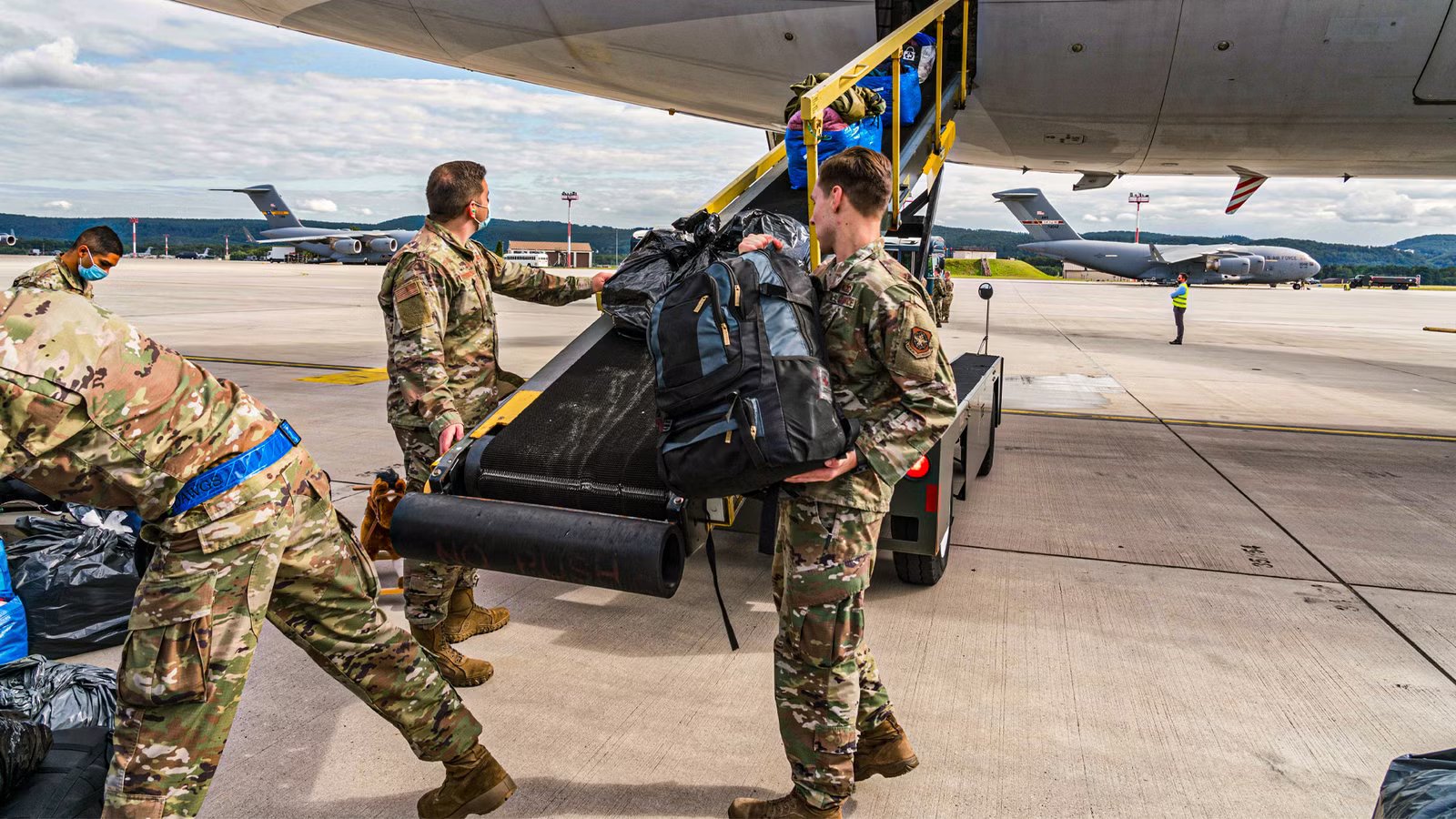
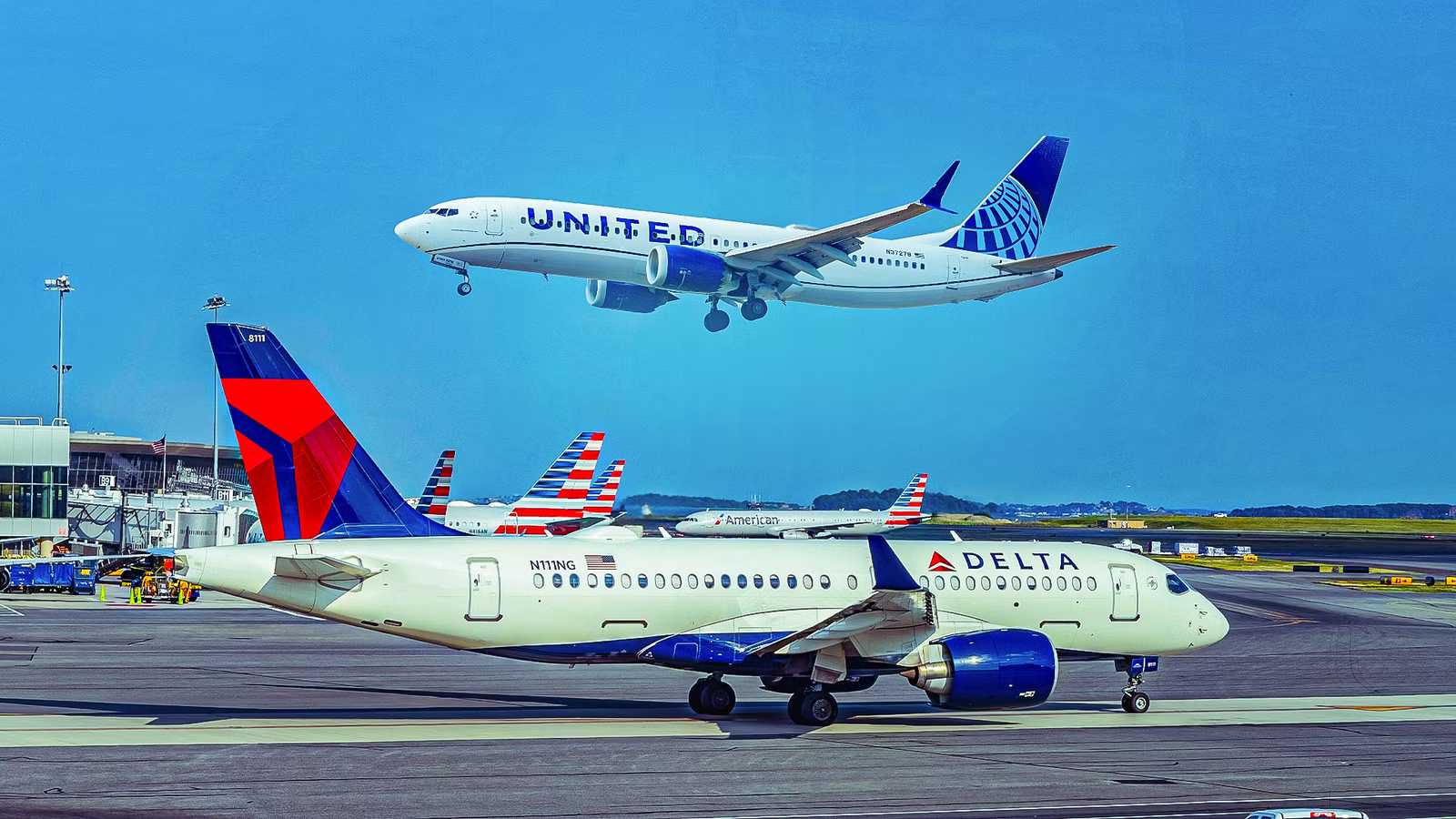
In the event of a conflict, the United States can call on its massive Civil Reserve Air Fleet (CRAF) to support efforts. This includes airliners from all of the major legacy US airlines. These are contractually obligated to support the United States Department of Defense airlift needs if required. The CRAF was founded by the Defense Production Act of 1950, which gave POTUS broad authorities for prioritization and allocation of industrial base resources, including commercial airliners.
The intention was to establish national preparedness programs to allow the country to respond to both domestic emergencies and international threats. This is not unique to the US; the Soviet Union even went so far as to design commercial airliners with secondary military uses in mind. Today, many countries maintain capable programs that allow the government to call up commercial assets in emergencies, including the UK, China, Russia, and many others. Here is what to know about how US commercial airlines participate in the CRAF.
The CRAF’s Three Segments

The US Air Force says that the Civil Reserve Air Fleet is a “unique and significant part” of the country’s air mobility resources. Selected aircraft from US-based airliners are committed to augmenting the military’s airlift requirements during emergencies. The CRAF has two main segments: one is international, and the other is national. The international segment is divided into long-range and short-range sections.
The long-range international section is made up of passenger and cargo aircraft that are capable of transoceanic operations. This augments the Air Force’s C-5M Super Galaxy and C-17 Globemaster III strategic airlifters. Medium-sized passenger and cargo aircraft are expected to fill the short-range international section and support the near-offshore and some intra-theater airlift requirements.
Aircraft committed must be US-registered, and airlines must maintain at least four complete crews for each aircraft. To take part in the CRAF’s international segments, airlines need to maintain a minimum commitment of 30% of their CRAF-capable passenger fleet and 15% of its CRAF-capable cargo fleet. There are three stages of incremental activation. Stage I is for minor regional crises and disaster relief efforts, Stage II is for a major theater war, and Stage III is during a period of national mobilization.
When The CRAF Has Been Used

The United States has activated the CRAF three times, all three of which were since the end of the Cold War. The first occasion was during the first Gulf War, during Operation Desert Shield, where the US built up its forces in the Middle East in response to the Iraqi takeover of Kuwait. The second was in 2003 as part of Operation Iraqi Freedom, and the third time was in 2021 during Operation Allies Refuge, which was the evacuation of people from Afghanistan as the country fell to the Taliban following the US and British withdrawal.
In August 1990, the initial call-up was for 17 long-range international passenger aircraft and 21 long-range international cargo aircraft. This was 38 aircraft from 16 different airlines. They provided the military with an additional 1,920 passenger seats and 490 tons of cargo capacity per day. In 1991, this increased to 76 passenger aircraft and 40 cargo aircraft, or 116 in total across Stages I and II. Stage III was considered, including the call-up of 31 widebody freighters, but this didn’t happen.
The largest passenger aircraft contributors were United (21), Northwest (14), TWA (12), and Pan Am (10). Fast-forward to the 2021 Kabul operation, and the call-up was much smaller, with just 18 aircraft. Contributing airlines were American (three), Atlas Air (three), Delta (three), Omni (three), Hawaiian (two), and United (four). Commercial aircraft did not fly into Kabul; they picked passengers up from points that USAF aircraft had transported them.
Size Of The CRAF

The official US Air Force webpage on the size of the CRAF fleet is now well out of date. It says, “As of June 2014, 24 carriers and 553 aircraft are enrolled in CRAF. This includes 517 aircraft in the international segment with 391 in the long-range international section and 126 in the short-range international section. There are 36 aircraft in the national segment.” Since then, the number of carriers has remained similar, but the number of aircraft has increased.
A December 2025 US Transportation Command (USTRANSCOM) article offers a more current picture, saying “More than 20 carriers and over 800 aircraft currently participate in CRAF.” It notes that CRAF offers one of the military’s most significant surge capabilities. The article was in the context of cooperation with Japan, and the country noted, “While we have no Reserve, National Guard, or CRAF fleet in Japan.”
Civil Reserve Air Fleet (per USAF) | |
|---|---|
Established | 1952 |
Participants | Over 20 |
Aircraft | Over 800 |
Key members | United, Delta, American, Atlas Air, FedEx, UPS |
Space-based counterpart | Commercial Augmentation Space Reserve (CASR) |
In March 2025, the Air Mobility Command (AMC) CRAF fact sheet says there are 17 carriers in the long-range international segment, eight carriers in the short-range international segment, and three carriers in the national segment. Airlines may be participating in multiple segments. A Defense Business Board 2025 report says that 25 commercial carriers participate and says that the CRAF allows the Air Force to surge its 275 (C-5, C-17) fleet to over 500 with CRAF commitments.
The CRAF Charter Airlift Services

All this doesn’t mean contracted airlines only provide transportation services during emergencies. US commercial airlines frequently carry military cargo around the world to US bases and to US allies, including on passenger aircraft. United passenger aircraft carry F-35 and other aircraft components on commercial passenger flights to Israel and many other destinations.
The Air Force writes, “To provide incentives for civil carriers to commit aircraft to the CRAF program and to assure the United States of adequate airlift reserves, the government makes peacetime DOD airlift business available to civilian airlines that offer aircraft to the CRAF. DOD offers business through the CRAF Charter Airlift Services contract.“
Participating airlines commit a portion of their fleet to the CRAF in exchange for preference when bidding on peacetime military cargo and passenger transport business. In October 2026, the US Department of War listed dozens of airlines, saying it had awarded $4.2 billion in contracts for the international long-range and short-range charter airlift services in support of the CRAF. This brought the program’s total cumulative face value to $8.2 billion.
Participating Airlines

When notified of a call-up, a carrier has 24 to 48 hours to have its aircraft ready for a CRAF mission after the AMC assigns the mission. The carriers are required to operate and maintain the aircraft using their resources, although they are controlled by the AMC. In 2014, there were two aircraft in the national/domestic section, Southwest and Allegiant Air. In late 2025, there were three, although it’s unclear what the third airline is.
Airlines participating in the short-haul international segment were Alaska, American, Delta, JetBlue, Lynden Air Cargo, Miami Air International, Sun Country, Northern Air Cargo, and United. Sun Country was acquired by Allegiant in 2026. Overall, the list of contracted airlines has not likely changed dramatically. The largest section is the long-range international segment.
In 2014, this included ABX Air, Air Transport International, American, Atlas Air, Delta, FedEx, Hawaiian (now part of Alaska Group), Kalitta Air Cargo, National Airlines, Omni Air International, Polar Air Cargo, Sky Lease I, Southern Air, United, UPS, and US Airways (now merged with American). Much of the value of the CRAF is from integrating military requirements with the airline’s normal commercial operation. In other words, instead of the military ordering a United aircraft to fly a particular route, it will make use of flights already commercially scheduled on those routes.
Space Force Replicating Its Own Space-Based CRAF

In the last few years, the US Space Force has been setting up its own Commercial Space Office (COMSO) to develop the Commercial Augmentation Space Reserve (CASR). In 2023, the Space Force solicited industry ideas for a potential commercial space reserve, and by 2026, the Space Force was working toward a minimum viable CASR capability and was selecting the first larger cohort.
Overall, it appears the Space Force is deliberately borrowing from the CRAF model, but still adapting it to the economics of space. It is designed around pre-negotiated agreements that give the military access to commercial surge capacity during crises. In January 2026, Defense Scoop quoted Director Col. Tim Trimailo saying, “By the end of this year, we’re going to have CASR contracts for space domain awareness so that if we end up in a crisis or conflict, these are contracts we can turn on very quickly and actually support us shoulder-to-shoulder in the fight.“
The Space Force has deliberately not publicly identified the four companies that received the initial CASR contracts. However, likely vendors for the program include Starlink/SpaceX, Amazon Kuiper, Intelsat, LeoLabs, Slingshot Aerospace, Kratos, Privateer, True Anomaly, and others. US Airlines and space-based companies provide the US military with extra capacity (e.g., cargo transport, satellite imagery) but don’t interfere much with normal operations during peacetime. They also provide a massive surge capacity in emergencies.