dailynewsnblog
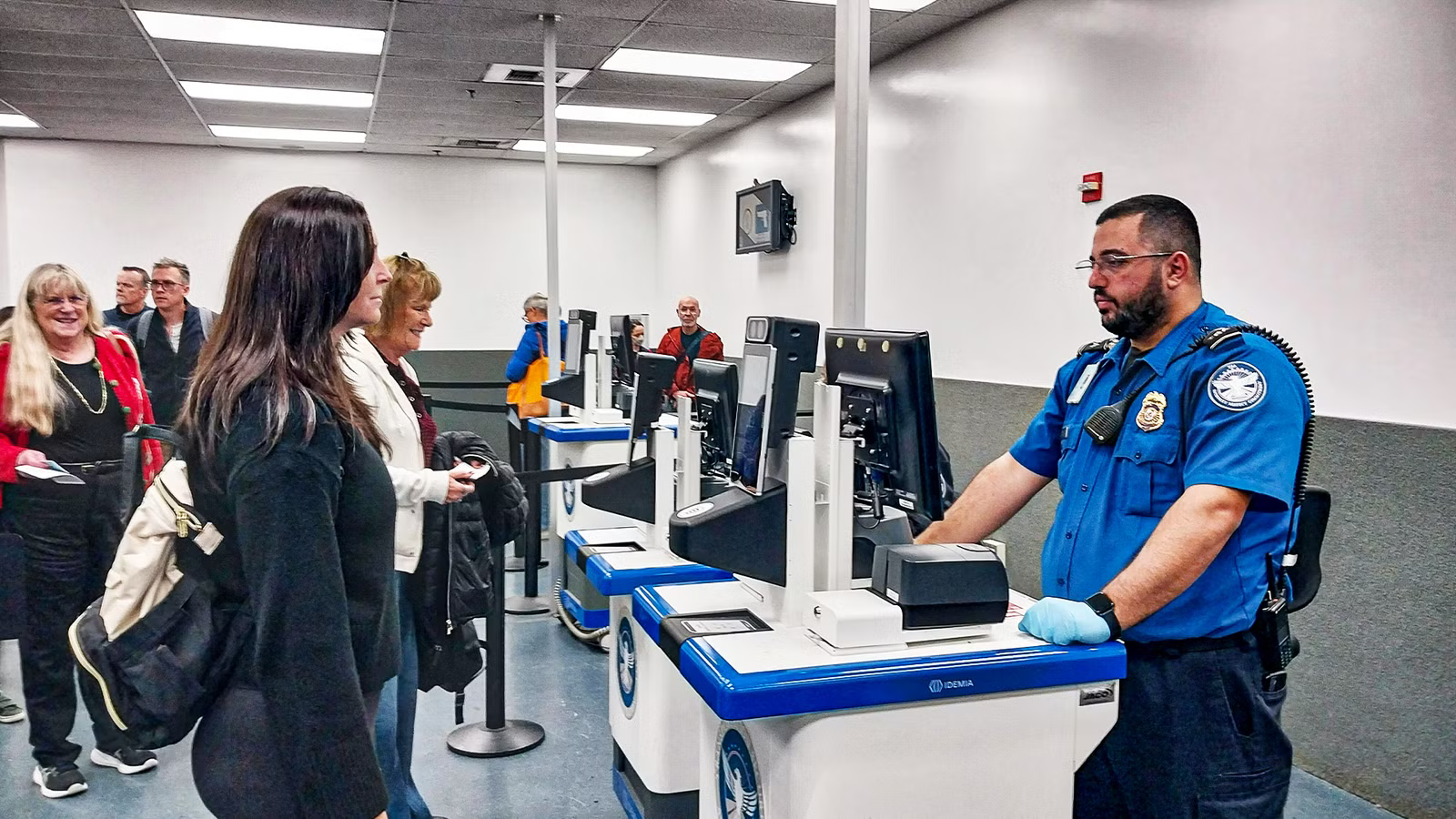
Travel Bulletin has released data from the MyTSA app’s wait estimates, covering mid-June through mid-August. They have compiled the average Transportation Security Administration (TSA) security wait times across 50 airports during this peak season. Across each of these 50 airports, the average wait time was 9.9 minutes, with John F. Kennedy International Airport (JFK), the US’s second-busiest airport, performing worst.
Travel Bulletin estimates that every additional 1,000 passengers of capacity per hour adds an extra 2.3 minutes to wait time. However, a busy airport doesn’t always mean a long wait. Busy airports like San Francisco International Airport (SFO) perform exceptionally well, with passengers entering security almost immediately after joining the queue.
The TSA Wait Time Ranking For The Busiest Airports

The busiest airport in the US is  Los Angeles International Airport(LAX), which deals with over 4,300 passengers per hour. Yet, the wait time is the seventh longest in the top-ten busiest airports at 11.8 minutes. The second-busiest US airport, JFK, is actually the worst performing. It averages 23.1 minutes. Chicago O’Hare International Airport (ORD), the US’s third-busiest airport, doesn’t perform much better. The average wait time is 20.2 minutes.
The table below shows the ten busiest airports in the US by passenger volume per hour and compares their TSA wait times. The airports are then ranked, with number one being the airport with the longest average wait time among the ten busiest airports:
Airport name | Passengers per hour | TSA wait time (minutes) | Wait time rank (# longest) |
|---|---|---|---|
Los Angeles International Airport (LAX) | 4,305.9 | 11.8 | 7 |
John F. Kennedy International Airport (JFK) | 4,282.0 | 23.1 | 1 |
Chicago O’Hare International Airport (ORD) | 4,216.7 | 20.2 | 2 |
Hartsfield-Jackson Atlanta International Airport (ATL) | 3,753.8 | 14.1 | 4 |
Denver International Airport (DEN) | 3,320.5 | 12.6 | 6 |
Dallas-Fort Worth International Airport (DFW) | 3,230.7 | 13 | 5 |
San Francisco International (SFO) | 3,216.9 | 4.5 | 10 |
Newark Liberty International Airport (EWR) | 3,039.5 | 17.9 | 3 |
Orlando International Airport (MCO) | 3,033.8 | 9 | 9 |
Boston Logan International Airport (BOS) | 2,998.1 | 9.8 | 8 |
Airports that are a little less busy tend to perform better, according to the Travel Bulletin data. The shortest wait is at the US’s seventh-busiest airport, SFO, with a 4.5-minute average wait. The ninth-busiest, Orlando International (MCO), and tenth-busiest, Boston Logan International (BOS), airports also perform well with wait times under ten minutes. Yet, the seventh-busiest airport, Newark Liberty International (EWR), performs poorly. The wait time there is almost 18 minutes.
Why JFK Has A Horrendous TSA Problem

A partial government shutdown this spring hit airport security across the country. JFK was making headlines for wait times that could reach an hour. JFK was among the top five for TSA absences because of the shutdown. “It looks long. I don’t know where the actual security line starts yet. It’s moving slowly, but it’s gonna be a long wait,” Justin Swirvul, who was flying to Madrid, told Spectrum News. The government shutdown ended after 76 days in late April, when President Donald Trump signed a spending bill. Yet, the TSA issues at JFK continue.
Many of the ongoing problems are tied to construction work at the airport, which has failed to keep up with the schedule. The airport is undergoing a redevelopment of Terminal One, which will have 13 gates. The opening of this facility has now been delayed into 2027. The result is a bottlenecking of international travelers into an insufficient number of TSAcheckpoints.
The Terminal One redevelopment and other construction work have also shifted roadway patterns, creating an unpredictable airport environment. A new highway split rule depends on which terminal you use, along with new rideshare and pick-up/drop-off rules. Passengers are now hit by unexpected delays because of difficulties getting to the airport, leading to unsustainable numbers of passengers arriving at TSA checkpoints in a rush.
SFO Has By Far The Best TSA Performance

Wait time at SFO this summer averaged under five minutes. It suggests bonuses for passengers when traveling through an airport that is part of the TSA Screening Partnership Program (SPP). SFO is one of 20 airports that use privately contracted screeners rather than TSA workers.
The main perk of this model is that the security workers are privately hired individuals rather than federal workers, Tamara Gane writes. In the case of SFO, they are employed by Covenant Aviation Security. As a result, they are paid directly, rather than through the government payroll.
The SPP model also offers advantages beyond government shutdown crises. Corporate logistics, rather than federal bureaucracy, allows staffing levels to adjust quickly, so additional lanes can open during peak periods. It also allows greater flexibility in staffing. Contractors can negotiate wages, bonuses, and more to offer competitive compensation and benefits, which is particularly important in the expensive Bay Area context.
LAX: A Busy Airport With Decent TSA Performance

TSA agents at LAX are the busiest in America, processing 4,305.9 per hour. Given the scale of this traffic, it is impressive that the performance is only a few minutes worse than the average. Yet LAX also has plenty of security variability. Chase reports that wait times can grow to at least 25 minutes during peak hours. These travel times are 6:30 AM to 9:00 AM for domestic flights, and 11:00 AM to 2:00 PM and 8:00 PM to 11:00 PM for both domestic and international flights. This evening period is particularly busy for international flights from the Tom Bradley International Terminal (Terminal B).
The general guidance at LAX is to arrive two hours early for domestic flights and three hours for international flights. However, LAX has some measures that can help you rush through the lines, going beyond simply avoiding these peak travel times. Firstly, the airport has launched its LAX Fast Lane pilot program. You can now reserve your security screening time in advance, so long as you are traveling from Terminals 7 or 8.
To smooth your flying experience, you can also pre-book parking through the parking page. Be aware that choosing economy parking will require a shuttle to your terminal. You may need to wait around ten minutes for one to arrive.
Anchorage: The Quiet Airport With Awful TSA Waits

Avoiding the US’s busiest airports does not mean avoiding the worst waits. This can be seen from the 16.3-minute average wait time at Ted Stevens Anchorage International Airport(ANC), despite the fact that the TSA agents there process 516.7 passengers per hour.
Some relatively quiet airports perform unusually poorly. The table below uses additional Travel Bulletin data for some such airports:
Airport | Wait Time (minutes) | Passengers Per Hour |
|---|---|---|
Ted Stevens Anchorage International Airport (ANC) | 16.3 | 516.7 |
Portland International Airport (PDX) | 13.4 | 1,172.6 |
Dallas Love Field (DAL) | 11.1 | 679.8 |
San Diego International Airport (SAN) | 13.2 | 1,727.4 |
Tampa International Airport (TPA) | 12.7 | 1,578.0 |
Sacramento International Airport (SMF) | 10.6 | 864.9 |
Technological issues have plagued ANC’s TSA teams. This May, less than a month after the partial government shutdown ended, ANC suffered intermittent outages with its X-ray screening equipment. This led Lex Yelverton, an airport spokesperson, to suggest passengers arrive two to three hours before departure. Alaska Public Media reported that he said: “TSA is actively working to address the current situation. However, extended wait times are expected to persist throughout the day and may continue through Friday.”
Is More Private Security The Answer?

After this spring’s TSA chaos, an alternative is clearly required while governmental funding remains volatile. More shutdown problems are possible should the Republican Party perform poorly in the midterm elections this winter, as seems likely. Such threats create an incentive to shrink state apparatus like the TSA.
President Trump thinks that leveraging the private sector, as has been done successfully by SFO, is the answer. His FY 2027 budget proposed cutting 9,400 TSA personnel and replacing them with privatized screening. The TSA has also made moves towards privatization through its Horizon 25 strategy, launched this summer, Business Insider reports. It promises to “accelerate public-private partnerships.” The regulator had made similar attempts through its TSA Gold+ program, which was scrapped partly due to union opposition.
Opponents of security privatization say introducing competition will worsen working conditions and reduce security effectiveness. “These proposals would hurt the very workforce dedicated to the security of the traveling public each day. Private contractors answer to the bottom line, incentivizing them to cut labor costs. And TSA’s privatization push is built on offloading its highest expenditure – personnel compensation and benefits,” Senator Andy Kim told the US Senate Committee on Commerce, Science and Transportation in response to the planned TSA Gold+ program. Kim also called back to the original mission of the TSA, centralizing airport security work and standards after the September 11 terror attacks. He says that this mission remains relevant today.