dailynewsnblog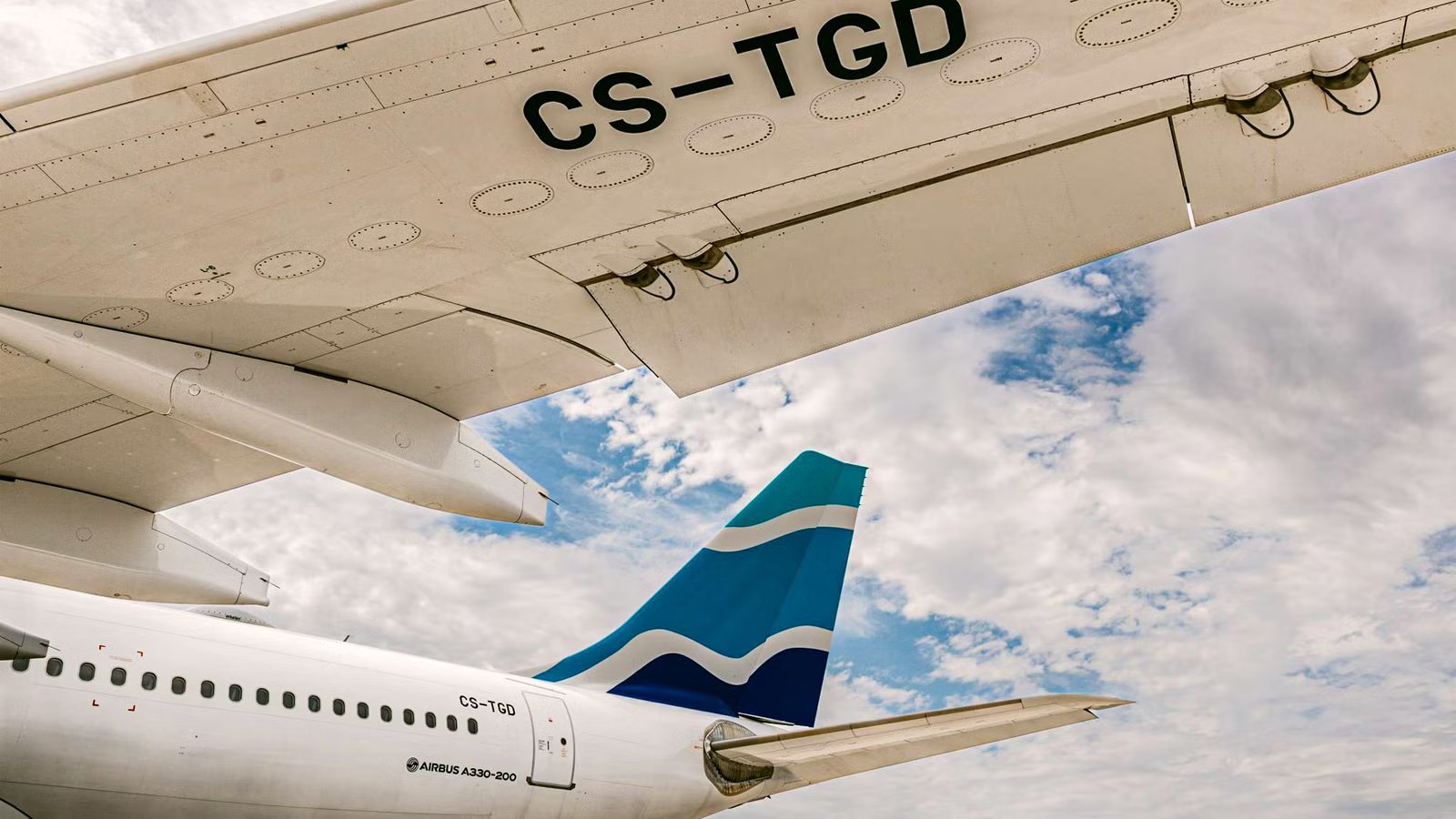
The high-profile acquisition of Pauls Calitis to the executive leadership of euroAtlantic Airways in May 2026 is truly a defining moment for the specialized wet-lease aviation sector. Moving from the highly structured world of a scheduled passenger airline to lead a dedicated Aircraft, Crew, Maintenance, and Insurance (ACMI) operator is a huge change, but its new leader is most definitely fit for the task.
The global wet-lease market has changed massively in recent years, evolving from a temporary emergency recovery option into a permanent pillar of long-haul capacity management for mainline carriers. As legacy airlines wrestle with prolonged aircraft delivery delays, chronic engine supply bottlenecks, and sudden regulatory groundings, the requirement for dependable ACMI partners has reached an unprecedented peak. Under this new leadership, the operator is perfectly poised to step into a role where it can lead the ACMI market.
Bringing Plenty Of Know-How

Calitis developed his foundational aviation expertise during a distinguished 30-year tenure at airBaltic, charting a career trajectory that progressed from a commercial line pilot to Chief Operating Officer and Executive Board Member. This extensive operational background provided him with an intimate understanding of complex crew scheduling, tightly optimized network hubs, and strict international regulatory compliance within a premium scheduled passenger framework. Calitis brings all of this experience as a cornerstone of his new executive mandate as he takes control of euroAtlantic’s global operations.
Managing a scheduled passenger carrier involves a clear focus on long-term predictability, rigid forward planning, and a homogenous network architecture designed around fixed flight schedules. In stark contrast, the long-haul ACMI environment operates as a highly reactive, on-demand ecosystem where widebody assets must deploy rapidly to rescue disrupted mainline schedules across different continents. The job is no longer about optimizing a single-type narrowbody scheduled network; now Calitis’ role is to orchestrate an agile, multi-platform fleet that services multiple global airline clients simultaneously, each presenting distinct operational parameters and stringent service level agreements.
Mainline airlines hiring external capacity expect an entirely seamless operational integration, requiring the ACMI operator to mirror their internal safety, punctuality, and passenger service metrics down to the smallest detail. Calitis aims to build a highly reliable asset class that operates as an unnoticeable, high-grade extension of a client airline’s premium brand, doing so by injecting rigid scheduled network methodologies and strict quality control loops into euroAtlantic.
More Scale Means More Aircraft

Backed by the financial resources of London-based majority shareholder Njord Partners, euroAtlantic is aggressively executing its ambitious New Era 2030 growth roadmap. The central directive of this strategic expansion is to double the carrier’s active widebody fleet from its baseline to a minimum of 12 aircraft within the next three years. The plan is to capture a substantial volume of long-term wet-lease contracts, driven by a severe global widebody shortage that has already resulted in 60% of the airline’s 2026 fleet availability being pre-sold to major international carriers.
Achieving this operational scale calls upon a far more diversified fleet, breaking euroAtlantic’s traditional reliance on an all-Boeing widebody fleet. The airline is actively integrating its first Airbus assets, bringing in two Airbus A330-200 frames alongside its existing fleet of Boeing 767-300ER and long-range Boeing 777-200ER aircraft. Now with this multi-platform configuration, the carrier can offer highly tailored capacity solutions, matching the exact stage-length, cargo capacity, and passenger density requirements of its diverse global leasing clients, which it hopes to bring in more of.
Calitis strongly emphasizes the operational flexibility gained by maintaining a mixed Boeing and Airbus footprint despite the inherent complexities in flight crew cross-training and components provisioning. Dual-manufacturer capability ensures that euroAtlantic remains resilient against type-specific safety groundings or single-source supply chain bottlenecks that could instantly paralyze a uniform fleet. It also aligns perfectly with the operational structures of global legacy airlines, which can seamlessly integrate a wet-leased aircraft that matches their existing cockpit commonality and station engineering capabilities.
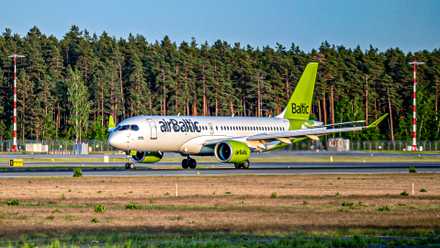
Is This The Next Airline Facing Uncertainty?
With only 11 million in cash at the end of 2025 and ongoing cost pressures, airBaltic might be the next airline to face pressure in 2026.
Once Again Saving Fleets

The global aviation industry has spent the past few years grappling with severe supply chain constraints, none more operationally disruptive than the Pratt & Whitney Geared Turbofan (GTF) engine durability issues. During his executive tenure at airBaltic, Calitis sat on the absolute front lines of this operational crisis, managing extensive aircraft groundings caused by a shortage of replacement components and prolonged maintenance facility turnaround times. Navigating this severe and persistent industry disruption provided him with firsthand, highly technical insights into the critical value of structural asset resilience.
These chronic engine bottlenecks meant Calitis had to design highly proactive maintenance buffers and dynamic asset allocation strategies to maintain baseline network integrity under duress. At euroAtlantic, he is directly implementing these hard-earned lessons by restructuring the carrier’s technical operations to prioritize strict fleet availability over maximum daily aircraft utilization. Through gaining independent spare parts pipelines, establishing robust component pools, and maintaining conservative scheduling margins, the airline can now guarantee ironclad dispatch reliability for wet-lease clients who cannot tolerate operational slippage.
These hard-earned operational insights are what will shape euroAtlantic’s overarching commercial strategy, moving the primary focus away from unpredictable, short-term ad-hoc charters toward structured, long-term strategic ACMI partnerships. Mainline carriers are increasingly willing to pay a premium for guaranteed, long-term backup lift that remains completely separated from ongoing global supply chain shocks. Under Calitis’ analytical leadership, the carrier is positioning its expanded widebody fleet as a specialized, low-risk insurance policy for network planners seeking to protect their high-yield transoceanic corridors.
Discipline Is Key

Integrating these completely new aircraft types into an active charter role is one of the most critical testing grounds for euroAtlantic’s evolving business model under its new leadership. Moving away from a single-manufacturer will mean the carrier needs a profound restructuring of baseline technical operations to ensure safety and scheduling fluidity remain completely uncompromised. Calitis, therefore, will need to apply his structured narrowbody network experience to streamline this multi-manufacturer transition, keeping operations seamless as the company scales.
Adding the two A330 units alongside established Boeing platforms generates immediate capacity, no doubt, but it also introduces massive logistical friction in technical crew certifications, parts provisioning, and safety standards. The carrier now has to separate maintenance pipelines, distinct engineering type ratings, and independent supply chains for both manufacturers simultaneously. As a result, quality control measures need to be thoroughly implemented, ensuring that every newly inducted asset conforms perfectly to the rigid requirements of international aviation authorities before entering active wet-lease service.
Induction Phase | Core Operational Objective | Regulatory & Safety Milestones |
Phase 1 | Technical asset inspection and delivery | Airworthiness certification approvals from aviation authorities |
Phase 2 | Flight deck crew platform cross-training | Comprehensive type-rating validations for all line pilots |
Phase 3 | Station engineering and components provisioning | Establishing dedicated rotable parts pools at key international hubs |
Typically, carriers follow the above steps when introducing a new aircraft type. Following these steps means euroAtlantic avoids the common industry pitfall of expanding too rapidly at the expense of day-to-day operational safety margins. The key is pacing asset integration through structured validation loops, where the carrier can scale up its available capacity without experiencing the mechanical teething issues that frequently disrupt less disciplined charter operators.
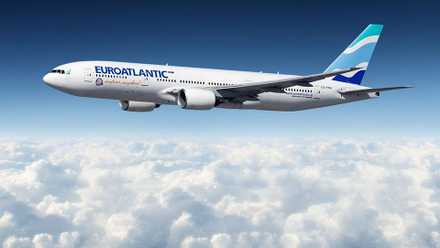
A Short History of Portugal’s EuroAtlantic Airways
The Portuguese charter operator celebrates 25 years of operations this year.
Keeping The Standards At The Top

New leadership and new aircraft are all well and good, but the underlying market importance that these ACMI operators have is stepping up to aid some of the world’s largest and most prestigious airlines, which means matching this prestige. This scenario presents a unique operational hurdle, as a single sub-optimal flight can severely damage the customer goodwill that a mainline network carrier has spent decades building.
The solution for euroAtlantic is to use wet-lease arrangements as a seamless extension of the hiring carrier rather than a basic ad-hoc charter flight. Calitis is using his deep commercial airline perspective to re-engineer euroAtlantic’s customer service loops, making sure that cabin crews, onboard catering standards, and ground handling interfaces adapt dynamically to match the specific luxury or service profile of partners like LOT Polish Airlines or Azul Linhas Aereas. Clients will generally outline targets that the ACMI operator will need to hit, such as:
Performance Metric | Premium Target Parameter | Mainline Network Impact |
On-Time Performance | Greater than 95% dispatch reliability | Comprehensive protection of high-yield connecting hub schedules |
Crew Commonality | Full white-label brand alignment | Seamless continuation of signature passenger service standards |
Maintenance Readiness | Less than two hours mechanical recovery time | Systemic elimination of downstream multi-leg route cancellations |
Using these almost granular passenger-facing details, the operator protects the customer goodwill of the network airline during high-stress operational recoveries or seasonal route expansions. It turns ACMI aircraft from a mere temporary backup solution into a high-grade strategic asset that enhances the mainline carrier’s operational flexibility without diluting its customer satisfaction scores. Ultimately, providing premium network-level execution is what allows a specialized wet-lease provider to command a significant financial premium in a crowded marketplace.
A Recipe For Success

Rapid expansion often strains the foundational systems of an airline, making disciplined, risk-managed execution far more valuable than raw volume growth. As long as euroAtlantic sticks to its core safety and performance metrics even as it works to double its total widebody footprint, growth will inevitably be stable and allow the airline to take a dominant place in the ACMI market.
What is clear is that euroAtlantic’s corporate evolution rests on getting dependable, long-haul capacity, which requires partnering with operators that prioritize structural asset resilience over short-term utilization spikes. Global aircraft shortages and manufacturer delivery delays are only going to continue to impact scheduled airlines well into the future, so having a highly disciplined, multi-platform wet-lease provider available provides a crucial safety valve for protecting premium transoceanic schedules.
The New Era 2030 milestones are where the focus will be most strongly on, and Calitis’ pragmatic leadership style provides euroAtlantic with a clear, balanced trajectory for sustainable international expansion. Combining the agility of an ACMI operator with the rigorous quality standards of a premium network carrier, the Lisbon-based airline can show the world that controlled growth and top-tier operational quality can coexist seamlessly in a highly volatile global aviation market.