dailynewsnblog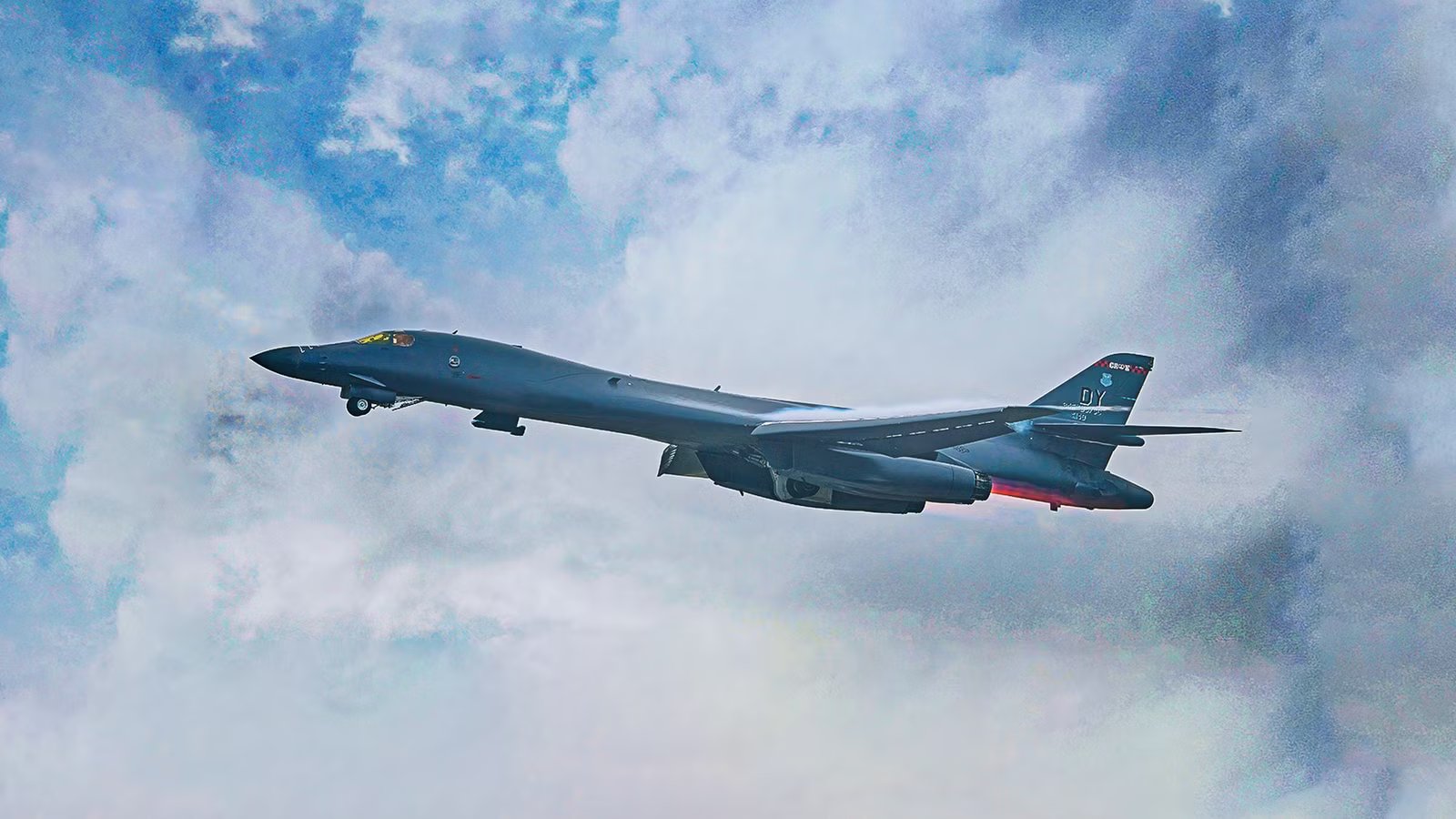
And yet another move to extend the retirement timeline of one of its Cold War airframes, the US Air Force has pushed out the decommissioning timeline for the Rockwell B-1B Lancer supersonic bombers to 2040 or longer. The delayed fate of the ‘Bone,’ as the B-1 is known, is thanks to a modernization program called the B-1 Embracing Agile Scheduling Team, or BEAST.
This program was executed by the 7th Bomb Wing based at Dyess Air Force Base from 2023 to 2025. BEAST cut what is normally a 24-month heavy depot overhaul cycle down to 22 days. The B-1 airframes have been stressed heavily over the decades due to their supersonic low and fast penetrating flight profiles. Thus, the B-1’s sunset is inevitable due to sheer airframe fatigue, especially with the US Air Force aggressively sending legacy planes to the Boneyard under its ‘divest to invest’ procurement strategy.
Still, the BEAST retrofit upgrades have modernized its systems to keep the high-performance swing-wing bomber lethal for at least another decade. This is very valuable to the USAF at a time when the US armed forces are experiencing a shortage of strategic missile stockpiles, technical deficiencies with stealth fighters, and making up for force readiness gaps after planes were destroyed in Operation Epic Fury.
Keeping The B-1 Lethal: The BEAST Flies On

The first of 23 Lancers completed the BEAST overhaul program in 2023. The huge supersonic strategic bomber received upgrades to its defensive suite, data link, Identification Friend or Foe, and other avionics. The program has been so successful that two aircraft have actually been returned from the Boneyard and regenerated as operational airframes. The B-1 dubbed ‘Lancelot’ was pulled from mothball in 2024, and ‘Apocalypse II’ followed this year in April.
These jets were brought back online as part of a congressional mandate that required the Air Force Global Strike Command to sustain a combat-capable B-1 fleet of at least 45 airframes. The terms dictated by lawmakers on Capitol Hill required AFGSC to continue investing in the fleet. Now, as the USAF has dipped below 5,000 airframes for the first time in its modern history, these supersonic bombers have once again become as critical as the day they rolled off the assembly line.
The Bone was originally made to be a nuclear strategic deterrence platform, but with the end of the Cold War and the evolving needs of the US military, it has adapted to become much more. Since it was stripped of its nuclear deployment capability in the 1990s, the Lancer proved to be an unlikely but exceptionally capable close air support asset. The B-1’s immense weapon payload and highly diverse arsenal have proven indispensable in campaigns across Iraq and Afghanistan, and every other conflict the US has engaged in over the past three decades.
The Mighty Bone By The Numbers

The B-1 Lancer is capable of carrying the largest payload of any of the strategic bombers in the AFGSC. Its three internal bomb bays can accommodate 75,000 lb (34,000 kg) of weapons. Additionally, the USAF has recently been experimenting with its external missile pylons to mount hypersonic standoff weapons. After the load-adaptable modular pylon upgrade rolls out to the fleet, the Bone will be able to haul a staggering 36 cruise missiles per sortie.
This would make the B-1 the most heavily armed ‘arsenal ship’ in the Western bloc of air forces. Every single Lancer can already be equipped with weapons like the AGM-158C long-range anti-ship missile or joint air-surface standoff missile. Expanding its carrying capacity and adding new standoff munitions would make it an absolutely devastating platform to strike land or maritime targets, even against near-peer adversaries with advanced integrated air defenses.
This capability will be crucial over the next decade as the Northrop Grumman B-21 Raider 6th generation stealth bombers slowly arrive at air bases and the venerable Boeing B-52 Stratofortress is upgraded to the latest ‘J’ standards. Although the USAF does eventually want to have only two types in the AFGSC inventory, the combined upgrades of the BEAST and the LAM pylon will make the B-1 an excellent stopgap platform for the fleet.
BEAST: No Dead Time On The Flightline

The BEAST program was more than just an upgrade series; it was a paradigm shift in how military industrial procurement is executed. The 7th Bomb Wing made a massive process improvement through localized supply chain isolation to eliminate as much ‘dead time’ from the process as mathematically possible. This is because during that two-year depot cycle, the bomber spends much of its time simply sitting in a hangar waiting.
Technicians at Dyess and Ellsworth AFB work together to establish modular workspaces and consolidate a centralized depot system to streamline the supply chain and eliminate both physical and administrative bottlenecks. Optimizing the logistics and real estate of the operation saved months of idle time off the schedule.
The BEAST team organized all-inclusive upgrade kits that were ready to go in the hangar before each plane even arrived. Every time one of the Lancers got to the hangar floor, every single part and piece was ready and waiting to be installed. Work was able to start immediately and progress rapidly thanks to the pre-staging of every wire harness, nut, and bolt required for the full upgrade package.
The BEAST program also cut a significant amount of wasted schedule time by building in the upgrade installation to the programmed depot maintenance phase that is required as a part of the routine depot cycle. That meant that aircraft in the ‘up’ status could keep flying to minimize the impact on operational squadrons. Then, when a jet went into the shop at a pretty normal interval, the BEAST package was rolled into the overhaul and inspection work.
Readiness Enhancer For The US Air Force

Despite the fact that the B-1 is one of the top airframes on the chopping block for the ‘divest to invest’ fleet recapitalization program of the USAF, the success of the BEAST upgrades has proven to be very valuable under current conditions. The Air Force currently has the lowest number of airframes that it has ever had in its modern history since being established as an independent service branch and splitting off from the Army.
The USAF is aggressively pursuing decommissioning, but the replacement planes are not forthcoming and in similar numbers to sustain force levels. Specifically, deficiencies with the Lockheed Martin F-35 Lightning II capabilities are hurting Air Force readiness levels as many of these 5th generation fighter jets are not able to complete their full mission profile. Meanwhile, the next-generation air superiority fighter that will take over from the Lockheed Martin F-22 Raptor is several years from being fully operational.
Adding to the fighter bottleneck, the B-52 fleet will soon begin the largest overhaul and upgrade program in its history, which will take badly needed bombers out of service. Then the US lost or damaged at least 42 planes during Operation Epic Fury and Iran. That means that there will be billions of dollars diverted to replace those airframes, and it will be years before new aircraft arrive to fill the spots that have been left vacant.
The Cost Of Doing Business

In June, Congress committed $342 million specifically to the B-1 fleet as part of the $1.7 billion legacy bomber lifecycle extension budget, as Air and Space Forces Magazine reported. This funding is meant to build on the foundation laid by the BEAST and LAM programs to harden the communication and navigation systems as well as enhance radio crypto and digital systems to keep the B-1 lethal until the B-21s arrive in large numbers. The current budget covers programs running from 2027 to 2031, which aim to keep the bombers flying until at least 2037.
The external heavy-stores pylon program was also approved last year for $50 million to advance the weapons integration of hypersonic missiles in parallel with the LAM program, according to Air and Space Forces Magazine. Combined with the latest upgrades that will improve on the digital systems of the BEAST upgrades, the B-1 will be able to carry the 5,000-lb (2,267 kg) AGM-183A Air-launched Rapid Response Weapon or Hypersonic Attack Cruise Missile on the LAM pylons.
These upgrades will make the B-1 a critical part of the strategic deterrence fleet of the US and its allies as the Air Force is steadily optimizing airframes and doctrine under the ‘pivot to the Pacific.’ So while these upgrades sound like significant investments in a platform destined for the Boneyard in the near future, they are a relative bargain compared to the programs coming down the line. Despite the enormous cost of newer ‘exquisite’ airframes, the Bone continues to get the job done more reliably despite its lack of stealth technology.
The F-35 Joint Strike Fighter has been paralyzed by the technology-refresh-three-block-four software package that has been deficient, and the 6th generation Boeing F-47 stealth fighter is years away from even a first test. The F-35 program has bloated to over a $2 trillion estimated lifetime cost due to overruns, and that number is still climbing. Meanwhile, the F-47 Next Generation air dominance is expected to cost $300 million per plane, and the USAF wants between 185 and 200 of them.