dailynewsnblog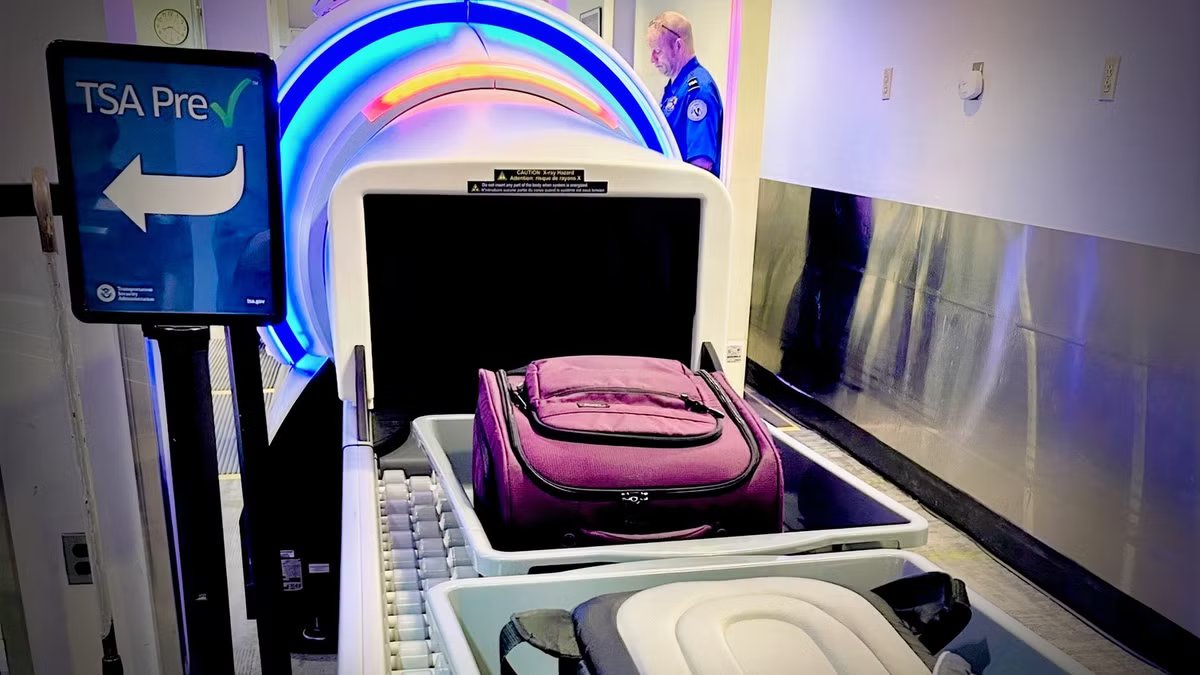
Airport security checks can be stressful experiences. Any frequent flyer will be able to recount a story where their bag was pulled by staff and opened to remove an item — be it a full water bottle, a misplaced pen knife, or even unsuspecting soft food — to be confiscated. Whether deliberate or not, all the time and effort involved in traveling means it can be easy to make mistakes when it comes to packing.
On the other hand, some might recount instances where items that blatantly should have been spotted slip through security undetected. However rare, it does happen and can make for some worrying revelations. Reassuringly, America’s Transportation Security Administration (TSA) is adopting new technology to clamp down on any such cases.
TSA Spends Over $1 Billion On New Scanners

Between 2021 and 2023, the TSA splashed up to $1.3 billion on the procurement of new scanners for airport checkpoints across the US. This covered three separate contracts, with the largest worth up to $781.2 million alone. Using computed tomography (CT) technology, the machines provided have since increasingly allowed officers to view rotatable 3-D images of the insides of carry-on luggage. Older models simply displayed two-dimensional pictures instead.
Some 634 of the fresh CT units had already been installed at the time in April 2023, with the $1.3 billion said to cover 1,214 of the updated models if all options were exercised, according to the TSA. Prior to this, an initial batch had been ordered back in 2019.
This itself came two years after a report emerged of undercover investigators managing to sneak fake weapons through airport security. It is unclear whether the report and ensuing orders were connected. Regardless, the findings that were published in the press afterward appeared pretty stark.
TSA Shortcomings Flagged Previously

The Department of Homeland Security report flagged “vulnerabilities with TSA’s screener performance, screening equipment, and associated procedures.” Figures then cited by the likes of Forbes spoke to a failure rate of “more than 70%.” What is more, this was actually said to have been an improvement on a similar test that took place two years earlier.
Despite the improvement, the point remained: when put to the test by those with no intention of doing harm — luckily — the systems in place looked to be missing the majority of barred items. Worryingly, the equipment investigators had attempted, and overwhelmingly managed, to get through stretched to fake guns, knives and explosives.
Soon after, TSA Administrator David Pekoske assured efforts to improve were being made. This included exploring the use of 3D-imaging CT scanners in US airports, he said. Cut forward to today, and the organization is deep into the rollout of this improved technology. Such scanners naturally offer an improvement on the older models in terms of security. Benefits do not stop there, though, including for passengers.
New TSA Scanners Simplify Security Process

By shooting hundreds of images using an X-ray camera, spinning around bags and other items passing through, the new machines can create 3-D images of the contents inside. Per the TSA, this allows such a clear image that the system can automatically detect explosives and other threatening items.
It is also thanks to this that the images generated can be manipulated on a monitor by officers to focus on what is inside. All told, this means fewer carry-ons should theoretically be pulled aside for manual inspection. Fewer bags being pulled in turn should mean the time spent waiting for manual checks in any such case is shorter as a result. Of course, the reality of airport security can often be somewhat more chaotic, so whether the latest technology does make a difference here is up for debate.
TSA 2025 Statistics | |
Passengers screened | 906.7 million |
Carry-on bags screened | 2.1 billion |
Checked bags screened | 480 million |
Busiest day of screenings | 3.1 million (November 30, 2025) |
Highest daily screening records set in 2025 | 8 of 10 |
Prohibited items discovered in carry-on bags | More than 1 million |
Firearms discovered at checkpoints | 6,669 |
There is another win for passengers, though, and one that may spark less debate about the success of its implementation. The CT technology has also meant an end to the unwelcome process of having to root around inside bags for certain items that had to be scanned separately. Indeed, not long ago it was standard practice to have to remove laptops, liquids, and so on while in the queue at security. With the CT scanners nowadays, travel-sized liquids and electronic devices can be left inside. That said, this upside must be taken in context.
Better Technology Also Closes Margin Of Error

At its core, the new and improved machines have been adopted with one key goal in mind. That is, ensuring fewer things that should not slip through checks actually do. So for the passenger again, the probability of getting a prohibited item through, accidentally or not, has been slashed.
That means being absolutely certain that the items within one’s carry-on luggage are actually allowed or not is becoming as important as ever. As Johnny Jones, of the American Federation of Government Employees and a TSA worker, said of the latest scanners to AP News last year: “It’s a difference of being able to see something that would have been hidden by something that you can now see clear as day with the new technology.” He added: “It eliminates the guesswork.”
Catch what other flight trackers miss
Emergency squawks, holds, NOTAMs — live signals, no signup.
Open tracker
Catch what other flight trackers miss
Emergency squawks, holds, NOTAMs — live signals, no signup.
Open tracker
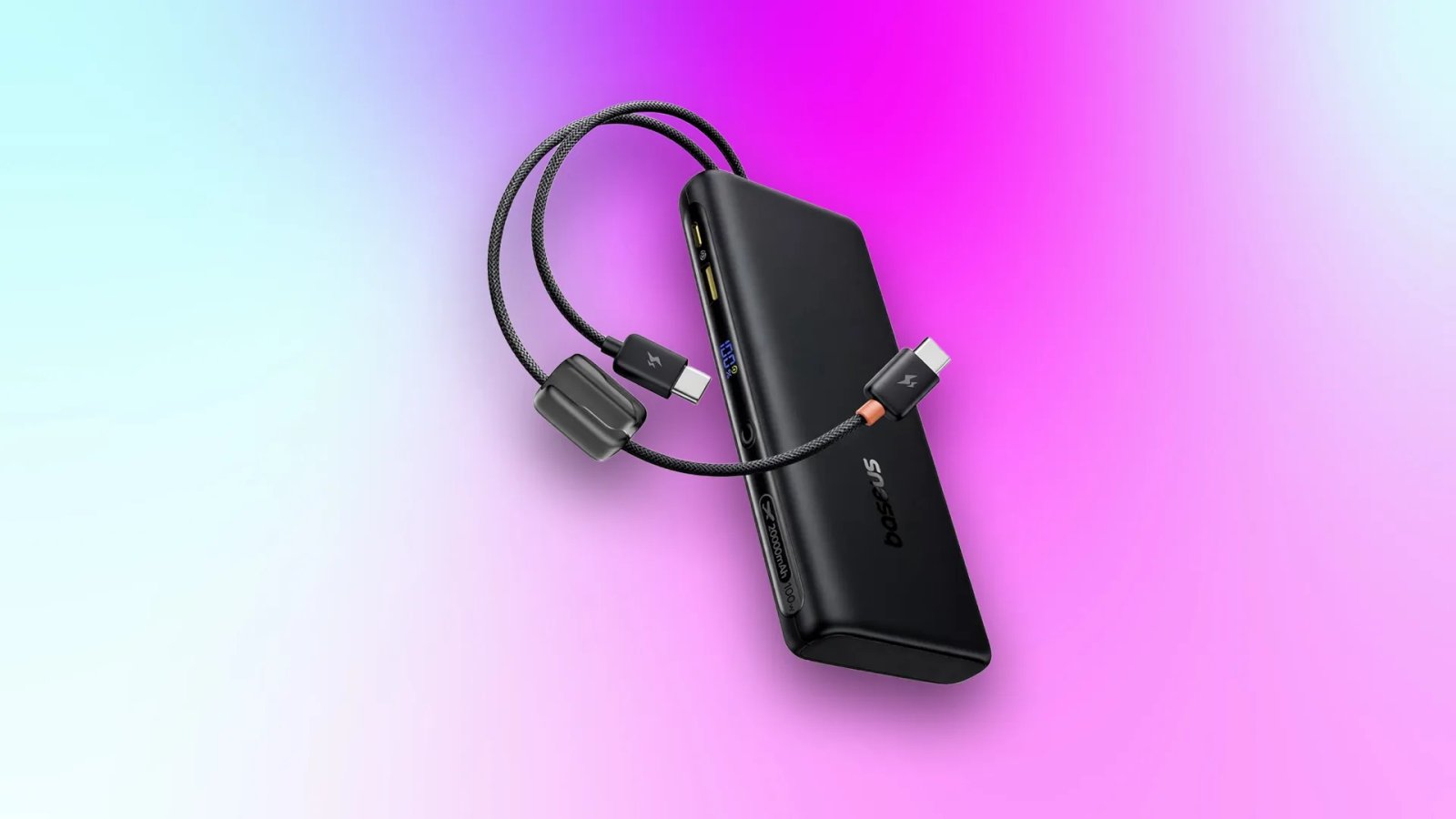
Generally, it is easy for travelers to determine what is and is not allowed when it comes to the likes of firearms, knives, and other weapons. The process is less simple for many other goods, though, including so-called “threat items” that may not so blatantly stick out as such. Power banks, for instance, may seem unsuspecting on the surface. The truth, however, is that they have increasingly become a burden on the industry in recent years.
Power Banks Closely Regulated Across Aviation Industry

With the rise of mobile phones, there has also come a rise in portable means of keeping their batteries topped up while on the go. However, these power banks, or more specifically their lithium batteries, have a rare but very dangerous tendency to overheat and even go up in flames. It does not take an expert to work out that one of the worst places for this to happen is tens of thousands of feet in the air inside the cabin of an aircraft.
Data shows such exact instances have become increasingly common in the skies over the years; however, lithium battery fires aboard planes in the US jumped by over 42% between 2018 and 2023, as reported by CBS News. From 2021 to 2023 alone, it was said that there averaged at least one of these fires a week in the skies above the US.
Batteries allowed in airline passenger baggage in the US, from the FAA:
Item | Carry-on | Checked luggage | Notes |
Smart luggage | Yes | Yes* | The battery must be removable |
Dry batteries | Yes | Yes | Includes alkaline & rechargeable |
Electronic devices | Yes | Yes* | Must be powered off if checked |
Spare batteries & power banks | Yes | No | Carry-on only |
E-cigarettes & vapes | Yes | No | Carry-on only |
Location trackers | Yes | Yes* | Size limits apply |
Lithium metal batteries | Yes | Yes* | Spare batteries carry-on only |
Non-spillable batteries | Yes | Yes | Max 100 Wh |
Mobility devices | No | Yes* | Depends on battery configuration |
Lithium battery generators | No | No | Prohibited on passenger aircraft |
*Restrictions or airline approval may apply
The response has been increasingly tightening regulations since the late 2010s. “Spare lithium-ion and lithium metal batteries, including power banks and cell phone battery charging cases, must be carried in carry-on baggage only” under Federal Aviation Administration (FAA) rules, for example. Rules do not stop there, with non-rechargeable metal batteries limited to 0.07 ounces (two grams) of lithium content, and rechargeable ion batteries of only up to 100 watt-hours each allowed. Simply put, with rotatable 3-D imaging provided by the new CT scanners, the TSA has become armed with a far more effective means of spotting electronics that may violate the rules.
CT Scanners Aid TSA’s Huge Job

So, while these rules have not drastically changed recently, the technology capable of enforcing them has. Passengers may on occasion have found themselves getting away with taking larger power banks and other forbidden items through security historically. Among other things, the sheer scope of the TSA’s daily workload would explain why this happened.
According to TSA checkpoint data, well over two million people had been processed every day between the first and fifth of August this year. On the second of the month alone, almost 2.9 million travelers were screened. Alternatively, during 2025, 906.7 million passengers and 2.1 billion carry-on bags were screened. From these, over a million prohibited items were discovered. Whichever way one looks at it, there is no denying the numbers are vast.
Today, the chances of such discoveries being made are increasingly being swung with the CT scanner rollout. Come early July, 1,162 of the machines had been installed across 296 airports. As the TSA writes of these itself: “Research shows that CT is the most consequential technology available today for airport checkpoints.”