dailynewsnblog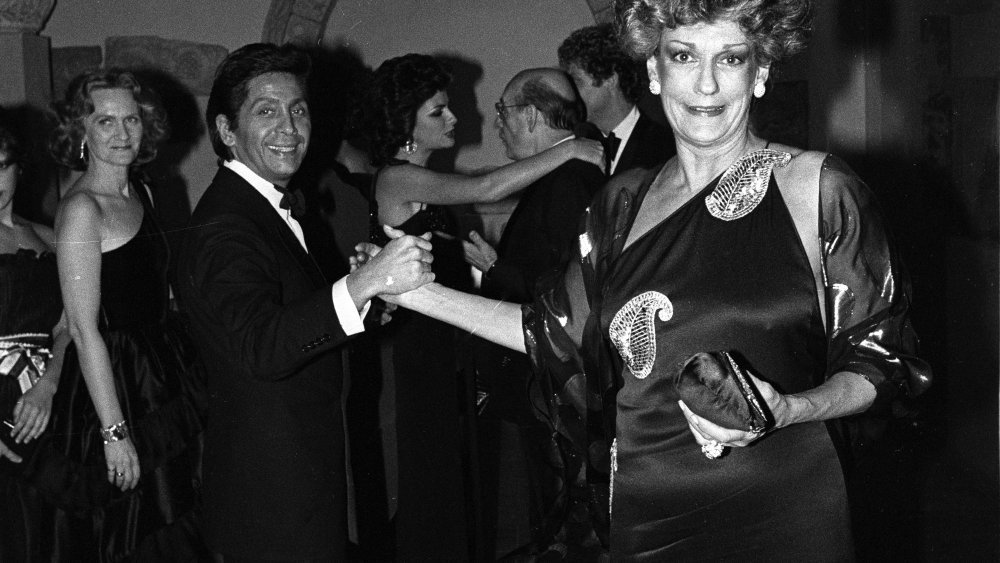
It’s been said that the best way to get a party started is to bring your friends. That’s exactly how the Met Gala, fashion’s most coveted invitation of the year, became fashion’s “party of the year.” The planning began in 1944, when Dorothy Shaver, then chairwoman of the Costume Institute’s event committee, along with Eleanor Lambert and friends, began what is now one of the most successful fundraisers for fashion exhibitions. The dinner and dance was initially held at New York City’s Rainbow Room and the Waldorf-Astoria until the Costume Institute officially opened its galleries inside the Metropolitan Museum of Art in 1959.
After Shaver and Lambert came Diana Vreeland, who joined the Costume Institute in 1972 as a special consultant for exhibitions. Vreeland transformed its exhibitions and, in 1975, with the help of socialite Pat Buckley, elevated its annual party into fashion’s most prestigious event.

Diana Vreeland, Karl Katz and Jacqueline Onassis at a reception for the “Glory of Russian Costume” exhibition at The Met Museum of Art, 1977. Fairchild Archive
Nick Machalaba
The gala’s red carpet became a spectacle rivaling event the grandest award show arrivals. Buckley, married to political conservative William Buckley, was one of New York’s leading social doyennes. Known for her talent in bringing the right mix of people — from across the aisles — together, she and Vreeland helped establish the gala as the pinnacle of high society and fashion in New York for three decades.
Buckley’s guest list aligned perfectly with New York’s social culture, successfully engaging the philanthropic arm of its inner circle. The roster included the “ladies who lunch,” a term coined by John B. Fairchild in the 1960s.
Known for their love of fashion, these women elevated the affair — and others in their respective eras — making it worthy of the multipage layouts WWD began dedicating to the event in its “Eye” pages for over 40 years.

Babe Paley, Kenneth Jay Lane, Marion Javits, and Stephen Paley attend the Met Gala, 1974. Fairchild Archive
Fairchild Archive/Penske Media
It was Buckley who introduced the concept of round tables, intentionally placed for mixing high society, artists, authors and fashion designers to foster friendlier conversations and meaningful connections. She once told WWD that this approach was one of the keys to her success in hosting gatherings at home. Buckley also reinforced a strict black-tie dress code for the event, even as they became a themed “costume” affair.

At the Met Gala (L) Carolina Herrera and Jacqueline de Ribes, 1977. (R) Nan Kempner and Lynn Wyatt, 1988. Fairchild Archive
Regulars on Buckley’s invite list included C.Z. Guest, Babe Paley, Estée Lauder, Nan Kempner, Nancy Kissinger, Deeda Blair, Carolina Herrera, Jacqueline de Ribes, Annette Reed, Mica Ertegün, Marion Javits, Mercedes Kellogg, Happy Rockefeller, Slim Keith, Barbara Walters, Brooke Astor, Chessy Rayner, CeCe Kieselstein-Cord, Blaine Trump, Lee Radziwill, Lynn Wyatt, and on occasion Jacqueline Kennedy Onassis, accompanied by their husbands and gentleman walkers. Familiar faces that became must-have attendees at the posh event.
“Everybody who is here is here.” Estée Lauder once remarked, capturing the exclusivity and significance of the yearly soirée and what has become fashion’s high-profile celebration of fashion and culture. In 1995, Vogue’s Anna Wintour took the reins as chair of the Costume Institute Gala and continues to host a who’s who of fashion, music and entertainment to raise money in benefit of the Costume Institute at the Metropolitan Museum of Art.
Here is a look back at WWD’s exclusive coverage of Buckley and friends at the Met Gala.